



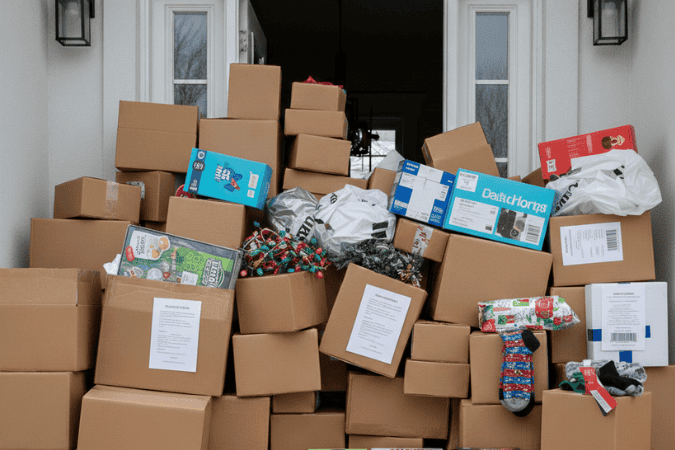
January is the hidden peak season for e-commerce. The better your holiday shopping period was, the crazier your January can become. Lots of retailers underestimate how the January influx of holiday shopping returns affects staffing, cash flow and inventory.
Return rates can rise from 23.5% to 44.5% in January. Two-thirds of retailers expect only a 5% to 20% increase, but the real return rate can be close to 50%, making it the busiest time of the year for returns.
Now that things are calming down, it’s a good time to look back on how your business handled the January return avalanche. What did you learn? What will you do differently next year?
We’ve got some thoughts, and we’re here to share some fresh, new return-shipping insights from our Peak Season Survey 2025 (France and the Netherlands), along with retail benchmarks from Returnless.
Returns are part of the purchase now
Across France and the Netherlands, 48% of shoppers say returns are an integral part of the post-purchase experience. For many customers, the ability to return is not just a nice extra. It’s part of what makes online buying feel safe. Around 30% of shoppers even say they intentionally order multiple items (for example, the same garment in multiple sizes), knowing from the outset that they will return some.
There’s also a very human side to return shipping that we’re only just starting to understand. 38% of shoppers say they feel guilty about holiday gift returns. 40% say they have pretended to like a gift just to avoid the return process. These facts point to one thing: customers want the return experience to be as straightforward and smooth as possible.
Return shipping is also directly linked to customer loyalty. 70% of customers say an easy, transparent returns policy makes them more loyal. So, when you offer a customer-friendly returns process, it’s more than just damage control. It’s also about motivating customers to return for future purchases.
At the same time, sustainability is an important factor for many customers. 45% say they consider the environmental impact of returns. 47% say they prefer merchants with eco-responsible return options. If your return flow feels wasteful, it can influence whether someone comes back.
What customers expect in January
Most shoppers want two things: clarity and speed.
Customers are willing to wait 5.2 days for a refund. After that, many will start asking questions. The reason this matters in January is simple: People have just splurged on holiday shopping. They’re watching their balance. A refund can feel urgent.
Now compare that expectation to what a return can look like on the retailer side. It takes 23 days on average for a returned item to make it through the process and back into sellable stock, so it’s available to buy again. Most of that time happens before the return even starts.
Here’s how it breaks down:
- There’s an average delay of about 13 days before the customer even starts the return process.
- Inbound transport adds about 2 days.
- At most companies, internal checks and refund steps add about 8 more days.
There’s a clear disconnect here between what customers want and what most retailers deliver. Customers expect a refund in less than a week. But the internal step alone can average longer than that. That mismatch might cause you to get bombarded with refund questions, even when your team is working hard to keep up.
It’s also why tracking notifications matters. If customers can’t see their return shipping status, they might start to worry that something is wrong. If they can see the status, they may still not love the wait, but they worry less. That level of transparency is even more important for international returns, where customers may feel even more out of control.
What transparent returns look like
If you want fewer follow-up queries about post-holiday returns and refunds, be sure to offer a transparent, customer-focused returns process. That means using clear email notifications, FAQs or a “Return shipping” page on your website to answer the most common questions, like:
- How do I request a return?
- What does the return cost?
- How can I check the current status of my return?
- When will my refund be issued?
Customers don’t want a long explanation of your internal process. They just want simple answers.
A useful way to test your own flow is to look at the messages a customer receives after they start a return. Make sure they get an update when the parcel is scanned, and another when the refund is issued. If you can add an “arrived at our warehouse” update, it reduces uncertainty even more.
For example, an effective status update can be as simple as:
“Your return arrived on [date]. We will check it within [X] business days. We will issue your refund to your original payment method once the check is complete.”
Clear communication like this helps manage customer expectations and bridge the gap between what they want and what you can realistically deliver.

The January problem retailers underestimate
January is the busiest month for returns. As we’ve seen, there’s a gap between customer expectations and retailers’ return processes. But there’s also another gap. It’s the mismatch between the post-holiday e-commerce returns volume most retailers expect in January, and the volume they actually wind up having to deal with.
Returnless reports that 67% of retailers expect returns to increase by only 5% to 20% during peak season, but, in reality, that increase can be close to 50%.
If you plan for the lower number and you get something close to the higher one, you end up with a backlog that slows your internal processing time. That moves you further away from your customers’ 5.2-day refund expectation. It also keeps inventory out of saleable stock longer.
Cost also becomes more visible at that scale, too:
- 65.3% of merchants now charge for returns.
- Customers on average will accept about €5.39 as a return fee.
- But a return can cost around €6.35 to handle on an order worth about €150, which leaves a shortfall of about €0.96 per return that you still need to cover, either by absorbing it as a cost or recovering it elsewhere in your pricing.
Be sure to also check out our article on how to reduce return shipping costs.
It’s also worth looking upstream at why returns happen, because volume is not random. In fashion, 50% of returns happen because of the wrong size or fit. Across categories, a common reason is that the product isn’t what the customer expected. In post-holiday returns, you see more of both, because gifts are even more likely to be the wrong size or not what the recipient actually wanted.
How post-holiday e-commerce returns affect cash and inventory
The post-holiday e-ecommerce returns peak can often turn into a cash flow problem. It also slows down stock availability, which can negatively affect sales.
Suppose you ship 10,000 orders during peak season, with an average order value of €60. If 44.5% of those orders come back, that’s 4,450 refunds, or €267,000 moving back to customers over a short period. You might not refund all of it on the same day, but it’s still money leaving your business.
Inventory gets tied up too. If the average item takes 23 days to become sellable stock again, you can’t reliably sell that unit during that period. That matters even more if you run lean inventory or rely on January sales to keep revenue stable after the holiday spike.
This is why post-holiday returns planning belongs in operations and finance, not only in customer support.
A customer-friendlier approach to paid return shipping
Charging for returns has become common, but when you ask customers to pay for return shipping, it’s even more important to offer them a smooth return experience.
If your return fee is far above the €5.39 limit that customers accept, you may run into pushback. If the fee is clear before purchase, and clear again when the customer starts the return, it tends to be tolerated more often.
The easiest way to keep this fair is to be specific about when fees apply. Many brands charge for buyer’s remorse returns, but offer free returns for the cases customers see as the merchant’s responsibility. That makes customer conversations easier, and the process feels more fair.

Store credit: Keeping revenue without forcing customers
Store credit is one of the best ways to handle post-holiday returns, because it protects your cash flow in January while still keeping customers happy. It’s also a good match for the January post-holiday return peak, because many people who return something still want something else.
Currently, about 17% of returns are converted into store credit. Retailers who actively promote store credit raise that number to 44%. Returnless’s research found that retailers who promoted store credit saved over €2.5 million in revenue, based on an average store credit value of €83.
So, how can you “actively promote” the store credit option for returns? Make sure your customers see it the moment they choose how the return should be handled. Keep the message short and concrete. Tell people what they get, and tell them when they get it.
It’s also wise to avoid making store credit the only option. If customers feel blocked from a normal refund, they lose trust. Credit works best when you present it as a convenient alternative that’s faster than a card refund.
How to plan January returns like a real peak
The research insights we provided above can serve as a benchmark to help you fine-tune your own post-holiday return strategy. Here’s how you can get started:
1. Map your return timeline
Track two time spans: the time from delivery to return start, and the time from return arrival to refund completion. Those are the parts you can influence most directly.
If your “return start” time is long, the issue is usually clarity. Customers can’t find your policy fast enough, or put off organising the return because they expect a hassle. If your “arrival to refund” time is long, the issue is usually capacity or workflow.
2. Set a refund target that reflects customer patience
Customers say 5.2 days is how long they will wait for a refund. Use that as a reference point. If your internal processing time is closer to 8 days in peak weeks, pick a reduction target and work backwards. That can mean more staffing for inspection. It can also mean clearer rules for when you refund.
Even small improvements here often reduce refund questions, because the customer gets their refund sooner.
3. Make holiday gift returns easy to start
January returns include holiday gift returns, which come with many challenges both for your staff and customers. People may not have the complete order information. They may not know what steps apply. Solve that with clear “gift return” instructions on your website, targeting gift recipients.
Remember that most (12 days) of the return delay occurs because that’s how long it takes the customer to even start the process. The more you can reduce that delay, the faster you have resellable stock.
4. Treat paid returns like pricing
If you charge, show the fee before purchase, and show it again when someone starts a return. Use the €5.39 benchmark as a reasonableness check. If your true cost is higher, focus on lowering cost drivers where you can, so your fee doesn’t become a problem.
5. Offer store credit in one clear sentence
The jump from 17% to 44% when credit is actively promoted suggests wording matters. Keep it simple. If credit is faster than a refund, say so. If you offer a bonus (free gift, discount, etc.) with store credit, say it loud and proud.
January post-holiday returns metrics worth tracking
If you’re only tracking your return rate, you miss out on details that can cause your team’s workload to spike in January. Here are some key operational metrics that show you where your post-holiday returns are costing time and money:
- Time from delivery to return start
- Time from return arrival to refund completion
- Share of returns refunded within 5 days
- Share of returns that return to sellable stock within 14 days
- Percentage of returns converted to store credit
- Customer contacts per return
These numbers give you a clear before-and-after view when you adjust staffing, messaging, or your returns policy.
Conclusion: Start planning for the “hidden peak”
Post-holiday e-commerce returns are when many shoppers decide whether to keep buying from you or not. Our research shows that returns are normal and expected for many customers, and that a clear returns process drives loyalty.
The data from Returnless explains why January is the “hidden peak” season for retailers: return volumes rise fast, items can take weeks to become sellable stock again, and customers expect refunds faster than your process can keep up with.
Most retailers start planning for the holiday peak shopping period months in advance. Why not include the post-holiday returns season in that plan? Track refund time as an operational metric. Make it easy for gift recipients to start a return and get the process moving.
Want to learn more insights to improve your return shipping strategy? Check out the full Sendcloud 2025 Peak Season Index, and learn better ways to handle post-holiday returns in our article, 4 challenges for return shipping during the peak season.