12 ways to reduce WISMO and improve your e-commerce customer experience


Last updated:

If you run an e-commerce store or manage a customer service team, you’ve likely faced this: a flood of “Where is my order?” (WISMO) calls and emails. It’s tiring for your team, frustrating for your customers, and often a sign that your post-purchase experience could do with some improvement.
The good news? Reducing WISMO is absolutely doable, and it can make a big difference for your business. Less stress for your team, happier customers, and more time to focus on growth.
In this article, we’ll cover what causes WISMO, why it’s a challenge, and 12 easy ways to reduce it—while keeping your customers smiling.
What is WISMO?
“WISMO” stands for “Where is my order?”—a common query from customers. Research shows WISMO calls can make up over 35% of customer support interactions, spiking even higher during busy shopping seasons.
These queries usually come through various support channels—email, calls, chatbots, live chat, SMS, or social media—mainly because customers want to know when their parcel will arrive. Often, WISMO calls include other delivery-related questions, making them more time-consuming.
What is WISMR?
Similar to WISMO, WISMR stands for “Where is my refund/return?” These queries, though less frequent, still generate significant call volumes, especially during peak periods, causing frustration for both customers and support staff.
“Customer question number one is ‘Where is my order?’”
— Susan, Customer Service Manager | ByNouck
How does WISMO impact your business?
Reducing WISMO is crucial because these queries can negatively impact your business in several ways:
Customer expectations: According to our E-commerce Delivery Compass, the average consumer expects delivery within 3.3 days and won’t wait longer than 4.9 days. High WISMO rates indicate your company is struggling to meet these expectations.
Costs: Resolving WISMO calls costs an average of €5.50 each. For companies shipping thousands of parcels monthly, these costs add up quickly.
Customer satisfaction: WISMO calls frustrate customers, damaging their perception of your business and potentially leading to negative reviews.
Customer retention: Worst-case scenario, frustrated customers may stop buying from you. PWC research shows that 32% of customers will abandon a brand after just one bad experience.
Common causes of WISMO
Identifying the root causes of WISMO is key to reducing these time-consuming queries and enhancing customer satisfaction. The most common factors include:
Lack of tracking information: Customers are left in the dark when tracking updates are delayed or insufficient.
Delivery delays: Operational challenges, weather disruptions, or courier issues lead to unexpected slowdowns.
Non-deliveries: Parcels might be misplaced, lost, or delivered to the wrong address, triggering confusion and frustration.
Unclear delivery estimates: Vague or overly broad delivery windows leave customers uncertain about when to expect their orders.
Customs clearance: International shipments often face hold-ups due to incomplete documentation or customs procedures.
Order splitting: When items in a single purchase are shipped separately, customers may reach out repeatedly for each shipment’s status.
12 ways to reduce WISMO
Ready to simplify your customer experience? Here are 12 straightforward ways to cut them down and keep your customers happy.
1. Be realistic about delivery estimates
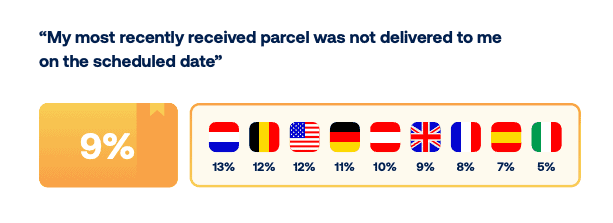
Avoid overpromising and underdelivering—literally. Use your historical shipping data, real-time courier performance stats, and analytics tools to set realistic delivery times. Shipping platforms like Sendcloud let you monitor courier performance, so you can choose reliable shipping partners and adjust delivery promises during peak seasons or delays.
For example: If a courier averages five days for delivery during the holiday rush, update your site’s delivery estimate to reflect that. Transparency not only reduces WISMO calls but also builds trust with your customers.
2. Make sure your shipping and returns policies are crystal clear
Confusion leads to questions—so make sure your shipping and returns policies are simple, detailed, and easy to find. Place them where customers naturally look, like your website’s header, checkout page, and order confirmation emails.
Take inspiration from brands like PittaRosso, which smartly includes links to shipping FAQs on their tracking page. This proactive approach gives customers instant answers, cutting down WISMO calls before they even happen. Curious to learn more? Explore how PittaRosso turned retail challenges into e-commerce success by prioritising customer experience.
Bonus tip: Use a FAQ format to address common concerns like delivery timelines, return windows, and refund processes.
3. Offer real-time updates and self-service tracking
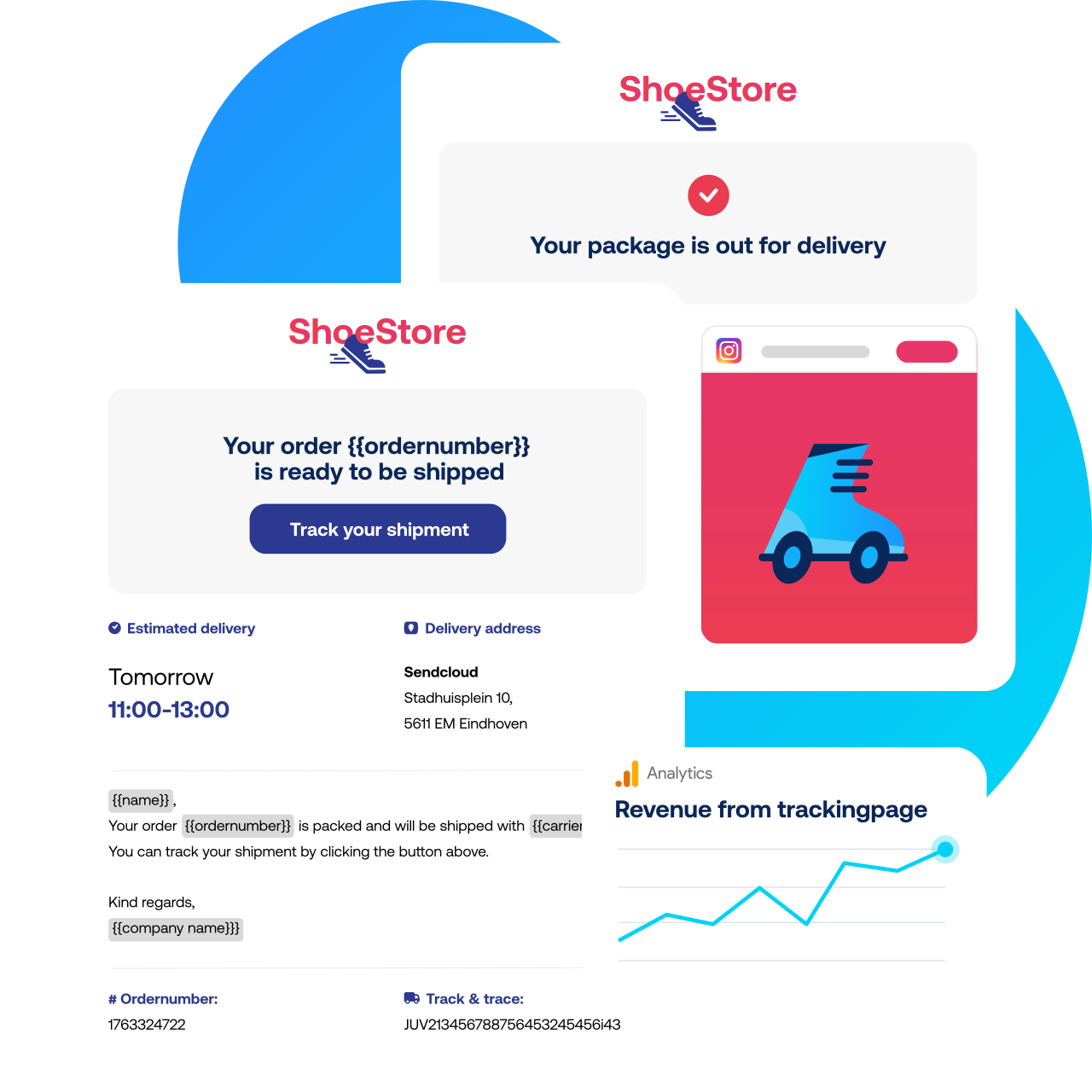
Keeping customers informed goes a long way in reducing WISMO queries. A real-time tracking page branded to your store gives customers a quick and easy way to check their order status without contacting support. By simplifying access to shipment updates, you can dramatically cut down on enquiries.
For inspiration, take UK-based Sweetie Shoppie. By implementing a branded tracking page, they cut WISMO queries by 50%.
4. Deliver notifications via multiple channels
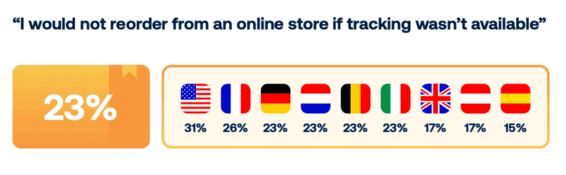
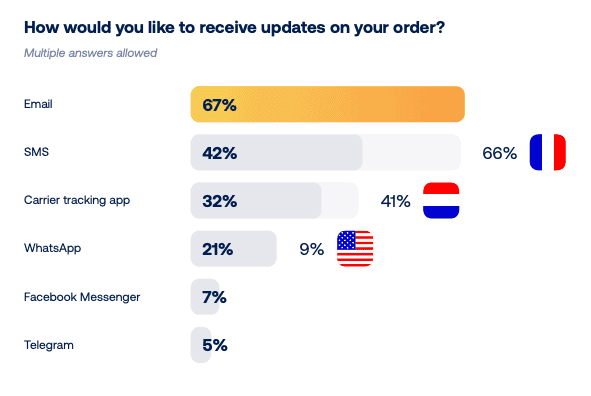
Not all customers check their email regularly, so it’s smart to use multiple channels for order updates. Combine email with SMS, WhatsApp, or even push notifications to ensure everyone gets the information they need, when they need it.
Did you know that while 67% of customers prefer email for updates, preferences vary widely? Offering choices lets customers pick what works best for them, reducing the likelihood of missed notifications—and the WISMO calls that follow.
5. Simplify courier notifications
Courier notifications often come in a jumble of technical terms and inconsistent formats, leaving customers scratching their heads. To fix this, streamline the process by consolidating updates into one clear, standardised system.
Did you know that inconsistent notifications are one of the top reasons customers feel frustrated during delivery? Even a minor delay feels worse when updates are unclear. Simplifying these messages not only reduces WISMO calls but also builds trust by showing you’re in control of the process.
Tip: If you work with multiple couriers, tools like integration platforms can help unify notifications across providers into a single, easy-to-follow format. This way, customers always get the same experience, no matter the courier.
6. Equip customer service with smarter tracking tools
Some customers will still ask, “Where’s my order?”—even with great tracking. The solution? Give your support team direct access to tracking data in a centralised system. With everything in one place, they can quickly answer questions without the back-and-forth of switching apps or digging for details.
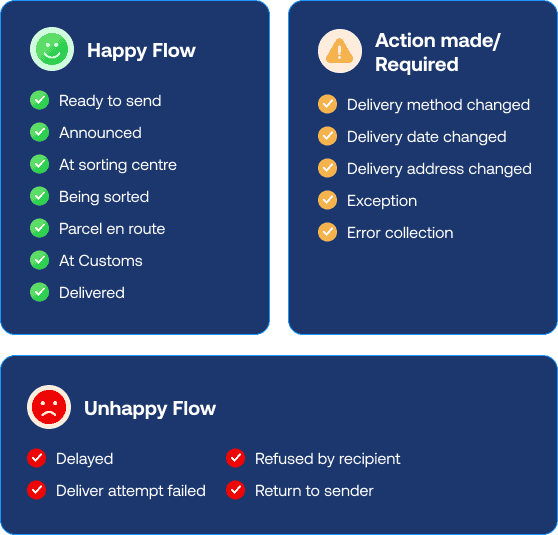
Smart systems can also flag delivery issues—like delays or missed deliveries—so your team can address problems before customers even notice.
Check out our guide to the 15 top shipment tracking software tools to find the best fit for your business.
7. Automate first-level customer service responses
Save your team’s energy for the tough questions by automating the simple ones. Chatbots and automated tools can handle routine WISMO queries, like tracking updates or delivery times. By integrating tracking data via API, your chatbot can provide real-time order status instantly, keeping customers informed without human intervention.
Take Vanessa Wu, for example. This women’s accessories brand significantly reduced WISMO queries by implementing automated responses for common shipping questions.
Pro tip: Ensure your chatbot offers clear, friendly replies and directs customers to a human agent if the issue requires deeper assistance.
8. Monitor and proactively inform customers about delivery issues
Delivery issues? They’re going to happen—it’s just part of the process. But here’s the key: don’t wait for your customers to come to you. Be proactive and let them know what’s happening as soon as you spot a delay or problem. From our experience, this simple step can reduce support tickets by as much as 75%.
Here’s how you can do it: use historical courier data to predict delays or pinpoint where things might go wrong. If you know a certain courier slows down during peak times, adjust your ETAs and notify customers early. It’s not just about fixing problems—it’s about showing customers you’ve got their back.
9. Protect your shipments
Lost, delayed, or stolen shipments can turn into major headaches—for both you and your customers. The good news? Insuring your shipments can provide peace of mind on both sides. It’s a simple way to show customers you’ve got them covered if something goes wrong.
Based on what we’ve seen, resolving claims quickly is key. For example, we’ve managed to settle 95% of claims within three days by streamlining the process. Consider setting up rules to automatically apply insurance to higher-value shipments or letting customers opt in at checkout. It’s all about minimising risk and showing you care about their experience.
10. Offer same-day or next-day delivery
Let’s face it—waiting days for a parcel feels ancient. Customers today want their orders fast. In fact, our latest Delivery Survey shows that 45% prefer delivery on a specific date and time, and 42% want next-day delivery. Offering these options shows your business is keeping up with the times and helps cut down on those dreaded WISMO queries.
Even if not everyone chooses faster shipping, just having it as an option can make your shop stand out. It’s like saying, “We get you, and we’re ready to deliver—literally.” Start small by testing these faster options in select areas or for popular products, and watch how much happier your customers get.
11. Optimise delivery performance


Author and researcher
As Global Content Manager at Sendcloud, Johanna leads content strategy across e-commerce, logistics, and shipping automation. With a background in B2B SaaS and a passion for clear communication, she creates educational resources that help over 30,000 online stores optimize and scale their shipping operations.

Subject matter expert
Anna, who co-founded Lox to tackle last-mile delivery hurdles and help businesses save time and money, was responsible for commercialising the product from the ground up. Following Lox's acquisition by Sendcloud, she's now focused on building out Support Automation, a new solution aimed at making delivery incident management smoother for everyone.
How much time can you save on shipping?

Share
Recommended For You
Enterprise
Tracking
Sendcloud’s Post-Purchase Solution, now available in the tools your team already uses
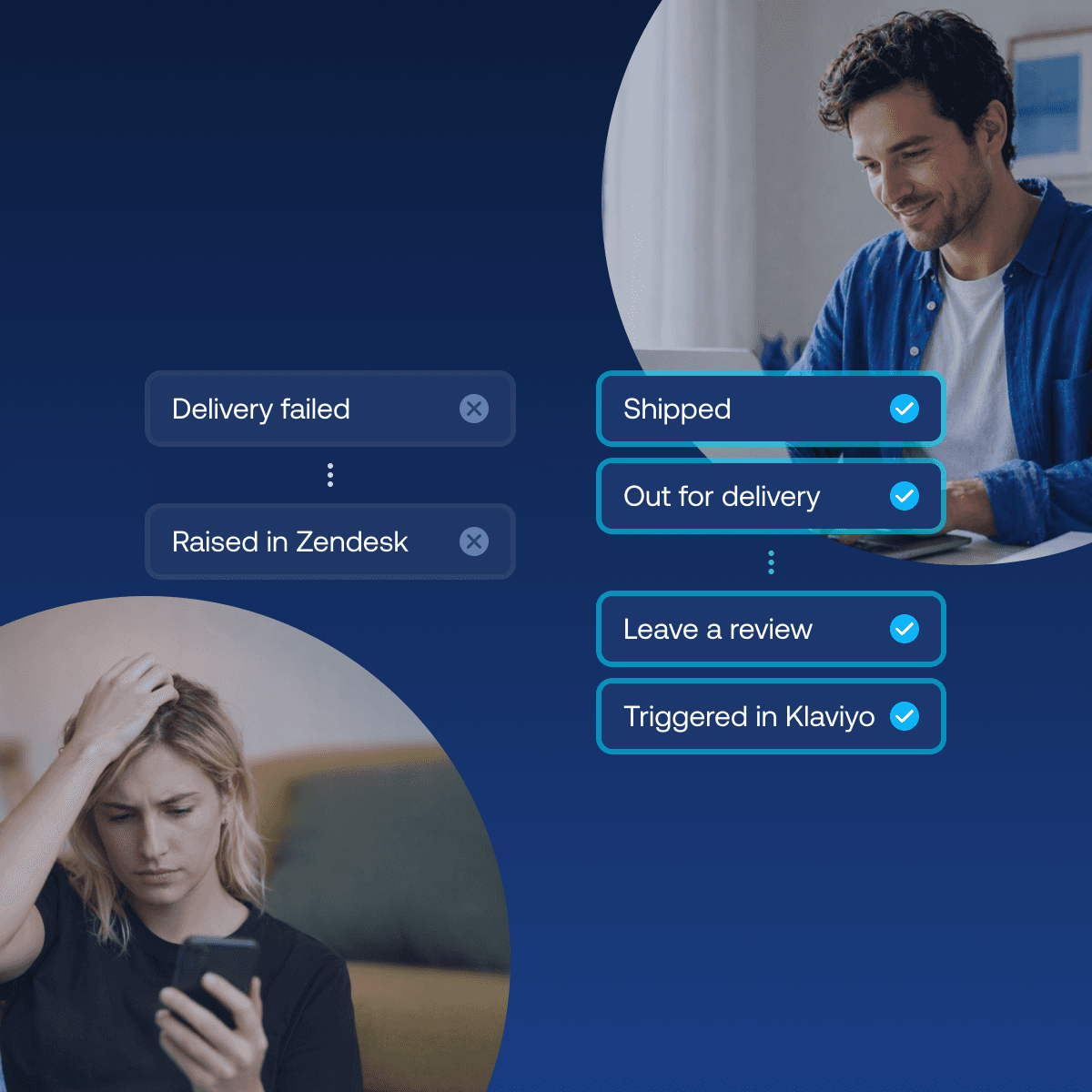
Most retailers leave post-purchase on default, letting courier notifications and out-of-the-box tracking emails speak for the brand. Sendcloud's Post-Purchase Solution changes that: delivery events now flow straight into the tools your team already uses, like Gorgias, Zendesk, Freshdesk and Klaviyo, turning tracking updates into branded touchpoints, proactive support alerts, and automated claims, no matter which courier or platform you ship with.

Shipping Intelligence
Shipping
E-commerce
Best 9 Shipping Data Analytics Software Tools (2026)
E-commerce
Enterprise