Why multi-carrier shipping is no longer a nice-to-have in European e-commerce


Last updated:
TL;DR: Relying on single-carrier shipping is a fragile set-up for European e-commerce. One strike, peak-season delay, or missed pickup can spike WISMO, claims, and lost repeat purchases, while limited delivery options hurt checkout conversion. The solution is a data-driven multi-carrier shipping strategy that matches the right couriers and delivery methods per country/region (home + OOH), backed by shipping intelligence and a centralised shipping platform like Sendcloud to standardise workflows, reduce IT complexity, and keep operations reliable as you scale.
Shipping is no longer a back-office cost line you set and forget. In 2026, delivery is a conversion lever, a margin risk, and a customer experience promise in one. With 61% of shoppers saying they would switch retailers after a failed delivery, your shipping strategy should be a top priority.
In this guide, we’re sharing expert insights and breaking down what single-courier setups quietly expose you to, why flexibility matters more than ever, and how to build a multi-carrier strategy that works end-to-end. Let’s get right to it.
Ready for some insightful details? We talked to Huib Adriaans, former founder of Tracey and currently VP Enterprise at Sendcloud. With over 10 years of experience in the e-commerce logistics space, he’s got some interesting tips and knowledge to share.
The hidden risks of single-courier dependence
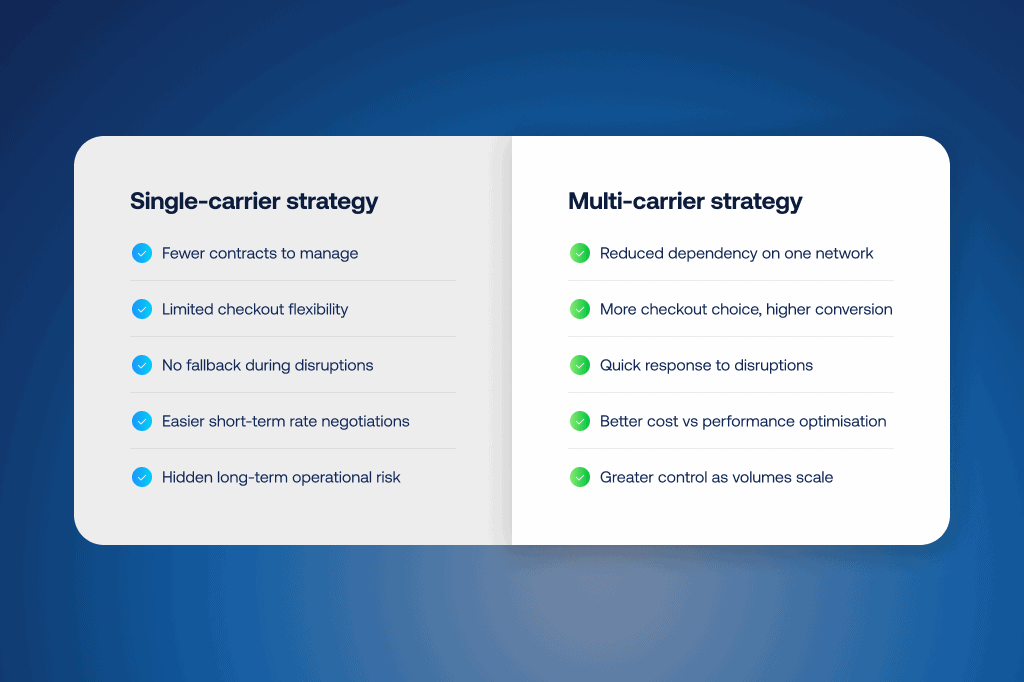
Still too many online retailers choose internal convenience over customer experience. From a business perspective, this totally makes sense. You’ve got fewer contracts to negotiate, fewer technical integrations and reduced warehouse complexity. It almost sounds like a no-brainer to stick to shipping with a single courier. Especially if this has been a successful strategy for your business.
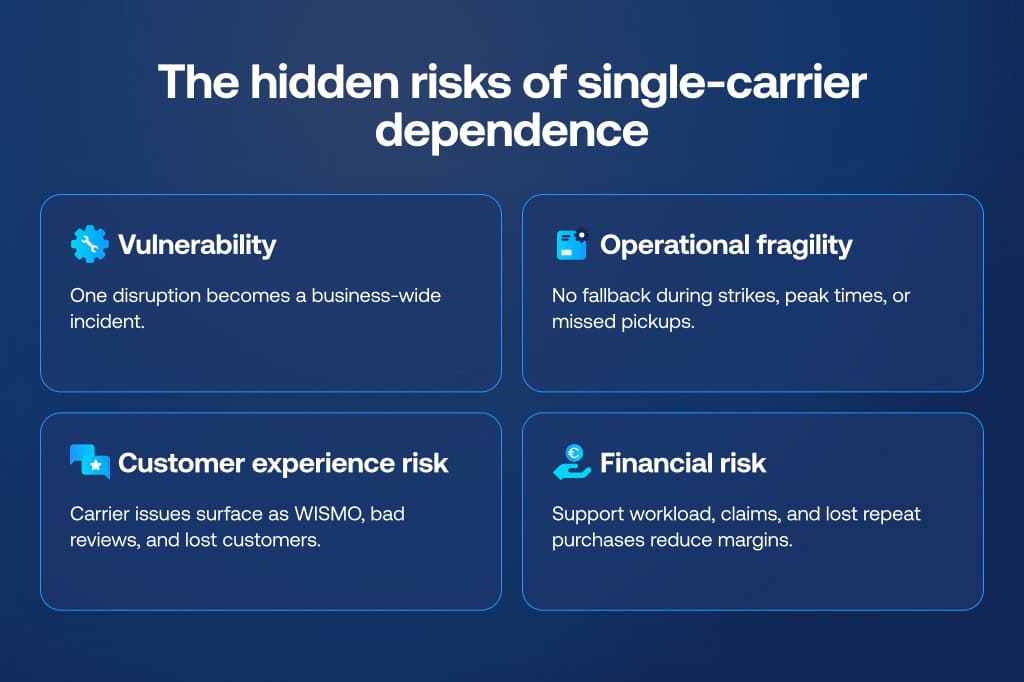
But, sticking to a single-courier strategy is a fragile setup. Here are 4 serious risks that compound when volumes grow:
Vulnerability: A single courier reduces short-term complexity, but it concentrates risks. When your whole shipping operation depends on one network, one disruption is enough to have a negative impact on delivery and your customer experience.
Operational fragility: Strikes, peak pressure, or a courier simply missing a pickup are not edge cases. They happen. And when all your volume sits with one courier, parcels stop moving. There is no quick fallback, and delays stack up fast.
Customer experience risk: Late or failed delivery turns into complaints, bad reviews, lower trust and more work for your customer service team as well. And even before they decide to order in your store, 21.9% of shoppers say they would abandon their checkout if convenient delivery options are missing.
Financial risks: Besides your shipping rates, more “Where is my order?” (WISMO) questions, manual claim handling and returns, but also missed repeat purchases add up quickly. Any rate savings disappear quickly when delivery performance drops.
Luckily, more enterprise retailers and brands are moving away from single-courier setups towards a multi-courier approach, which comes with clear benefits. Let’s look at the first step of the delivery journey, the checkout process.
The impact of courier flexibility on checkout conversions
The checkout is the first visible touchpoint between your customer and your delivery strategy. And it’s exactly where that strategy starts to pay off or work against you. Maximum flexibility means giving shoppers control over how, where, and with which courier their order is delivered.
That flexibility has a direct impact on conversion. Brands that introduce multiple couriers and delivery options often see a 20-30% increase in checkout conversion, equivalent to a 2-4 percentage point uplift. The effect becomes even stronger when shipping internationally, where expectations and preferences vary widely.
Free vs fast: the status quo in 2026
Most shoppers still prioritise cost over speed. While fast delivery matters, free or low-cost options remain the preferred option. 66.3% of customers abandon carts due to high shipping fees. 78.5% of consumers globally even prefer cheaper delivery fees, even if it means waiting longer.
But focusing only on price or speed misses a bigger shift. Data increasingly shows that delivery flexibility matters even more than speed and cost. Our Peak Season Index 2025 shows that for 63% of shoppers multiple delivery options matter more than fast delivery. For 72%, delivery needs to fit around their daily routine.
This is exactly where courier flexibility pays off. It allows you to combine a free or low-cost option with faster, paid alternatives, instead of forcing a single trade-off on every customer.
European differences
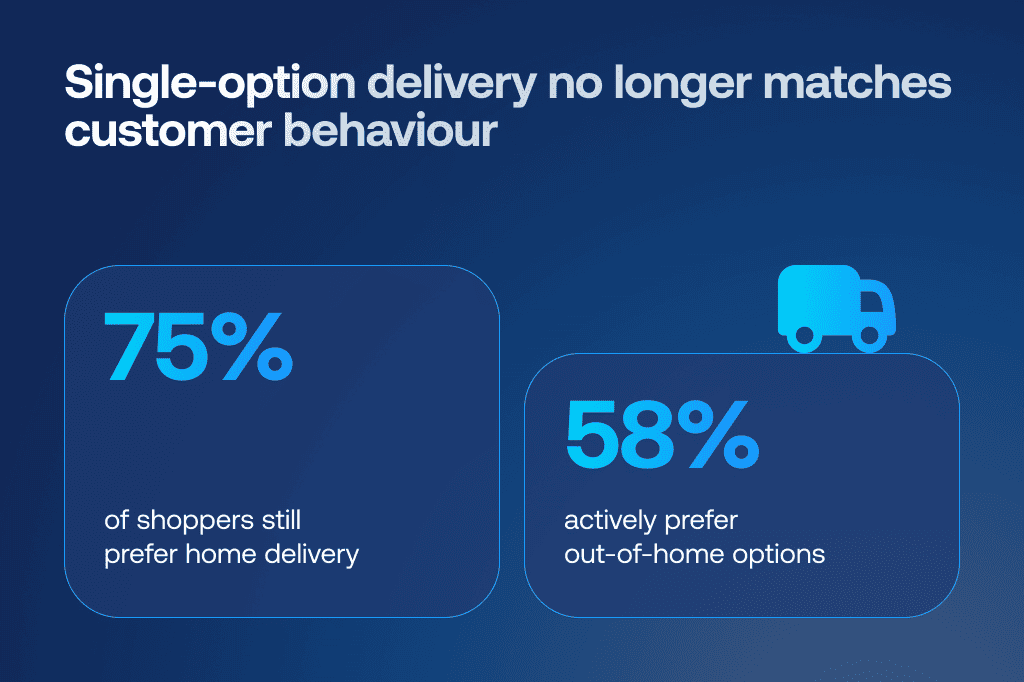
Delivery preferences vary significantly across Europe, which makes a one-size-fits-all checkout risky. While 75% of shoppers still prefer home delivery, 58% actively prefer out-of-home (“OOH”) options such as pickup points or parcel lockers.
Parcel lockers are gaining traction across Europe, with adoption nearing home delivery levels in the Nordics. This shift is expected to accelerate in other markets as well. Service points dominate in France and the Netherlands, while trusted national couriers like DHL play a decisive role in Germany. Speed expectations also differ per market, with shoppers in Germany and Spain generally being less patient.
A flexible checkout removes friction by letting customers choose what works for them, instead of forcing everyone into a single delivery option that only fits part of the audience. Meeting these preferences will decrease checkout abandonment rates. And let’s not forget about the fact that out-of-home delivery has higher delivery success rates and lower last-mile costs too.
From a conversion and cost perspective, offering multiple couriers or at least delivery methods might make complete sense. But one thing that’s holding many operations managers back when it comes to shipping with more than one courier is warehouse operations.
Optimising warehouse operations
More couriers obviously means more complexity. You need multiple sorting lanes and separate cages or pallets per courier. If processes aren’t clear, parcels might end up on the wrong trailer. But it doesn’t need to be a hassle. Most issues only arise when warehouse teams are brought in too late or when courier decisions are made in isolation.
Multi-courier shipping works best when warehouse constraints are part of the decision from day one. Here are a few other tips that’ll help you set up for success:
Limit complexity: Many retailers successfully work with 3-4 couriers per warehouse. Clear sorting rules based on courier, parcel size, or cut-off time help prevent mistakes on the floor. Visual cues, dedicated lanes, and simple scanning checks go a long way in keeping parcels on the right path.
Have a backup plan available: When a pickup is missed or a courier is overloaded, having a second or third courier already live allows teams to reroute volume within one or two days max. This becomes increasingly valuable as volumes grow.
Align warehouse teams with customer-facing teams: Support teams often see delivery issues first. Warehouse teams control execution on their end. Sharing feedback on courier performance helps refine sorting rules, courier mix, and daily workflows. Strong collaboration is what turns multi-courier shipping from a liability into an operational advantage.
With warehouse complexity under control, the real value of multi-courier shipping comes from how you design your courier mix.
The right courier mix: balancing cost, speed, and reliability
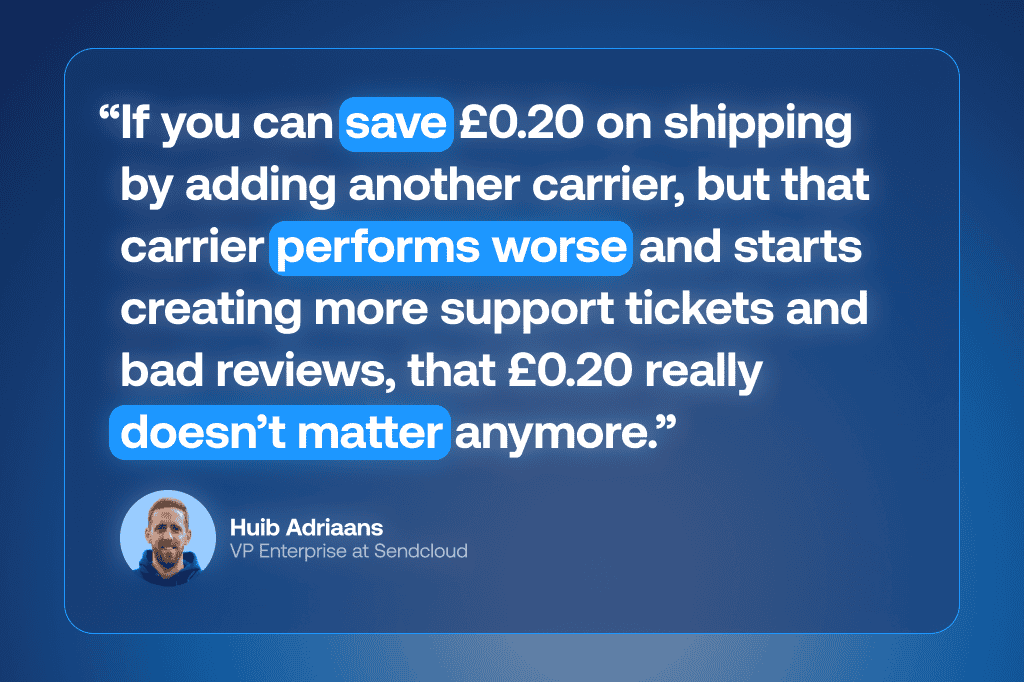
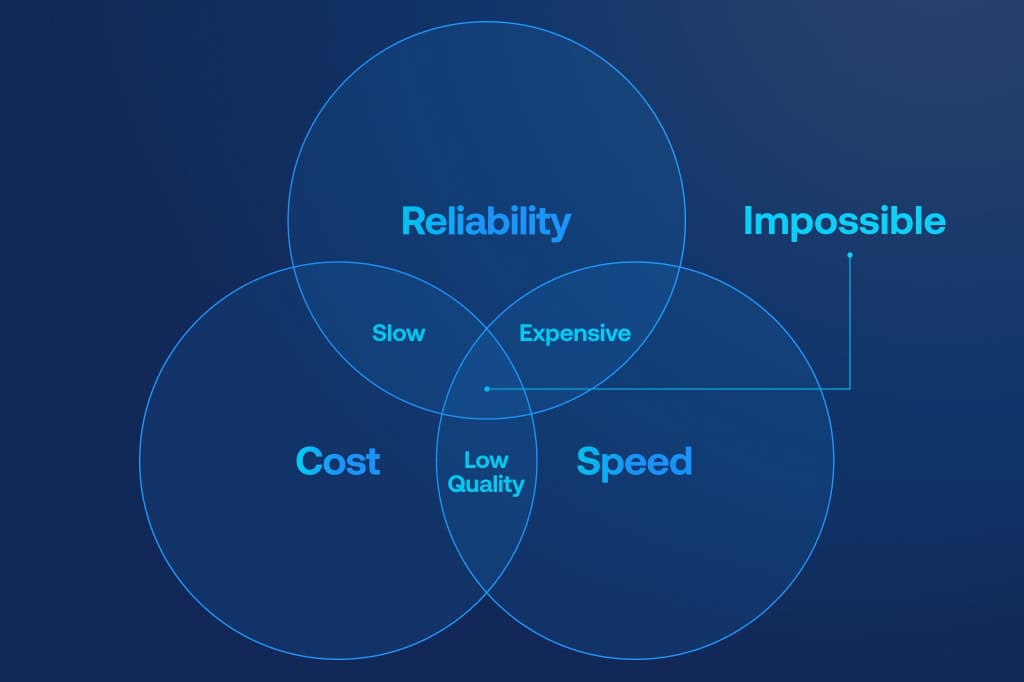
Choosing the right courier mix is rarely about finding the cheapest rate. It’s about understanding the total cost of shipping, not just what you pay per parcel. If you ship with a courier and save €0.20 on rates, but this courier delivers less reliably, it can quickly become a very expensive parcel.
You need to take into account the chances of delivery delays, resulting in higher WISMO volume. But also manual claims handling, and lost repeat purchases. At scale, those hidden costs outweigh any rate advantage.
Data-driven courier evaluation
The right courier mix should be built on data. Don’t judge couriers on a bad week or sales pitch, but look at performance over time. Compare transit times, exception rates, delivery success, and even regional performance per lane.
Want to test the impact of adding another courier to your portfolio? That doesn’t need to be difficult at all. Shift a small share of volume for a few months and measure results before making larger changes to your strategy. This allows you to balance risk and get real insights into which courier performs best for what parcel types, destination and service levels.
With Shipping Intelligence you get the data to benchmark performance, which also helps to increase negotiation power. By combining the right couriers for your business, you’re able to optimise cost, speed and reliability at the same time.
But what if something happens and you ship with multiple couriers? Let’s have a look at the impact of courier choices on support and how to optimise for that.
The impact of courier choices on support
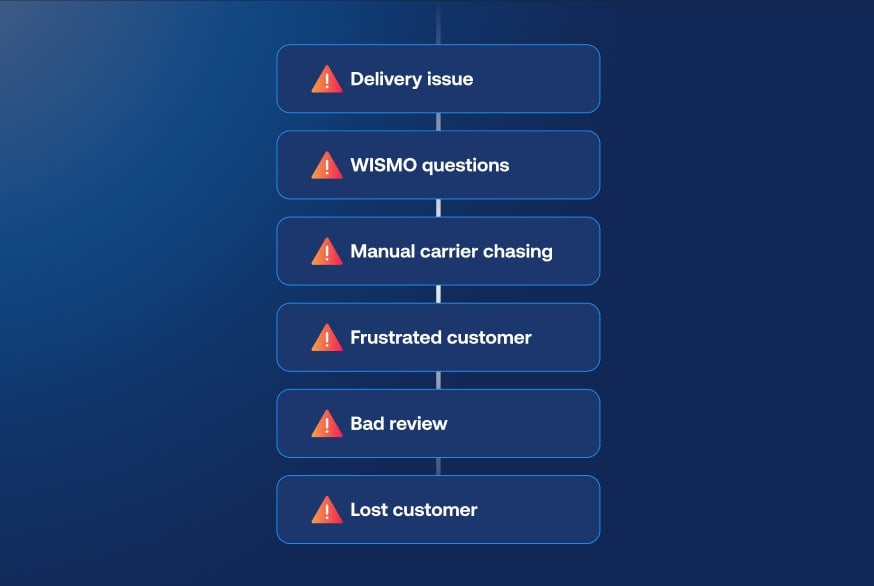
The impact of courier performance on customer support is often underestimated. Fact is, less reliable couriers generate more delivery exceptions. Unfortunately, every exception triggers work downstream. More WISMO questions, more manual follow-ups with couriers, more refunds, and more frustrated customers.
Support teams often feel the consequences of courier decisions first. WISMO questions aren’t a sign your customers are impatient. It’s a sign that expectations were misaligned or that delivery performance is inconsistent.
The good news is that you can still take ownership of delivery exceptions and create positive customer experiences.
Optimising support workflows
You might not expect it, but multi-courier setups can reduce workload for your support team when combined with standardised workflows and unified tracking. When tracking events are standardised across couriers, issues can be detected early. This allows teams to communicate proactively instead of reacting to tickets.
Curious to learn how that works? Here’s what a multi-courier shipping platform, such as Sendcloud, can do for you in terms of optimising support workflows.
Centralised claims in one overview. Instead of jumping between courier partners, you report issues, submit claims and track every ticket across your couriers in a clear overview.
Automated issue detection. The system monitors every shipment’s tracking events. You get real-time visibility across shipments, spot delays early, and automatically update your customers. A parcel loss, delay, or damage is detected and a claim will be generated with the correct courier.
Courier-specific rules are handled for you. By keeping deadlines visible, pre-filling forms with data from orders and prompting if photos or documents are missing your team doesn’t need to waste time on any claim handling.
Track progress and recover refunds faster. Claims don’t disappear into an email thread. The software logs courier replies, reminders, and outcomes, making it easy to see which claims are still open and which have been paid.
All of this sounds great on paper. But courier flexibility, automation, and data only work if the underlying integrations can actually handle the complexity.
Technical integration and architectural considerations
We said it before, dealing with a single courier is easier and could make sense from an IT perspective too. You only have to deal with one API, one label format, one tracking model. But convenience doesn’t scale and here’s why:
Each additional courier introduces its own API logic, label specifications, tracking events, and change cadence.
APIs change, error codes evolve, and new shipping services need to be implemented and tested
Direct integrations come with hidden costs and risks. Missed API updates, delayed tracking events, or broken label logic can quickly make an impact. At scale, the cost of maintaining reliability often outweighs the perceived savings of building in-house.
Choosing a platform vs. building in-house
In the end it comes down to two options. You can build and maintain direct courier connections yourself, but it asks for scarce engineering capacity on courier plumbing, instead of core product development. A centralised delivery management software solution unifies courier differences and tracking statuses, but also takes care of ongoing maintenance.
“Before Sendcloud, adding a new courier could take days of development. Now we’re set up in just two to three hours, including testing.”
— Stefan Hooft, Project Manager at Smartphonehoesjes
Every additional courier introduces more complexity and its own API logic. APIs evolve, error codes change, and new shipping services need to be implemented and tested.
A single integration will unify courier differences and tracking statuses, take care of ongoing maintenance and continuously optimise shipping processes.
Compare the best multi-carrier platforms here!
Implementation roadmap: build a resilient multi-carrier strategy
E-commerce is always evolving and the times when shipping was just a hygiene factor have long gone. You need to offer the best customer experience in order to make customers happy and increase chances they’re coming back. Implementing a multi-carrier strategy should be at the top of your list, if it isn’t already.
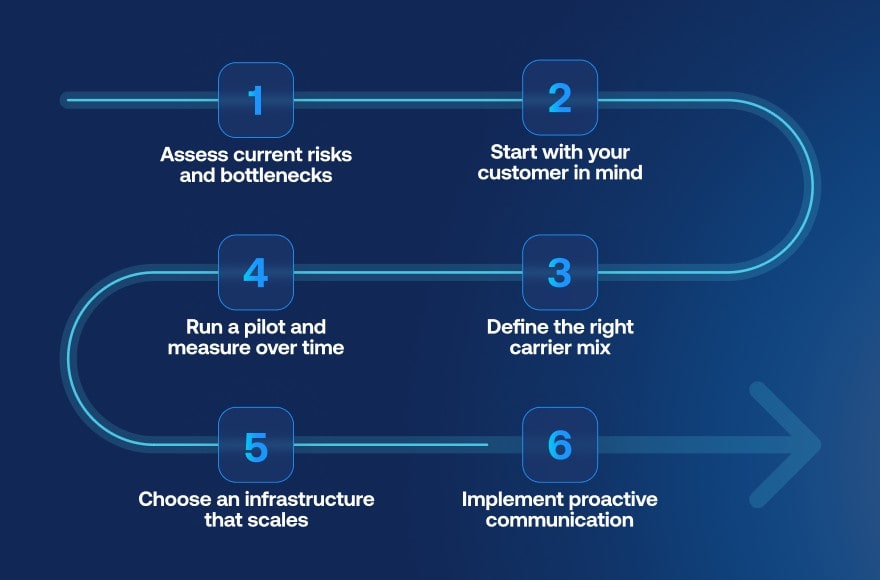
While it can feel like a hassle to implement, it doesn’t really need to be. Here’s an easy-to-use roadmap to strategically plan your multi-courier shipping setup.
1. Assess current risks and bottlenecks
Map where your courier dependency creates exposure today. Look into delivery failures, peak-season pressure, missed pickups, support ticket volumes, and IT maintenance effort. Forecast your shipping volume and decide whether your current courier setup is ready for the future.
2. Start with your customer in mind
Will you enter new markets? Do you plan to sell different types of products? These decisions influence what customers are expecting. Prioritise customer preferences over internal convenience. Then decide upon free vs. fast, home vs. out-of-home or ideally both, and preferred couriers across regions.
Make sure consumer preferences and insights guide your next decision. Want to know more about what shoppers prefer per market? Our E-commerce Delivery Compass is here to help.
3. Define the right courier mix
Defining the right courier mix only works if you can see beyond isolated metrics. With Shipping Intelligence you can evaluate couriers based on how they perform in real conditions. Make sure to compare delivery performance, transit times, exceptions, returns and costs.
By using benchmarks, you can discover how your couriers perform relative to similar shipments across the Sendcloud network. This allows you to assign the right courier to the right parcel and destination, shift volume away from underperforming couriers, test new couriers with success criteria and increase negotiation power with data.
The goal is to balance cost, speed and reliability, not purely optimise for rates.
4. Run a pilot and measure over time
When testing new couriers, you don’t want to switch everything at once. Introduce an additional courier on a limited volume basis and monitor results. You need to give couriers a fair amount of time, so make sure to run a test for at least a whole quarter.
During this quarter you can measure transit times, delivery success rates, exceptions, conversion impact, and support workload. Get insights on trends rather than a single bad week.
5. Choose an infrastructure that scales
Ensure your technical foundation can support implementing multiple couriers, without IT being a bottleneck. Adding new shipping methods to your checkout or implementing new couriers shouldn’t break any processes. With delivery management software that offers a centralised courier integration you reduce capacity needed from your engineering team.
6. Implement proactive communication with your customers
Ready to ship with multiple couriers and even diversify your strategy over multiple countries? Then make sure you have access to standardised tracking statuses so you can detect delays and shipping exceptions early. By knowing exactly what’s happening to each parcel, you can proactively inform customers before they are aware something is off.
Want to take full charge of shipping issues? Then standardise claim processes and issues handling across couriers with Support Automation. This reduces WISMO, lowers support costs, increases refunds and protects both customer trust and your margins when things go wrong.
Turn shipping into a competitive advantage at scale with Sendcloud
Shipping parcels might be one of the most frustrating parts of your operations. We get that. That’s exactly why Sendcloud has been built for this challenge since 2012. It’s time to take back control of the customer experience and stop letting delivery be the reason for 1-star reviews.
Reliable courier connections are only one part of the equation. With Sendcloud Enterprise, the entire delivery journey is connected. From conversion-driving checkout options to international label creation, a broad portfolio of 170+ couriers, unified courier data and intelligence, and automated claims handling.
Say goodbye to complex logistics processes and let us help you gain control over every step of delivery. Request a free demo and our shipping experts will show you how to reduce complexity, optimise logistics, save costs and consistently deliver on customer expectations.


Author and researcher
Huib Adriaans is the VP of Enterprise at Sendcloud and the founder of Tracey. With 10+ years in the logistics space, he leverages shipping intelligence and data-driven insights to help merchants reduce "Where is my parcel?" enquiries and build world-class delivery experiences.

Subject matter expert
Bart Michiels is Product Lead at Sendcloud with expertise in parcel carrier performance, shipping technology, and logistics operations. He shares data-driven insights to help online retailers optimize their carrier strategy and delivery experience.
How much time can you save on shipping?

Share
Recommended For You
Enterprise
Tracking
Sendcloud’s Post-Purchase Solution, now available in the tools your team already uses
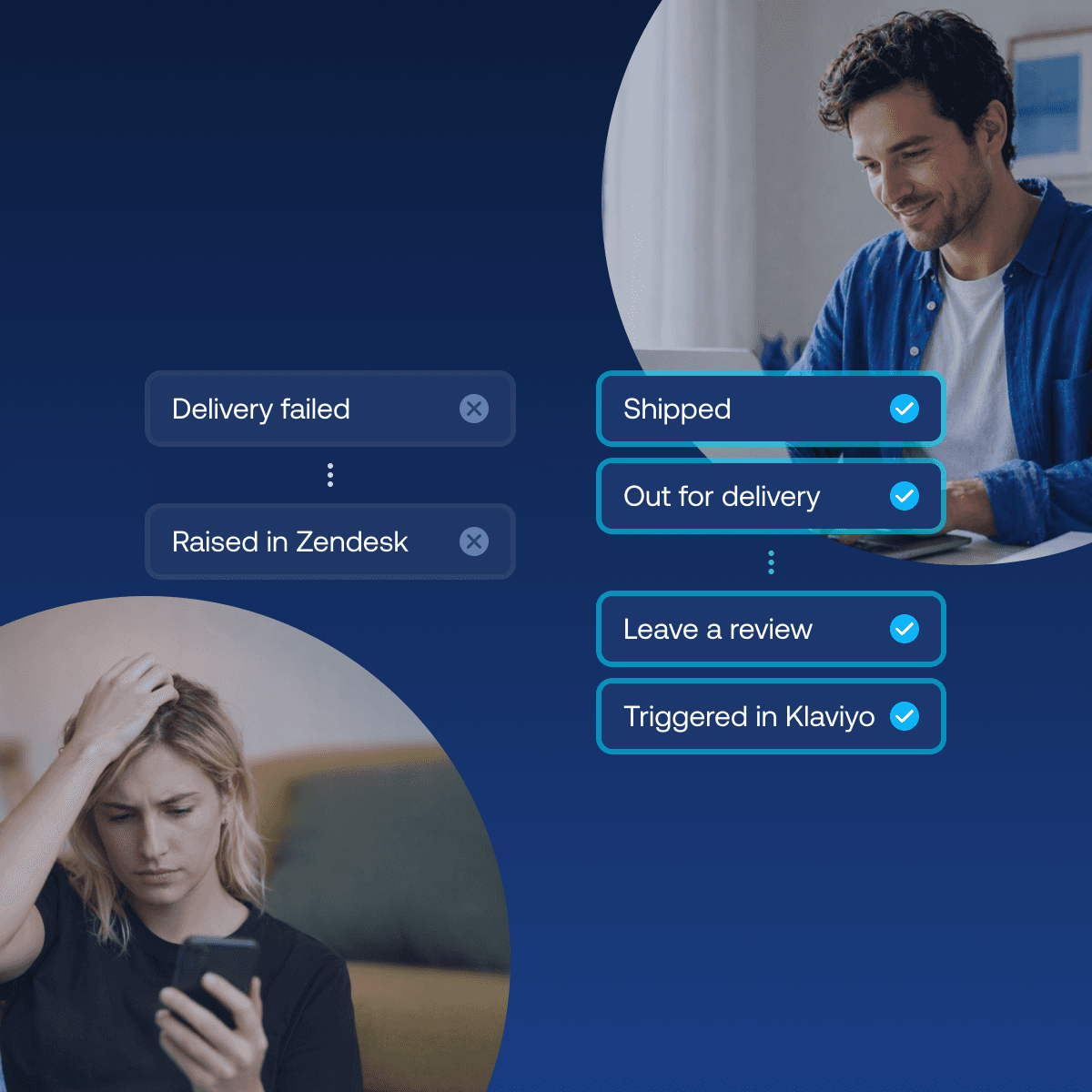
Most retailers leave post-purchase on default, letting courier notifications and out-of-the-box tracking emails speak for the brand. Sendcloud's Post-Purchase Solution changes that: delivery events now flow straight into the tools your team already uses, like Gorgias, Zendesk, Freshdesk and Klaviyo, turning tracking updates into branded touchpoints, proactive support alerts, and automated claims, no matter which courier or platform you ship with.

Shipping
Integrations
Best Shopify shipping apps: compare features, pricing & automation
Compare the best Shopify shipping apps for automation, couriers, labels, tracking, returns and international shipping. Find the right app for your store.

Shipping Intelligence
Shipping
E-commerce