What flexible delivery options do shoppers want at checkout?


Last updated:
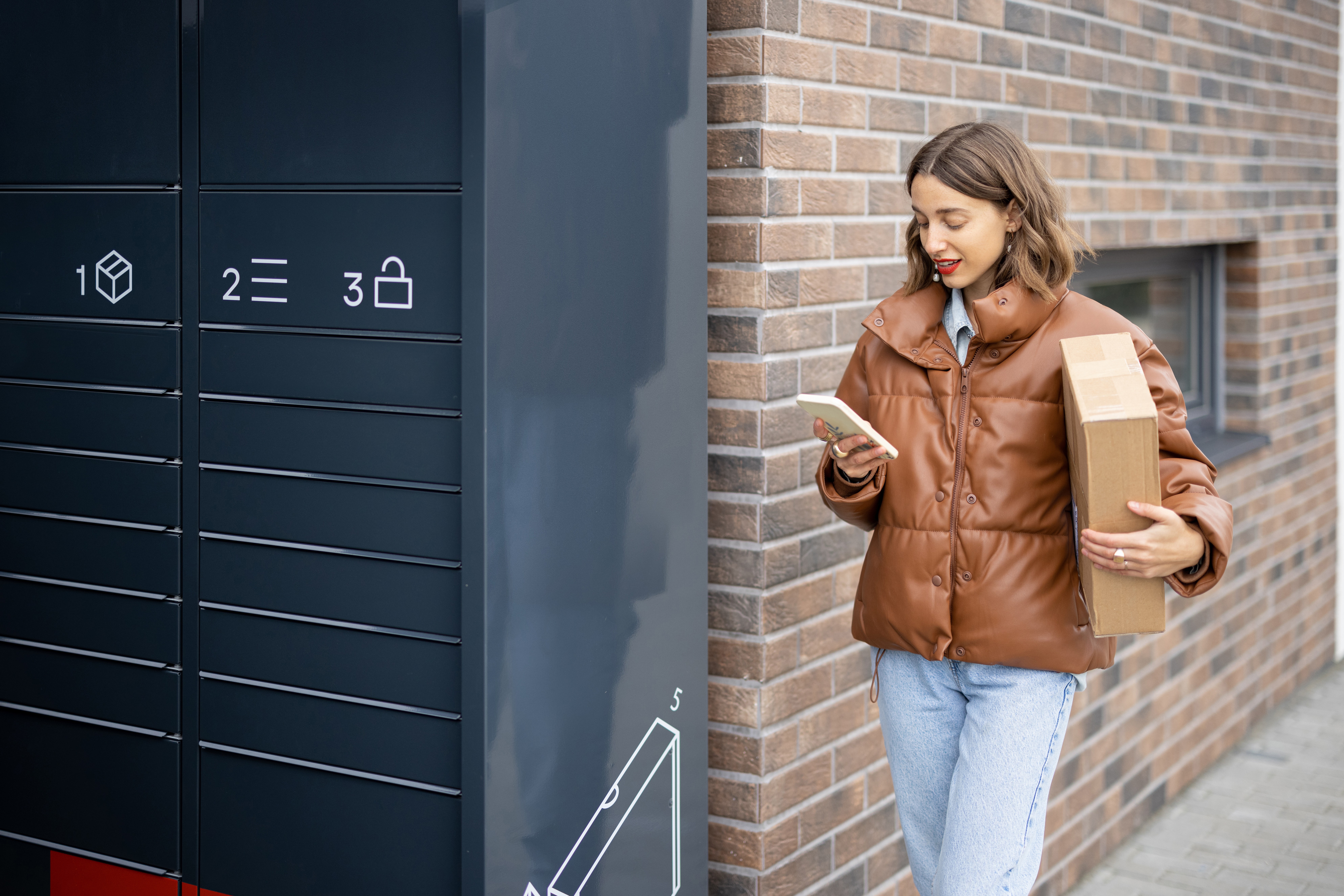
50.51% of European shoppers are more likely to complete a purchase when they can choose from flexible delivery options at checkout. Meanwhile, 42.87% say they feel frustrated when they're limited to just one carrier. Those numbers tell the same story from two different angles: shoppers want choice.
The findings come from Sendcloud's E-commerce Delivery Compass 2026, based on responses from 8,000 consumers across eight European markets. The message is clear: delivery options displayed at checkout influence whether shoppers complete their purchase. And the gap between a checkout that converts and one that frustrates often comes down to the same thing: giving shoppers the flexibility to choose the delivery option that works best for them.
But which delivery options matter most? And how can retailers offer more choice without adding operational complexity?
Let's look at what the data reveals!
Key findings |
|
Why delivery is still driving shoppers away at checkout
Before we look at how to fix it, let’s get clear on the problem.
In the past three months, 48.17% of European shoppers abandoned a cart due to delivery reasons. In Spain, that number rises to 55.73%. In the UK, it’s 54.52%. And even in Germany and Austria, where abandonment rates are lower, more than 4 in 10 shoppers still left because something about delivery didn’t work for them.
According to the data, the main reasons are:
Unexpected delivery costs (40.70%). Shoppers in Italy (45.49%), the UK (42.51%), and Austria (42.68%) are the most sensitive.
Delivery is slower than expected (27.06%). Spain is the most speed-sensitive market, at 35.37%.
Lack of flexible delivery options (23.06%). This includes options like changing the delivery date or address and not a convenient delivery location available.
Here’s the interesting part: the top 2 reasons aren’t only about delivery, but about how delivery is shown at checkout.
Unexpected costs often appear too late. Delivery times are sometimes vague, missing, or hard to compare. So what looks like a logistics problem is often an information problem. And that makes it much easier to fix.
What flexible delivery options do shoppers actually want?
When we asked European shoppers which delivery options they wanted to see at checkout, one thing became clear: a single delivery option is no longer enough.
Standard home delivery remains the most popular choice, accounting for 30.60% of checkout preferences globally. But that also means almost 70% of preferences go to other delivery options. Home delivery is still important, it’s just no longer the only option shoppers expect.
Here's where the rest of that demand goes:
Speed matters, but shoppers want flexibility too
Delivery speed accounts for 27.20% of checkout preferences, split across:
Next-day delivery (10.69%)
Same-day delivery (7.74%)
Nominated-day delivery, where shoppers choose a delivery date (8.77%)
Combined, these options are almost as popular as standard home delivery.
The UK stands out in particular. There, 16.05% of shoppers prefer next-day delivery, reflecting growing expectations for fast, predictable delivery.
Sustainability matters when it doesn't add cost
Sustainable delivery options account for 3.91% of checkout preferences.
At first glance, that may seem low. But the wider picture tells a different story: 66.38% of shoppers say they would choose a greener delivery option if it didn't cost extra.
Sustainable delivery may not drive conversions on its own. But when offered at no additional cost, it can help shoppers choose your brand over another.
Out-of-home delivery is now mainstream
Out-of-home (OOH) delivery options account for 26.83% of checkout preferences, including:
Service point delivery (10.27%)
Parcel lockers (9.16%)
Local collection points (7.40%)
These are no longer niche delivery methods. More than one in 4 checkout preferences now fall into the OOH category. Out-of-home delivery has become part of how millions of European shoppers receive their orders. And as adoption grows, so do expectations at checkout.
Out-of-home delivery is becoming as common as home delivery
Nearly half of European shoppers already use out-of-home delivery in their daily lives. That makes OOH a win-win for retailers: it's a delivery option shoppers increasingly expect at checkout, and it's often cheaper to fulfill than home delivery. That means lower last-mile costs without limiting customer choice.
The data shows just how common OOH delivery has become.
When asked which delivery locations they had used in the past 3 months, European shoppers were almost evenly split: 54.66% used home delivery, while 45.34% chose an out-of-home option, including service points (17.97%), parcel lockers (15.49%), and local collection points (11.88%).
A few years ago, out-of-home delivery was still gaining traction. Today, it's essentially half the market. Shoppers have already adapted their routines. They know where their nearest parcel locker is. They collect orders on the way home from work. And they no longer expect every parcel to arrive at their doorstep.
If nearly half of your customers already use OOH delivery methods, a checkout that only offers home delivery creates unnecessary friction. You're asking shoppers to switch away from a delivery habit they've already adopted. And at checkout, friction can cost conversions.
Price beats speed, but transparency beats both
When shoppers have to choose between free delivery and faster delivery, free wins 71.76% of the time.
The preference is especially strong in France (85.71%), Italy (84.88%), and the Netherlands (80.81%). Even in Belgium and Austria, where shoppers are more willing to pay for speed, nearly two-thirds still choose the free option.
The reason is most shoppers are happy to wait if it saves them money. In fact, 75.88% of European shoppers say they're willing to wait longer to avoid delivery fees.
But here's the important nuance: they're not willing to wait without knowing when their order will arrive. Across Europe, 76.05% of shoppers prefer online stores that show a clear delivery date at checkout. And in some markets, that preference is even stronger: France (89.90%), Italy (84.76%), and the UK (83.60%).
For retailers, this is one of the simplest ways to improve the checkout experience. A specific delivery date turns an uncertain estimate like "3–5 business days" into a clear expectation: "Arrives by Thursday." That small change helps shoppers feel confident about choosing the slower, cheaper delivery option.
Without that reassurance, even free delivery can feel like a compromise. And uncertainty at checkout is often where shoppers decide not to buy.
4 ways to offer more flexibility at checkout
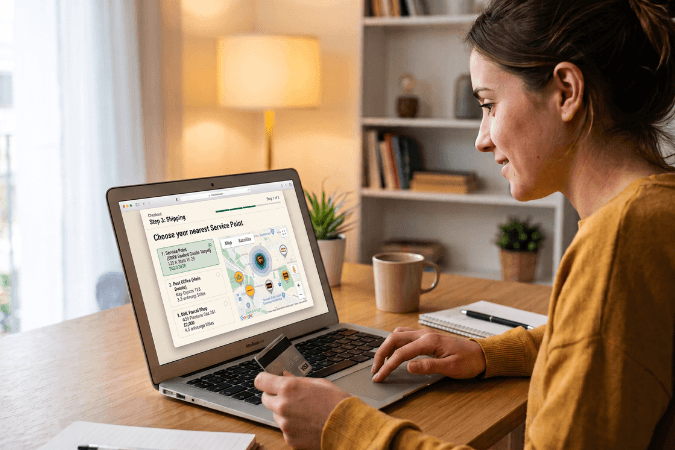
The good news is you don’t need to redesign your entire delivery operation to give shoppers more flexibility. The data points to 4 improvements that can make a real difference at checkout.
1. Surface the full delivery cost before the final step. Unexpected costs are the leading cause of delivery abandonment. The easiest way to solve it is to show delivery fees as soon as shoppers choose a delivery option, not at the final payment step.
2. Offer at least three distinct delivery options. Home delivery, one out-of-home alternative, and one speed upgrade. That combination covers the majority of shopper preferences without overcomplicating the checkout.
3. Show a specific delivery date, not a range. It's the single most requested change in the survey and one of the strongest predictors of purchase completion. Whenever possible, show an expected delivery date for every option, including free standard delivery.
4. Localise by market, not by region. The right out-of-home format differs significantly by country. In France and the Netherlands, service points are widely used. In Italy, Germany, and the UK, parcel lockers tend to be more popular. In Spain, local collection points play a bigger role. That means the best checkout experience isn't always the same across Europe. The closer your delivery options match local shopping habits, the easier it becomes for customers to find an option that works for them.
Most retailers are losing sales at the checkout screen
Most of the revenue that disappears at checkout is lost before a single parcel leaves the warehouse. Shoppers abandon when they see one option, no delivery date, and a surprise fee. That's a checkout problem, and unlike most logistics challenges, it's fixable today.
The findings from the E-commerce Delivery Compass 2026 point to a clear takeaway: shoppers are asking for better delivery experiences. That means show them a delivery date, be upfront about costs, give them a genuine choice of options, and localise because treating Europe as a single market is an easy way to underperform in all of them.
Want to see the full picture? Download the E-commerce Delivery Compass 2026 for the complete data across all 8 markets, or explore how Sendcloud's checkout solution helps retailers offer the right delivery options to every shopper.


Author and researcher
Marina Fernández leads the Communications craft, creating e-commerce, B2B, and SaaS content. She ensures that every piece of content is of the highest quality and effectively meets its intended purpose.

Subject matter expert
Kate is part of the Product Marketing team at Sendcloud, focused on helping merchants simplify shipping, scale operations, and turn delivery into a competitive advantage.
How much time can you save on shipping?

Share
Recommended for you

Shipping Intelligence
Shipping
E-commerce
Best 9 Shipping Data Analytics Software Tools (2026)

VAT on shipping costs: how does it work?
Why do you pay VAT on shipping costs? Which VAT rate should you use, and how do you pass it on smartly to your customer? Find the answers in this guide.

5 tips to speed up your online store for more conversions
Speeding up your online store is essential for more conversions. Read 5 tips here that help you improve your site speed!