The true cost of post-purchase: what e-commerce shipping really costs enterprise retailers


Last updated:
Most enterprise retailers optimise shipping costs once a year, during courier renegotiations, and leave the rest on the table. Surcharges add 15-30% on top of negotiated rates and are nearly impossible to audit manually. Around 35% of CS tickets are WISMO contacts that proactive tracking could eliminate. Roughly 5% of shipments hit an exception, and most of those refunds are never claimed. The retailers closing the gap are the ones treating post-purchase as a data problem, instead of an ops afterthought.
Shipping costs look like a single line item. In practice they're a web of hidden surcharges, wasted CS hours, and unclaimed refunds that erode your margins every month. Which deserves strategic priority and here’s why.
Post-purchase is no longer a back-office cost line you set and forget. In 2026, delivery is a margin lever, a retention driver, and a customer experience promise in one. With surcharges quietly adding 15 to 30% on top of negotiated rates and around 35% of support tickets being "where is my order" questions, the real cost of shipping is far higher than your rate card suggests.
In this guide, we're breaking down where enterprise retailers are actually spending on post-purchase, where they're losing money without realising it, and how to turn delivery from a cost centre into a margin lever you control.
Why post-purchase is now too expensive to ignore
For most of its history, e-commerce shipping was treated as an operational afterthought. Something the warehouse handled once the “real” work of marketing, merchandising, and conversion was done. That era is over.
Market developments have made delivery and post-purchase processes more important than ever. Courier rates from FedEx, UPS, DHL, and regional players have risen steadily over the past two years. At the same time, consumers became way more demanding when it comes to delivery.
Online shoppers expect transparency, flexibility, and multiple delivery options at checkout. Research consistently shows that shoppers will abandon a cart, because the delivery options don’t match their preferences.
Meanwhile, retailers face heavy competition from both local players and international giants with the best shipping experience from A-Z. Meaning, a post-purchase experience is no longer a cost center you can afford to ignore. It’s increasingly becoming a competitive moat.
But treating post-purchase as a competitive advantage starts with understanding what it actually costs you.
The actual shipping costs: rates, shipping surcharges, and courier selection
Most retailers have a reasonable handle on their base courier rates. What they consistently underestimate is everything that gets added on top, and how difficult it is to compare true costs across couriers without the right tooling.
Surcharges as gap between your rate and your invoice
You might not be aware of the gap between your base rate and what you actually pay at the end of the month. The culprit is shipping surcharges. There are plenty of surcharges, such as fuel surcharges, peak season surcharges, dimensional weight adjustments, and residential delivery fees.
These line items often add 15-30% on top of the negotiated rate. And they vary wildly between couriers. A shipment from France to Spain might look cheapest with Courier A based on the base rate, but Courier B could end up costing less once you factor in surcharges for oversize packages or remote delivery zones.
The problem is compounded during peak season. Couriers apply temporary surcharges around Black Friday, Christmas, and other high-volume periods, precisely when your shipping volume and your exposure are highest. Retailers who haven’t modeled these surcharges into their cost forecasts get hit with invoices that blow past their logistics budget.
The courier data problem behind surcharges
The deeper issue is visibility. Most retailers can't see their surcharges clearly enough to act on them. When you work with two or three couriers, each uses different terminology for similar charges. What one courier calls a “remote area surcharge,” another labels a “delivery area extension fee.” Comparing apples to apples across couriers becomes a manual spreadsheet exercise that nobody has time for.
Think about the impact at scale when shipping 100,000 orders a month. This results in invoices with 100,000 line items for base rates, plus two to three surcharge rows per shipment. That’s a 300,000-row document. Per courier, every month.
Manually auditing that data is functionally impossible, which means optimisation decisions come down to gut feel, with no hard data behind them. This is the single biggest blocker to courier optimisation. Most retailers choose suboptimal couriers, because they’re unable to compare the actual total cost across lanes, package types, and time periods.
Platforms with dedicated Cost Analytics close this gap. When you can break down spend by courier, lane, and method and surface hidden surcharges automatically, courier negotiations shift from annual guesswork to data-backed conversations.
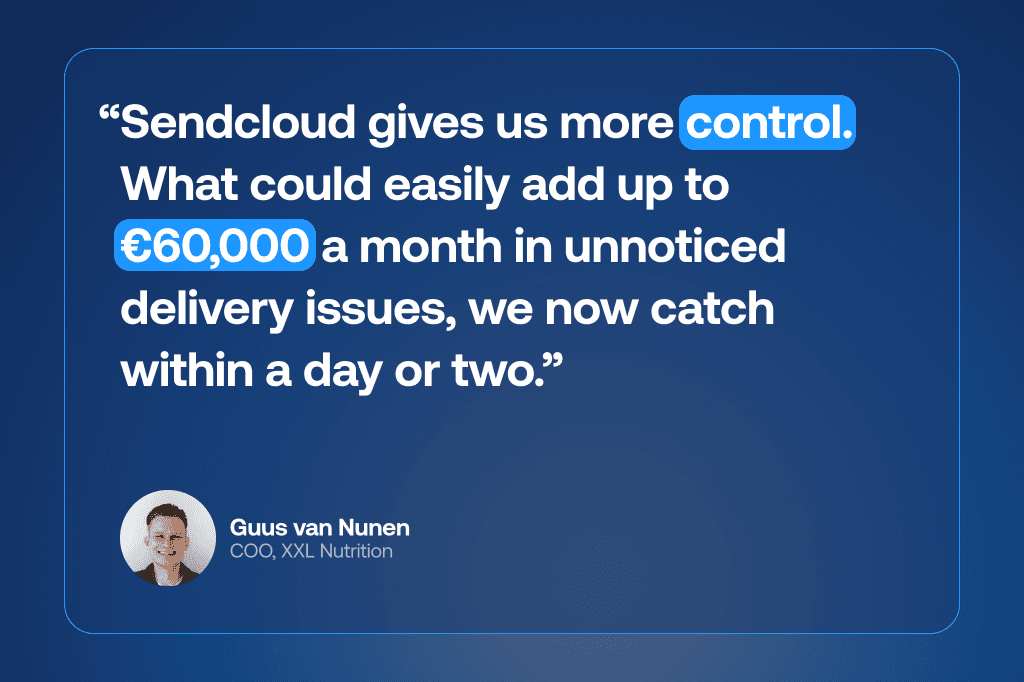
XXL Nutrition’s COO Guus van Nunen highlights the impact: “Before, checking shipping invoices took hours. Now I get a real-time overview of costs and catch discrepancies right away.”
Curious to read more about it? Discover here how a centralised shipping setup helped XXL Nutrition cut dev time and minimise support tickets.
But rates and surcharges are only half the story. The costlier half never shows up on an invoice.
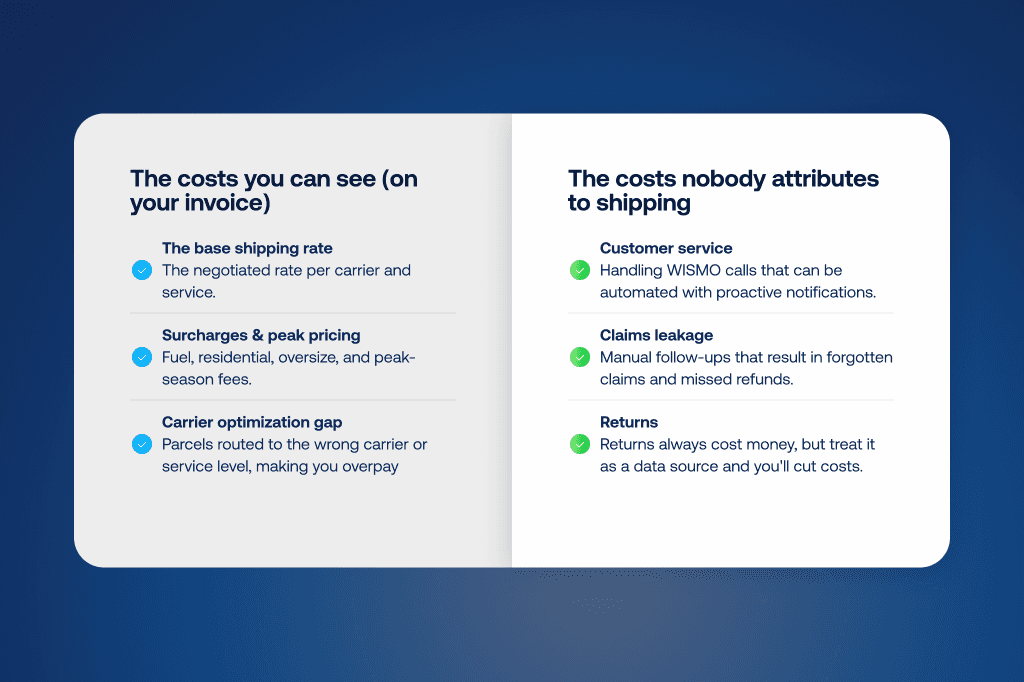
3 hidden cost areas of post-purchase: CS overhead, claims leakage, and returns
Below the surface of your courier invoices sits a second layer of cost that rarely shows up in the logistics budget: the hours your CS team spends on delivery issues, the refunds you’re entitled to but never collect, and the return handling that compounds both. These are the costs most retailers aren’t measuring at all.
1. Customer service: the hidden shipping tax
Customer service teams absorb an enormous share of post-purchase cost, and most of it is avoidable. Industry data suggests that roughly 35% of inbound CS tickets are WISMO contacts. They’re information gaps caused by a lack of proactive communication.
Here’s what typically happens: a customer’s package is delayed. The retailer’s CS team has no more information than the customer does. They’re looking at the same courier tracking page. The agent copies the tracking status, relays it to the customer, and the ticket sits open until the package moves.
Meanwhile, the customer is frustrated, the agent has added no real value, and the interaction shows up as a negative review that shadows all the hard work the brand did before the sale.
The fix is well-understood but rarely implemented at scale: proactive notifications that flag delivery exceptions before the customer notices. When a package is stuck at a sorting facility or rerouted, an automated message along the lines of “Your delivery is delayed, here’s the new expected date” eliminates the ticket before it’s created.
Retailers who have implemented branded, proactive tracking see 30-50% fewer delivery-related support contacts. The technology exists. The gap is organisational, because shipping operations and CS teams often sit in different departments with different tooling, and nobody owns the handoff.
Where automation helps and where it doesn’t
The highest-value application of automation is in the administrative back-end that agents currently handle manually: opening courier claims, filing investigation requests, tracking claim status across courier portals, and following up on refunds. It’s repetitive work, very time-consuming, and basically adds zero value to the customer relationship.
Where you still need humans is in the moments that matter:
A high-value customer whose high-value order was damaged
A repeat buyer who has had two bad experiences in a row
A delivery failure that requires judgment and empathy rather than a templated response
The end goal is to free your CS agents from carrier admin so they can focus on the interactions that build loyalty. Results back it up. Enterprise retailers using automated claims workflows report up to 60% less time spent handling delivery claims, with 8x more delivery issues resolved compared to manual processes.
2. Claims leakage: the money you’re entitled to but never collect
Around 5% of all shipments encounter some form of exception: late delivery, lost package, damage, incorrect delivery location. Not all of these are the courier’s fault, and not all are eligible for refunds. But a significant portion are, and most retailers leave that money on the table.
The typical patterns are as follows. A CS agent opens a claim with the courier. The courier’s claims process is long, requires multiple steps, and demands specific documentation. The agent, already under pressure to handle the next ticket, opens the claim but never follows up. The claim expires and the refund is never collected.
One enterprise retailer shipping high-value goods averaging €2,000 per order discovered that by automating both the opening and follow-up of courier claims, they recovered an average of €0.67 per shipment. On hundreds of thousands of monthly shipments, that adds up to a substantial six-figure annual recovery.
Proactive issue detection made the biggest difference. It allows you to automatically identify late or lost shipments that no customer complained about, and filing claims for those. Because most customers don’t contact support over a one- or two-day delay. They just silently downgrade their opinion of your brand. Meanwhile, the courier owes you a refund you never claimed.
3. Returns: the costs you can influence but not eliminate
Returns are distinct from claims in the fact that they’re a normal part of the customer journey. Returns aren’t exceptions. But the good news is that they’re the largest controllable costs in post-purchase.
The current industry debate centres on whether customers should pay for returns. Charging for returns reduces impulsive ordering behaviour (fewer “buy five sizes, return four” shoppers), but it can also suppress conversion.
A growing number of retailers are finding a middle ground: instead of a cash refund, they offer store credit or a coupon for the next order. The money stays within the business, and the customer has an incentive to return rather than chargeback. It’s a smart retention play disguised as a returns policy.
Regardless of your approach, returns cost money. In reverse logistics, in restocking, in CS handling time. The retailers who manage this well treat returns as a data source. Which products have the highest return rates? Which size guides are underperforming? Which couriers damage goods most often in transit? That data feeds back into purchasing, merchandising, and courier selection decisions.
How to start reducing post-purchase costs
The good news is that post-purchase cost reduction doesn’t require a full platform overhaul to get started. There are three discrete levers that enterprise teams can pull, and they can be pursued roughly in sequence based on effort and return.
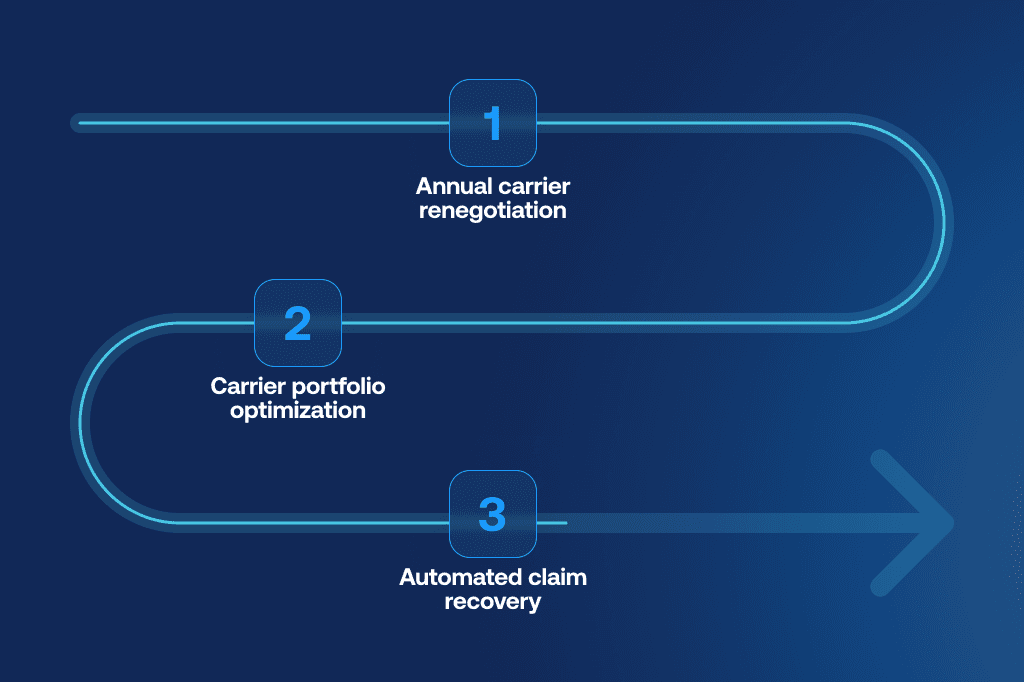
1. Annual courier renegotiation
Once a year, you sit down with your couriers, review volumes, and negotiate for better rates. It’s table stakes, necessary but insufficient on its own. The limitation is that you’re negotiating blind if you don’t know your true cost breakdown by lane, package type, and surcharge category.
Before you sit down, come prepared with three things: your true cost per lane (not just the headline rate), your surcharge breakdown as a share of total spend, and your volume trend over the last 12 months.
When using Sendcloud, Cost Analytics breaks your spend down by courier, lane, and method, surfaces surcharges automatically, and tracks volume over time, so you walk into the negotiation with evidence instead of estimates.
Bram van der Loo, Customer Service Manager at XXL Nutrition, described the shift clearly: “Sendcloud gives us hard data on volume, performance, and costs. This strengthens our position during courier negotiations.”
2. Courier portfolio optimization
You can also cut post-purchase costs by actively routing shipments to the lowest-cost, highest-quality courier for each specific lane and package profile, rather than defaulting to a single courier for all traffic.
It requires granular data on actual (not quoted) costs per courier per route, and it should be reviewed monthly, not annually. The savings here can reach up to 5% of total shipping costs, and sometimes significantly more if you have been locked into the wrong contracts.
3. Automated claim recovery
This is the lever most retailers overlook entirely. By proactively detecting delivery exceptions and automating the claim filing and follow-up process, you recover refunds that would otherwise go uncollected every week, every month. With Sendcloud’s Claims automation, you’ll benefit from a recurring revenue recovery engine, instead of a one-time negotiation win.
Stop letting post-purchase processes negatively impact your margins
Post-purchase cost hides across three layers: the visible charges on your invoice (rates, surcharges, peak pricing), the invisible overhead that never gets attributed to shipping (CS hours, claim admin, return handling), and the money you're owed but never collect (lapsed claims, undetected exceptions).
Most enterprise retailers optimise only the first, and even then, only once a year. What connects all three levers is data access. Even very large retailers often can't answer basic questions:
How many shipments did we make last year?
What’s our cost breakdown by country?
What percentage of our packages are oversized?
How much did we pay in surcharges versus base rates?
Without that foundation, courier negotiations are guesswork, portfolio optimisation is impossible, and claims recovery stays stuck in manual workflows. This is why visibility comes first: it's the layer that makes every other improvement achievable.
The retailers pulling ahead treat post-purchase as both a margin lever and a customer experience differentiator.
They get visibility into their true costs with tools like Sendcloud's Shipping Intelligence, automate the admin that buries their CS teams, and recover the refunds they're owed, turning a quiet monthly leak into protected margin.
And in e-commerce, where the delivery experience directly influences repeat purchases, they will also be the ones with margin left to protect. Want to learn more about improving post-purchase while cutting cost and workload? Request a demo and our shipping experts will show you where your post-purchase costs are hiding, and how to win them back.


Author and researcher
Huib Adriaans is the VP of Enterprise at Sendcloud and the founder of Tracey. With 10+ years in the logistics space, he leverages shipping intelligence and data-driven insights to help merchants reduce "Where is my parcel?" enquiries and build world-class delivery experiences.
How much time can you save on shipping?

Share
Recommended For You
Enterprise
Tracking
Sendcloud’s Post-Purchase Solution, now available in the tools your team already uses
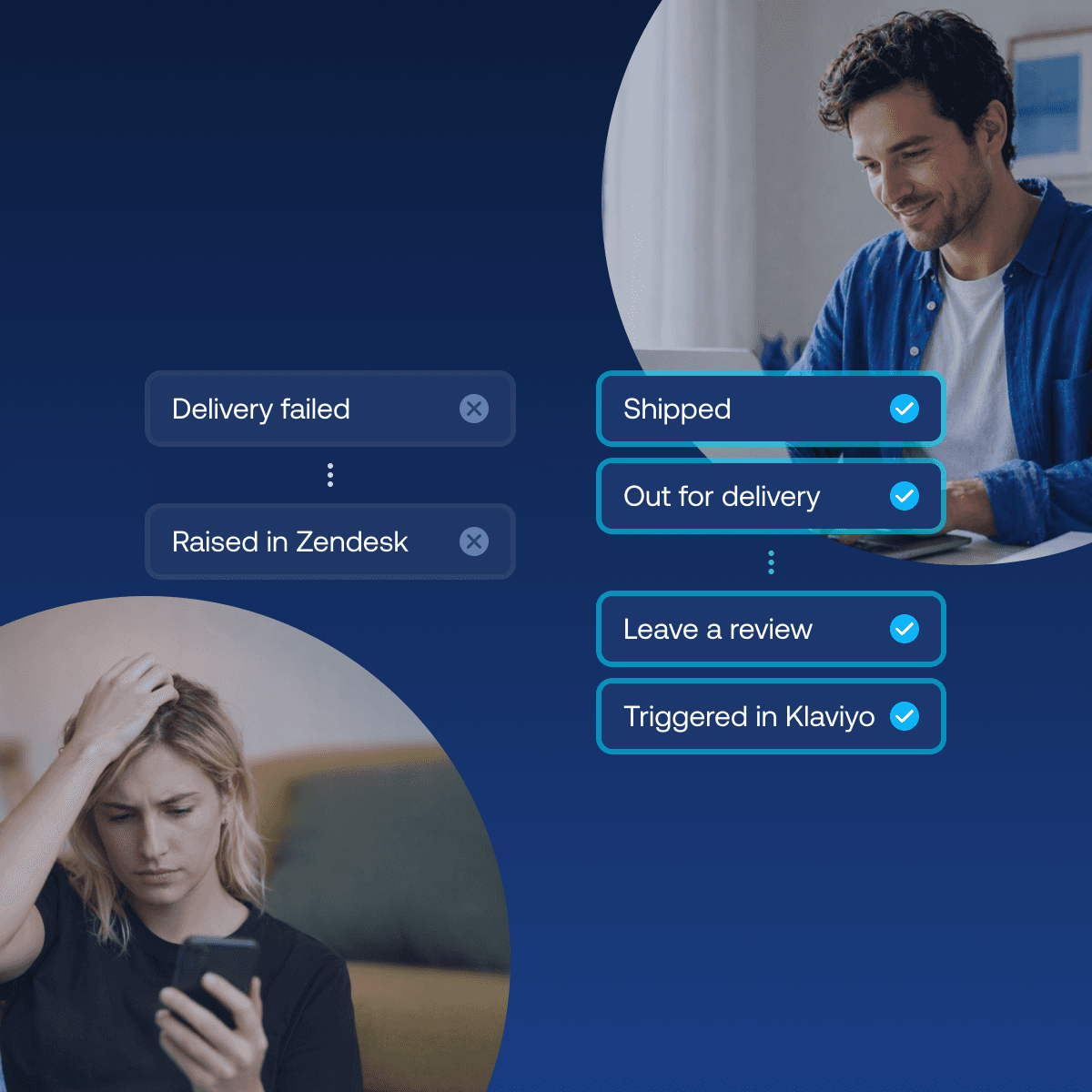
Most retailers leave post-purchase on default, letting courier notifications and out-of-the-box tracking emails speak for the brand. Sendcloud's Post-Purchase Solution changes that: delivery events now flow straight into the tools your team already uses, like Gorgias, Zendesk, Freshdesk and Klaviyo, turning tracking updates into branded touchpoints, proactive support alerts, and automated claims, no matter which courier or platform you ship with.

Shipping
Integrations
Best Shopify shipping apps: compare features, pricing & automation
Compare the best Shopify shipping apps for automation, couriers, labels, tracking, returns and international shipping. Find the right app for your store.

Shipping Intelligence
Shipping
E-commerce