Best 9 Shipping Data Analytics Software Tools (2026)


Last updated:
Shipping data analytics software collects data from your couriers and systems and turns it into insights on courier performance, cost, and delivery reliability. It helps you cut avoidable spend and fix problems before customers notice. The nine top tools are split into three groups: parcel-spend and audit platforms (Reveel, Sifted, ShipSigma, Lojistic, ShipScience) that recover money from couriers, post-purchase analytics tools (AfterShip, Parcel Perform) that measure delivery experience, and full delivery management platforms (Sendcloud, Enveyo) that connect analytics to the wider operation.
Most retailers sit on a goldmine of shipping data and barely touch it. It stays locked inside courier portals and invoices until something breaks. Good analytics software pulls that data together and turns it into decisions: which couriers to trust, where you’re overspending, what to fix first. This guide compares nine of the best tools available, so you can optimise the full delivery journey with data instead of guesswork.
9 shipping data analytics tools compared
Software provider | Best for | Product category |
Sendcloud | European mid-market and enterprise retailers who want to benchmark couriers and analyse cost, returns, and performance across the full delivery journey | Delivery management platform |
Reveel | US shippers focused on auditing parcel spend and recovering courier overcharges | Parcel spend and audit platform |
AfterShip | Retailers who want delivery and on-time performance analytics tied to a branded tracking experience | Post-purchase analytics tool |
Sifted | High-volume shippers that want predictive parcel-spend analytics and scenario modelling | Parcel spend and audit platform |
ShipSigma | Shippers benchmarking courier rates before a contract negotiation | Parcel spend and audit platform |
Lojistic | Teams that want free shipping invoice audits and cost reporting | Parcel spend and audit platform |
ShipScience | US shippers that want to automate billing-error and claims recovery | Parcel spend and audit platform |
Parcel Perform | Enterprise brands focused on post-purchase delivery and logistics intelligence | Post-purchase analytics tool |
Enveyo | Shippers that want data-driven courier selection and rate shopping | Delivery management platform |
Now you know which tools are worth evaluating and who they serve best, let’s look at why each one made the list and what it actually offers.
How these shipping analytics tools have been evaluated
The tools in this list serve different buyers. Some are parcel-spend and audit platforms built to recover money from couriers. Others are post-purchase experience layers, and a few are full delivery management platforms that offer analytics as a wider part of the shipping operation.
The honest answer is that no single tool is right for every retailer, so the comparison below focuses on the type of analytics each one delivers.
We based the selection on researching capabilities, reading user reviews, and talking with retailers in the market. We wrote the list, so of course Sendcloud is on it. But we wouldn’t include it if we couldn’t back it up, and we’d rather you judge for yourself. See what other retailers say on review platforms like G2 and Trustpilot.
The best shipping data analytics platforms right now
Here’s the rundown of the best tools you can use for shipping data and analytics. For each one we cover the type of analytics on offer, the product category, where the company is based, the key features, and pricing.
1. Sendcloud, best for benchmarking couriers across the full delivery journey
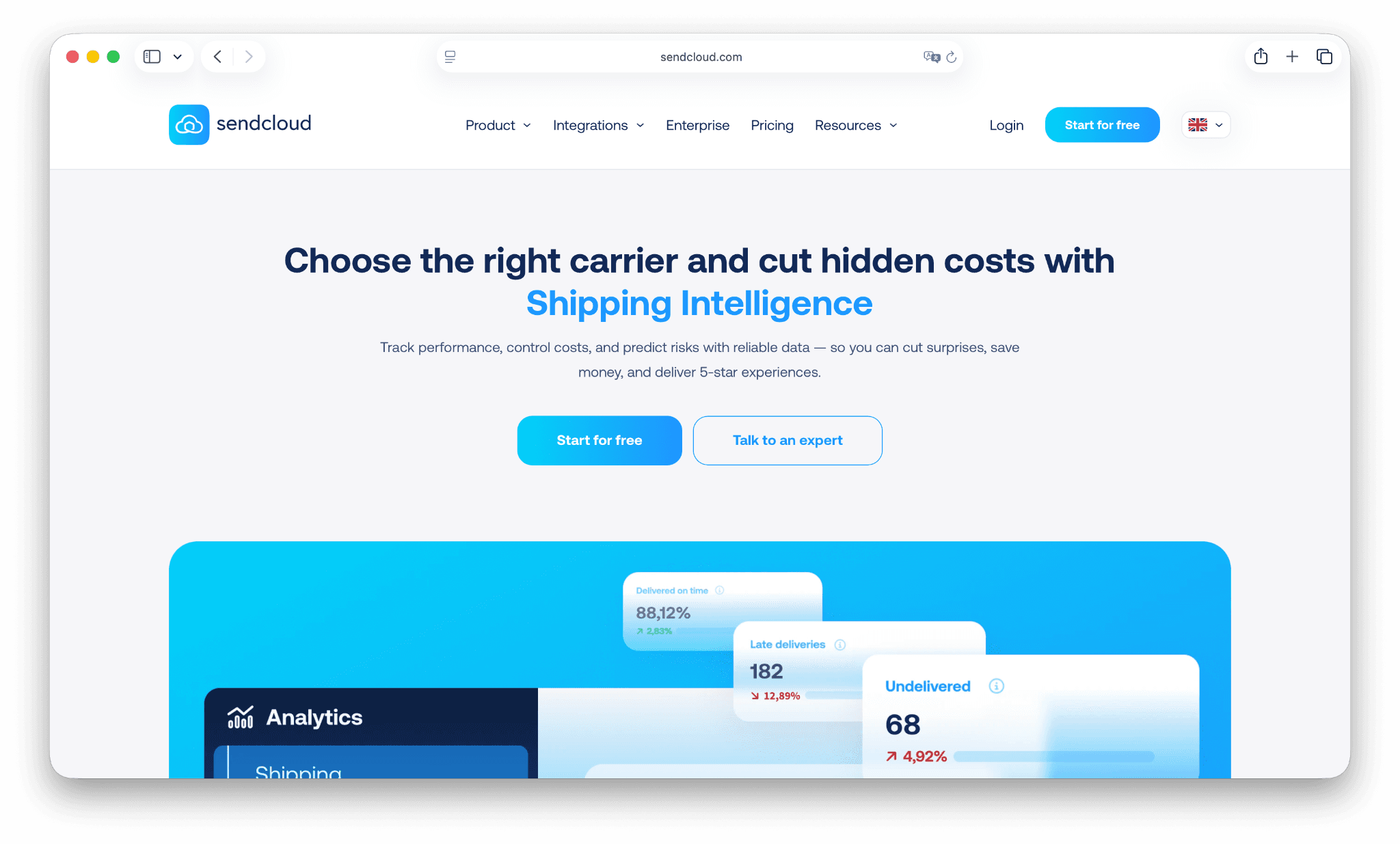
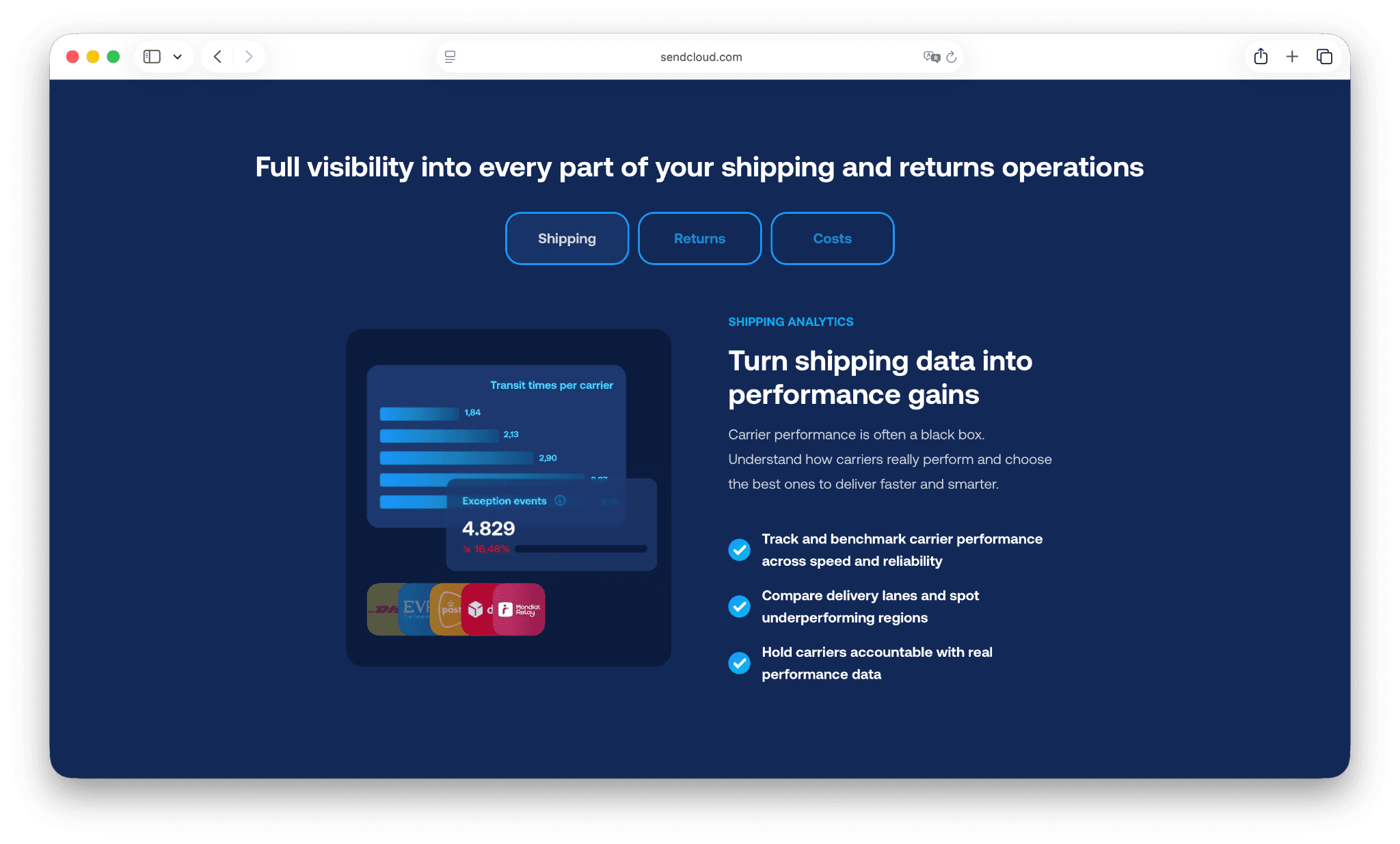
Sendcloud is a modular delivery management platform built for European e-commerce. Its Shipping Intelligence layer turns shipping data into benchmarks, so instead of looking at one courier in isolation, you can see how your courier mix performs against the market.
The benchmarking is powered by data from 30,000+ customers and billions of scan events, which strengthens your position when you negotiate with couriers. The analytical depth comes from two acquisitions folded into the platform: Tracey, the shipping intelligence product that’s now Shipping Intelligence, and Lox, which added the delivery-issue handling now called Claims Automation.
With those additions to the platform, Sendcloud connects analytics to the full delivery journey. A problem you spot in the data can be acted on in the same platform, instead of being exported to yet another tool.
Type of analytics: Courier performance benchmarking, shipping cost analytics, and returns analytics across the full delivery journey
Product category: Delivery management platform
Based in: Netherlands (European-first courier coverage)
Key features:
Courier performance benchmarking across speed and reliability, with the ability to compare lanes and spot underperforming regions
Cost analytics that break down spend by courier, lane, and method and surface hidden surcharges for data-backed negotiations
Returns analytics that flag the couriers and delivery reasons driving returns
Predictive insight that detects delays and anomalies in transit data before customers notice
Up to 5% cost savings from data-driven optimisations
170+ courier integrations, 9,500+ shipping methods, and 100+ integrations with WMS, ERP, and e-commerce platforms
Structured logistics data available through the API for custom reporting
Pricing: Starter plans from €26 per month, with a free plan available too. Enterprise retailers shipping over 120,000 parcels per year get custom pricing
“We’ve got our Trustpilot and CSAT scores up in 6 months. Moreover, insights into courier performance allow us to negotiate better terms with the couriers.” - Alex Formicola, Customer Support Lead at Rosefield
Curious how other retailers put Sendcloud’s harmonised shipping data to work? Read more customer stories here.
2. Reveel, best for auditing parcel spend and recovering overcharges
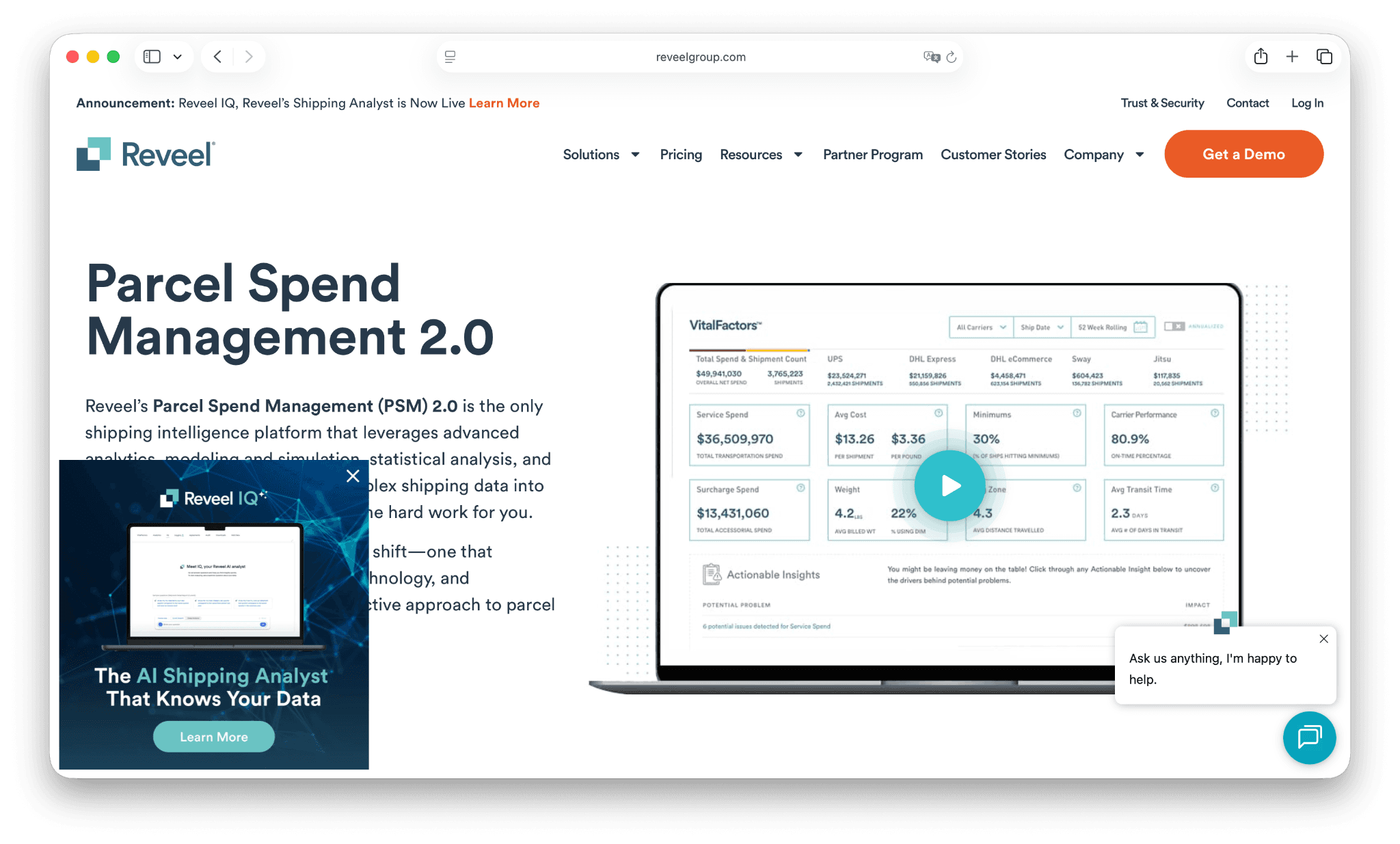
Reveel applies machine learning to your invoice and shipping data to find savings and get money back from couriers. The whole focus is the financial side of shipping. It offers rate auditing, refund and rebate tracking, and recommendations for the cheapest way to send each parcel.
In 2026 it added Reveel IQ, which lets finance and operations teams ask shipping questions in plain English and get validated answers with the cost drivers behind them. Reveel is US-centric in its courier focus, so European retailers should confirm coverage for couriers like DHL, DPD, or Colissimo before committing.
Type of analytics: Parcel spend management, rate auditing, and cost-recovery analytics
Product category: Parcel spend and audit platform
Based in: United States
Key features:
Automated rate and invoice auditing to recover invalid charges
Rebate and refund tracking across courier agreements
Predictive and prescriptive recommendations for the cheapest way to ship each parcel
Cost comparisons against industry benchmarks
Lost and damaged claims management
Pricing: Available on request
3. AfterShip, best for delivery and on-time performance tracking
AfterShip is a well-known post-purchase platform that connects to over a thousand couriers. Its analytics centre on delivery and on-time performance. You see where transit times slip and how the tracking experience itself is performing, all sitting alongside branded tracking pages and multi-channel notifications.
That data sits alongside branded tracking and multi-channel notifications, so the insight is tied directly to the customer-facing experience. AfterShip doesn’t handle outbound shipping logistics like label generation or courier contract management, so it usually runs alongside a separate shipping tool.
Type of analytics: Delivery and on-time performance analytics, plus tracking-page engagement insights
Product category: Post-purchase analytics tool
Based in: Singapore, with offices worldwide
Key features:
Delivery performance analytics and on-time tracking by courier
AI-powered estimated delivery dates based on product category and location
Courier performance comparisons against industry averages
Branded tracking pages and configurable email and SMS notifications
70+ native integrations including Shopify, Magento, and Klaviyo
Pricing: Free plan available. Paid plans start from around $29 per month, with enterprise pricing on request
4. Sifted, best for predictive parcel-spend analytics
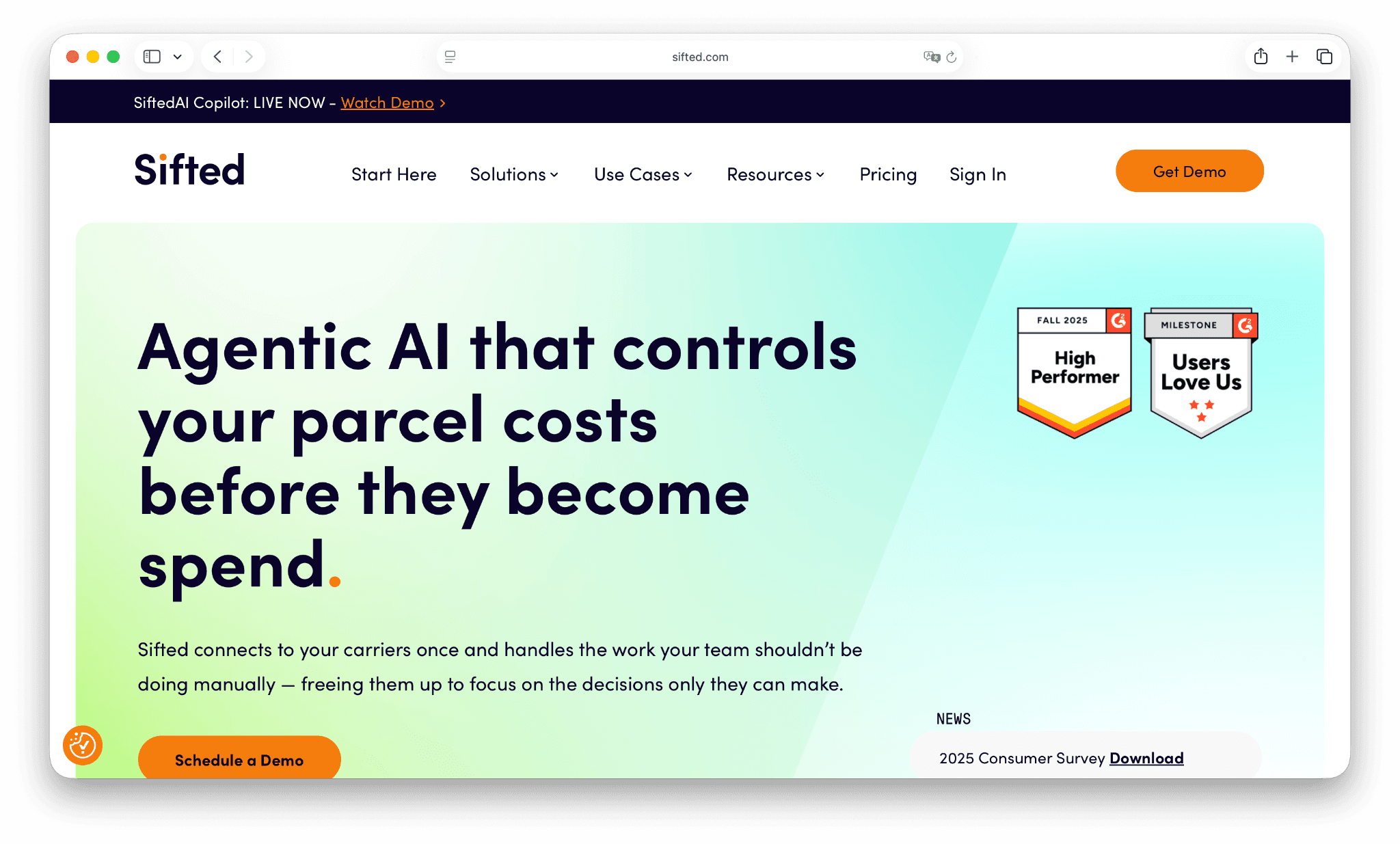
Sifted is a logistics intelligence platform built around predictive parcel-spend analytics. Instead of telling you what already happened, it models what’s coming, like how a courier’s rate increase or a new demand surcharge will hit your specific shipping profile. It runs as an always-on layer that watches spend, flags anomalies, and surfaces savings without anyone pulling a report.
This makes it a strong fit for high-volume shippers who want to forecast cost instead of reacting to it, though its courier focus leans US.
Type of analytics: Predictive parcel-spend analytics, scenario modelling, and expense forecasting
Product category: Parcel spend and audit platform
Based in: United States
Key features:
Scenario modelling and expense forecasting for rate increases and surcharges
Automated invoice auditing to recover invalid charges and service failures
Always-on profile monitoring with proactive alerts
Logistics Intelligence dashboards for tracking shipping KPIs
Courier lifecycle management across multiple couriers
Pricing: Available on request, based on shipping volume
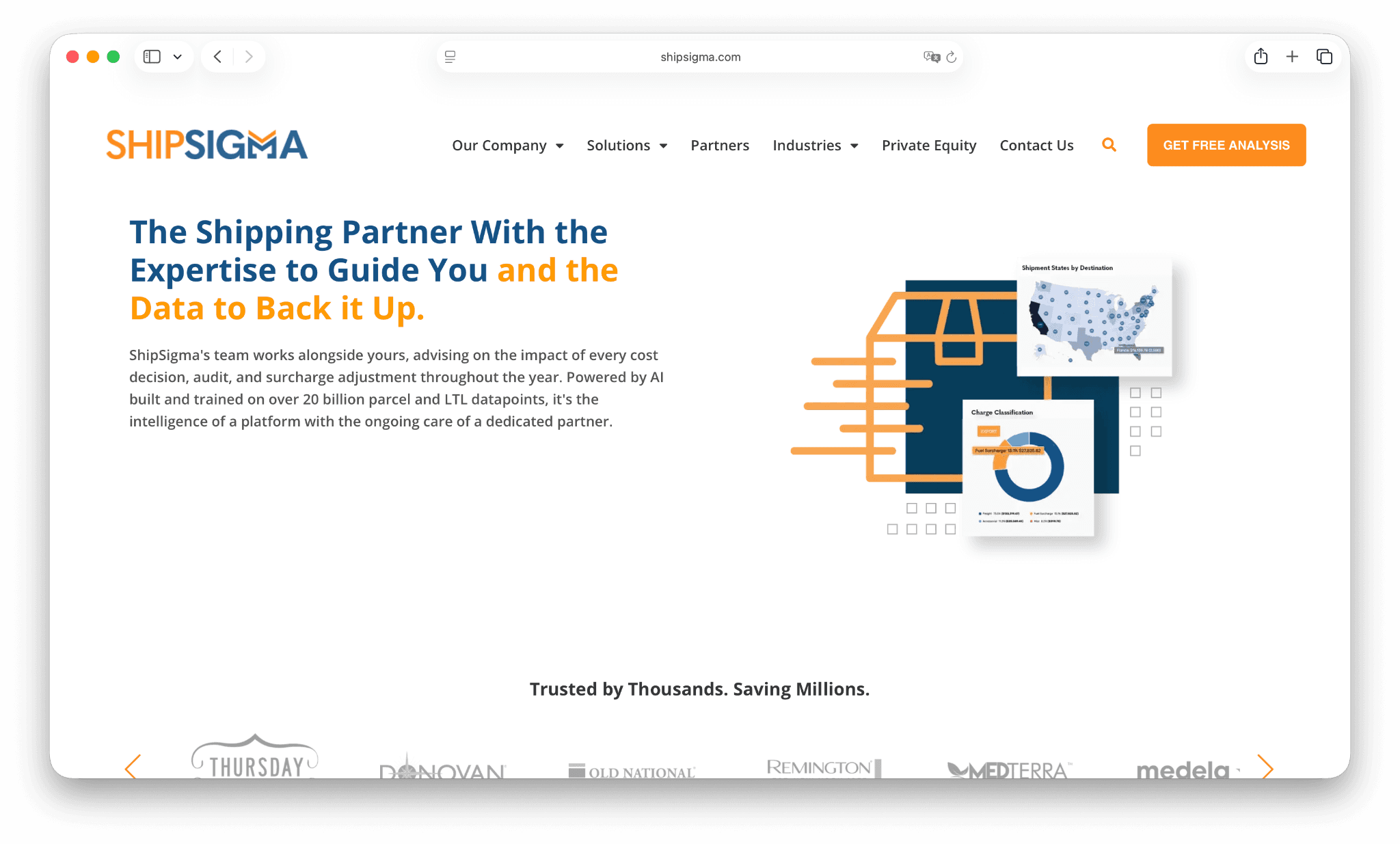
5. ShipSigma, best for benchmarking courier rates
ShipSigma offers software and a team to work alongside yours. It helps you benchmark your courier rates against market data before you sit down to negotiate. It measures your invoice data and shipping characteristics against courier profitability metrics, then builds a network strategy around discounts, tier management, and surcharge mitigation.
It offers most value right before a contract renewal, when knowing the real market rate is the difference between a good deal and an expensive one. On the flip side, it’s a sharp instrument for that one negotiation. But it won’t be the strongest option if you’re looking for a daily operations dashboard.
Type of analytics: Courier rate benchmarking and cost-reduction analytics
Product category: Parcel spend and audit platform
Based in: United States
Key features:
Rate benchmarking against a large network of shipping spend data
Courier contract analysis and compliance management
Surcharge mitigation and discount and tier management
Parcel audit that flags billing errors and recovers costs
Ongoing analysis and optimisation after a negotiation
Pricing: Available on request
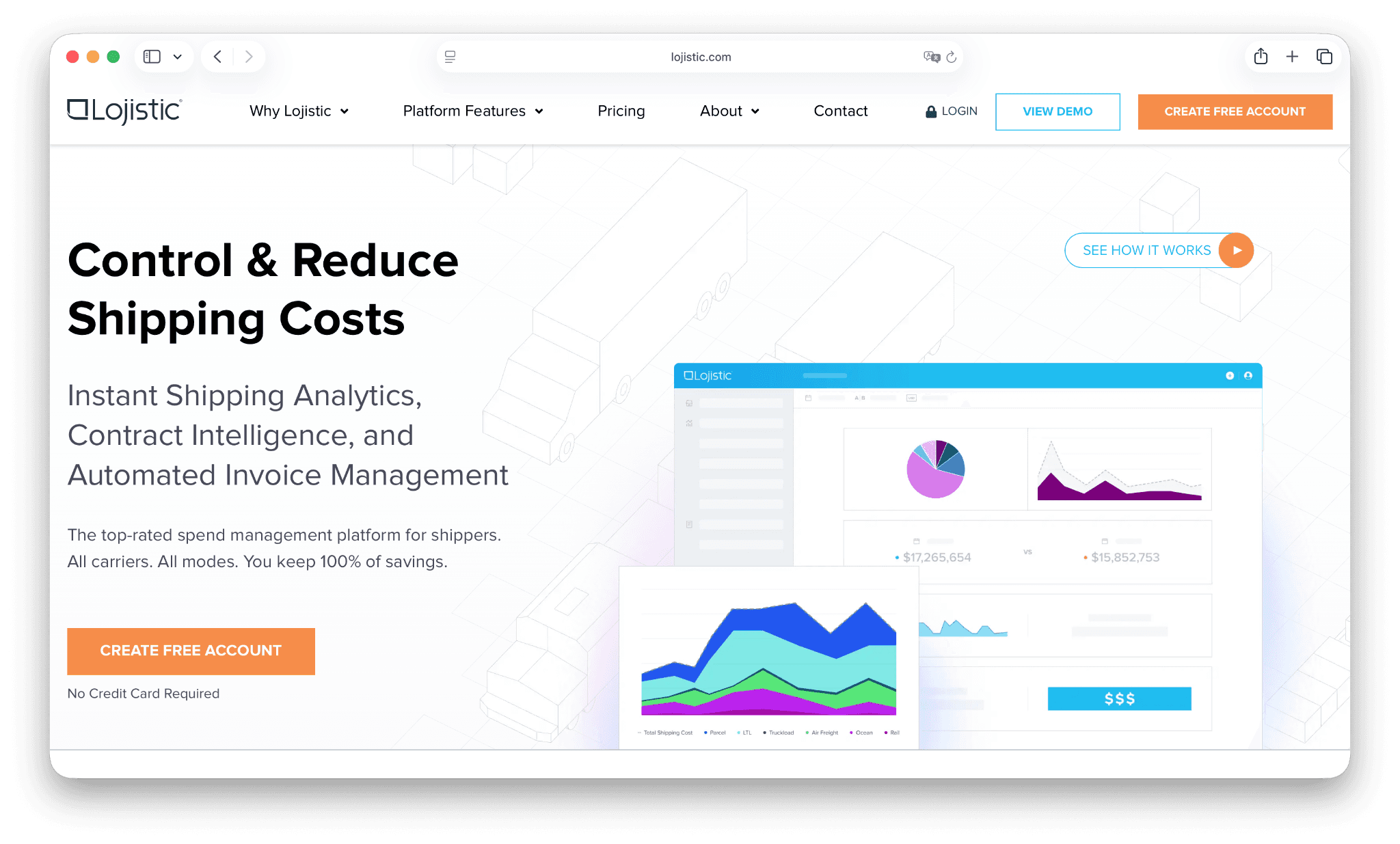
6. Lojistic, best for free shipping invoice audits
Lojistic offers something rare in this category: a genuinely free account. It audits your courier invoices for late deliveries, duplicate charges, and other billing errors, then layers reporting on top. For a team that just wants to see where the money is leaking before paying for anything, it’s about as low-friction as it gets.
It’s just good to keep two things in mind regarding Lojistic. The courier focus is US-centric, and full refund recovery is reserved for paid clients.
Type of analytics: Shipping invoice audit and cost-trend analytics
Product category: Parcel spend and audit platform
Based in: United States
Key features:
Automated invoice audits for late deliveries, billing errors, and duplicate charges
Custom, schedulable reports on shipping spend and trends
Courier and time-period comparisons
Shipping data integrated with business systems
Refund recovery handled for qualified paid clients
Pricing: Free account with optional paid add-ons
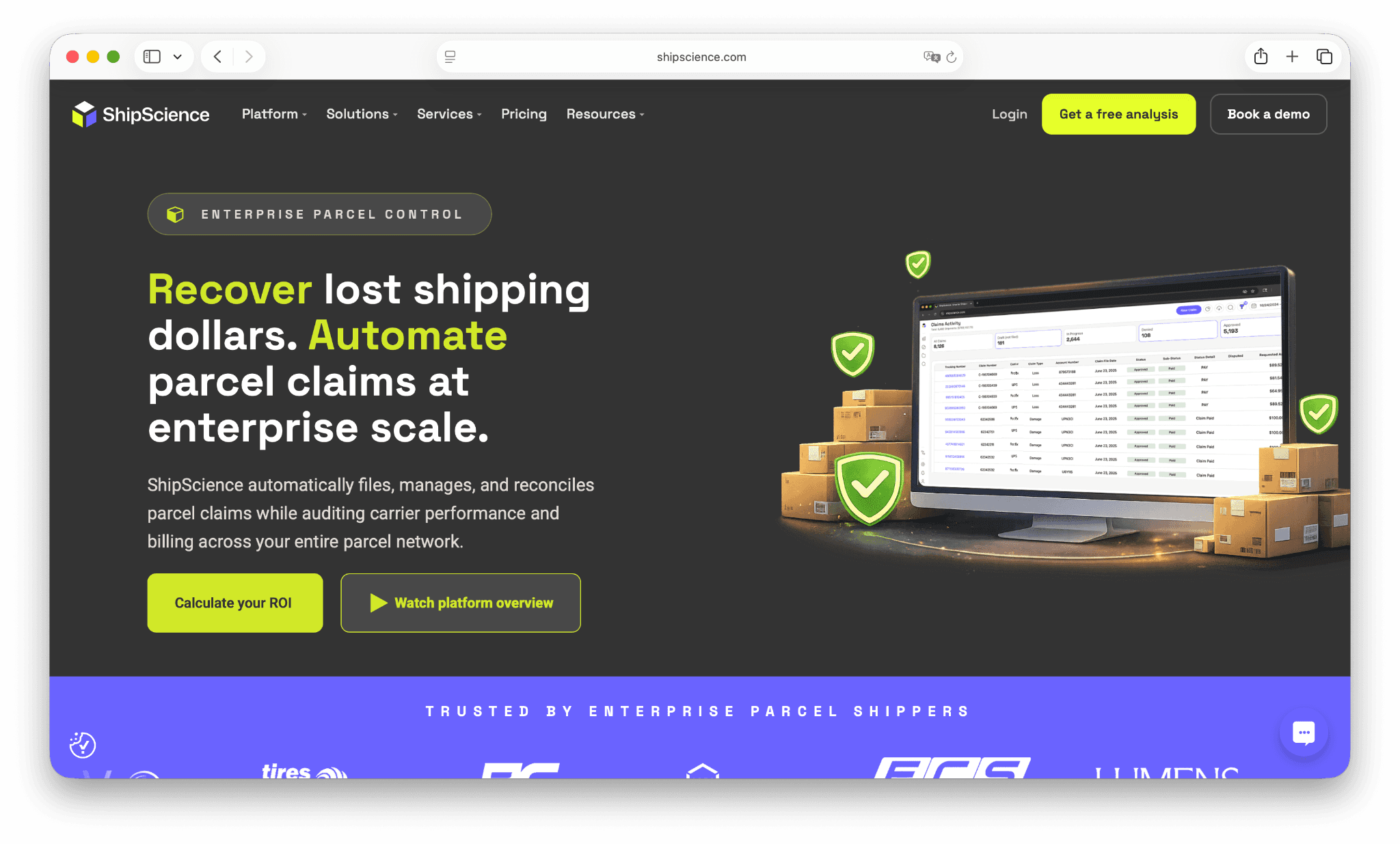
7. ShipScience, best for automating billing-error claims
ShipScience leads with automation. It hunts for billing errors, late shipments, and lost or damaged parcels, then files and reconciles the claims for you. If you’re quietly losing money to courier errors nobody has time to dispute, that’s the whole pitch.
Like most tools in the list, it’s US-focused, so check courier coverage if you’re based outside the US and want to rely on it.
Type of analytics: Billing-error detection, continuous audit, and claims analytics
Product category: Parcel spend and audit platform
Based in: United States
Key features:
Automated detection and filing of refunds for late shipments and surcharges
End-to-end automated claims for lost and damaged parcels
Continuous courier performance auditing across your parcel network
Contract and rate analysis to inform negotiations
A single dashboard for parcel data across multiple accounts
Pricing: Free starter tier, with paid plans that scale with volume
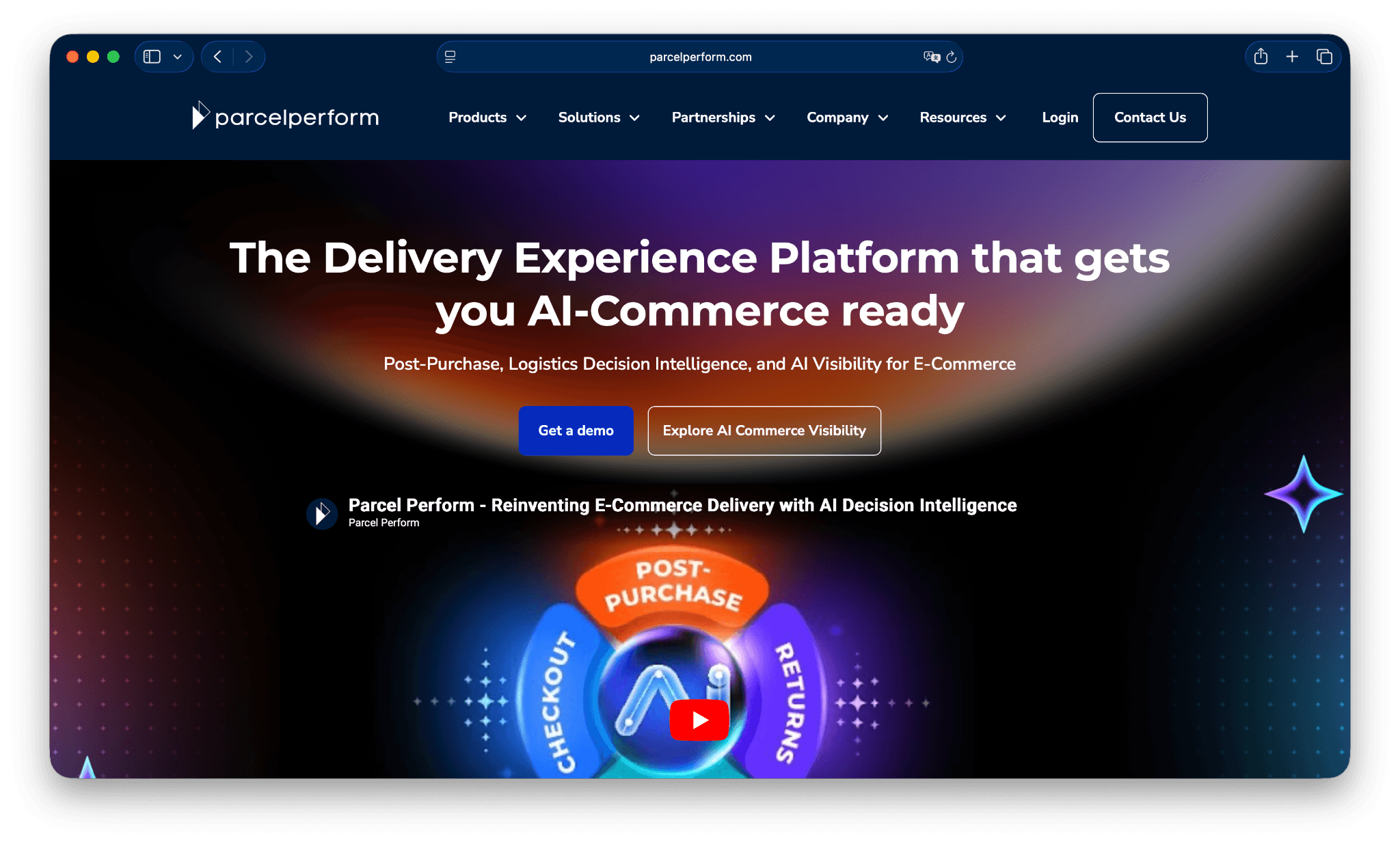
8. Parcel Perform, best for post-purchase delivery insights
Parcel Perform is an AI-native delivery experience platform that unifies shipment data from 1,100+ couriers into an intelligence layer. Its analytics stretch across post-purchase tracking, checkout, returns, and logistics, with predictive delivery dates and courier routing recommendations.
Because it catches common delivery pitfalls early and triggers branded notifications, the insight loops straight back into the customer experience. And just like AfterShip, Parcel Perform is a delivery experience layer rather than a full shipping operations platform. If you’re looking to combine label generation or rate shopping, you’d have to use it with another tool.
Type of analytics: Post-purchase delivery analytics and logistics intelligence
Product category: Post-purchase analytics tool
Based in: Singapore and Germany, with offices worldwide
Key features:
AI Decision Intelligence pulling from courier, WMS, and ERP data
Predictive delivery dates and courier routing recommendations
Post-purchase performance, returns, and logistics cost analytics
Proactive detection of 25+ common delivery issues
Real-time dashboards, historical reporting, and benchmarking
Pricing: Available on request
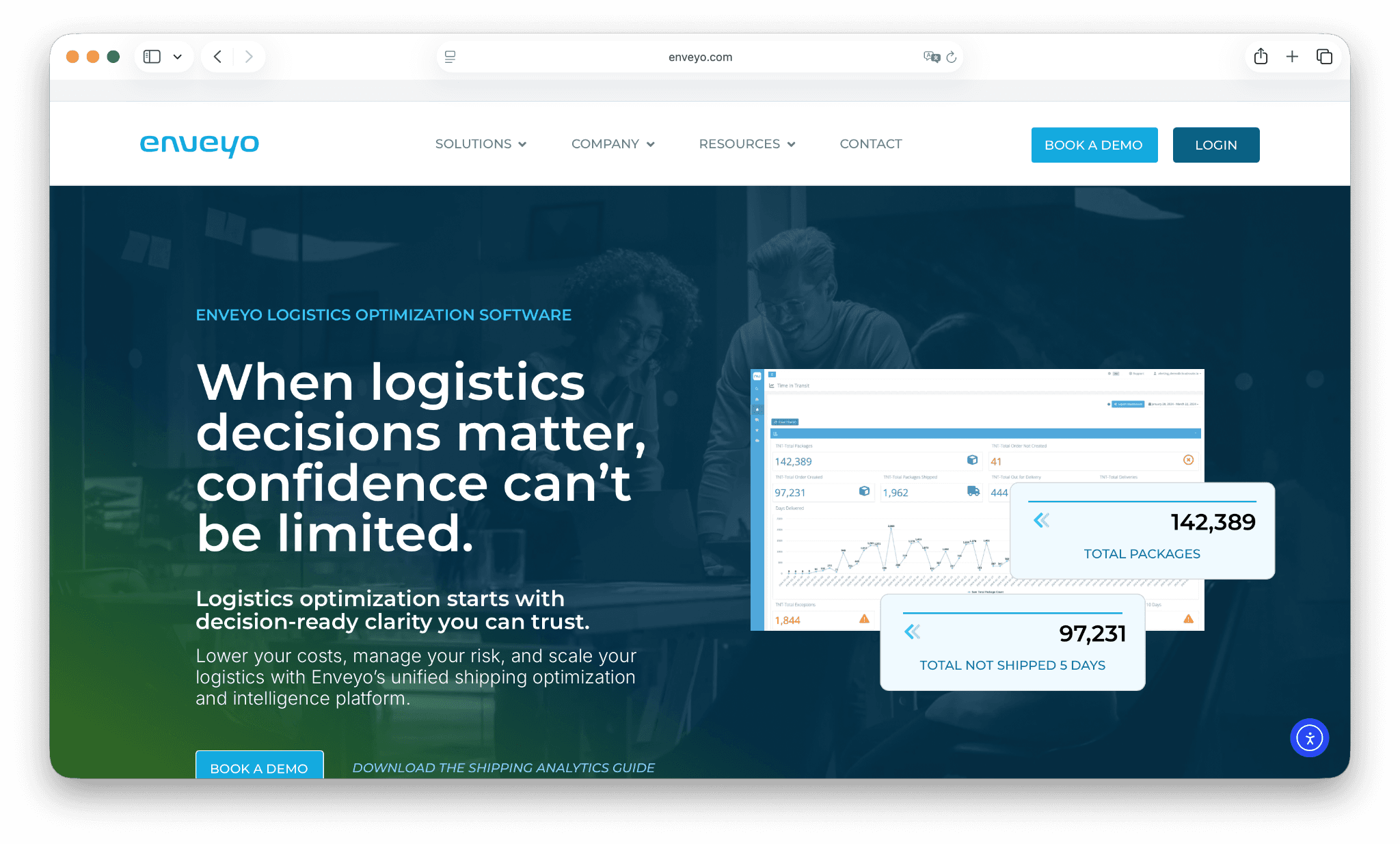
9. Enveyo, best for data-driven courier selection
Enveyo focuses on courier selection. The insights are based on clean, connected data, while its rate-shopping and modelling tools compare courier rates and transit times automatically and pick the best option for each parcel.
The real strength is that the analysis becomes an automated routing decision. Enveyo is also US-centric, so European retailers should check courier coverage and discuss what’s possible with data from European couriers.
Type of analytics: Courier selection, rate shopping, and shipment optimisation analytics
Product category: Delivery management platform
Based in: United States
Key features:
Real-time shipping analytics through Enveyo Insights
Automated courier rate shopping by cost, speed, and service level
Custom business rules that route and label shipments automatically
Courier auditing and cost analysis
Modelling tools to test network and courier scenarios
Pricing: Available on request
What should you look for in shipping analytics software?
The list above shows tools that serve different needs, so the right choice depends on which problem you’re solving. Here’s how to evaluate them before committing.
Courier benchmarking
The analytics that earn their keep tell you how your couriers perform against the market, not just against your own numbers from last month. Without an outside benchmark, you’re negotiating blind. Look for platforms that measure your courier performance and rates against a wider dataset, because that’s what turns a renewal conversation into a data-backed one.
Cost and surcharge analytics
Surcharges and billing errors are where shipping costs quietly leak. Strong cost analytics break spend down by courier, lane, and method, and flag hidden surcharges and invoice errors you can dispute. When you compare costs, calculate the total cost of shipping rather than just the subscription price.
Returns analytics
Returns are a cost centre most analytics tools ignore. It’s a huge bonus to get the ability to see which couriers and which delivery reasons drive returns. This allows you to fix delivery-related causes, rather than just processing the returns after the fact. In the long run it’ll save you a whole lot of money.
Real-time visibility
Real-time visibility isn't nice to have. In urban areas in the US, 20 percent of package deliveries fail. In Europe, even 77.07% of European shoppers experienced at least one issue with their most recent delivery.
That’s why you want real-time visibility. It lets you act while a shipment is still in transit. Check whether the platform surfaces live courier status and delivery exceptions, instead of simple end-of-month dashboards.
Predictive insight
The gap between reactive and proactive analytics is prediction. Tools that detect delays, anomalies, and surcharge exposure before they hit give you time to warn customers and switch couriers early. Ask vendors during a demo exactly how they handle a delay the courier hasn’t flagged yet.
Integrations
Analytics are only as good as the data feeding them. Confirm the platform integrates with your couriers, e-commerce platform, WMS, and ERP without heavy development work. Sendcloud, for example, offers 100+ native integrations plus flexible APIs, and enterprise retailers are live in under four weeks.
How do you choose the right shipping data analytics software?
As mentioned above, your problem and use case should be the start. If your main pain is overspending, a parcel-spend or audit platform like Reveel, Sifted, or ShipSigma will move the needle fastest. If it’s delivery experience and WISMO, a post-purchase analytics tool fits better. If you want benchmarking and analytics connected to the rest of your delivery operation rather than bolted on, a delivery management platform like Sendcloud is the stronger fit.
A practical approach is to shortlist three preferred tools, then book a demo with each. These calls reveal not just the functionality but the people behind the software, which matters more than it sounds once you’re relying on them through a peak season.


Author and researcher
Huib Adriaans is the VP of Enterprise at Sendcloud and the founder of Tracey. With 10+ years in the logistics space, he leverages shipping intelligence and data-driven insights to help merchants reduce "Where is my parcel?" enquiries and build world-class delivery experiences.
How much time can you save on shipping?

Share
Recommended For You
Enterprise
Tracking
Sendcloud’s Post-Purchase Solution, now available in the tools your team already uses
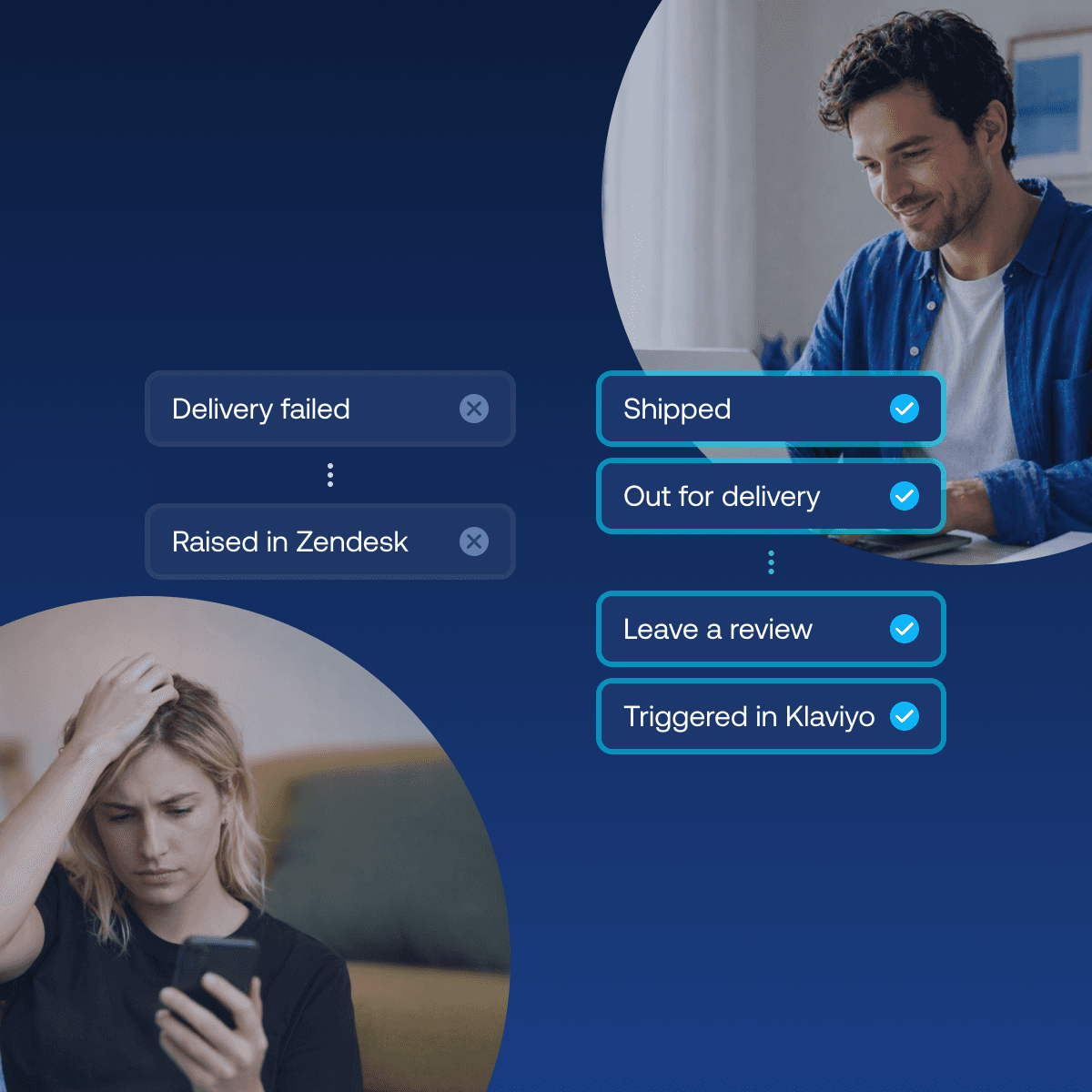
Most retailers leave post-purchase on default, letting courier notifications and out-of-the-box tracking emails speak for the brand. Sendcloud's Post-Purchase Solution changes that: delivery events now flow straight into the tools your team already uses, like Gorgias, Zendesk, Freshdesk and Klaviyo, turning tracking updates into branded touchpoints, proactive support alerts, and automated claims, no matter which courier or platform you ship with.

Shipping
Integrations
Best Shopify shipping apps: compare features, pricing & automation
Compare the best Shopify shipping apps for automation, couriers, labels, tracking, returns and international shipping. Find the right app for your store.

Shipping Intelligence
Shipping
E-commerce