Best shipping software for e-commerce: A full comparison guide for 2026


Last updated:

TLDR; Choosing the right shipping software is key to delivering an outstanding customer experience and optimising your shipping spend. This guide compares the best shipping software for e-commerce, showing how platforms like Sendcloud help automate fulfilment, reduce costs, and scale more smartly across markets.
Looking for the best shipping software to automate your e-commerce logistics? Whether you’re scaling beyond a single courier or trying to save hours on fulfilment, choosing the right platform can make or break your customer experience — and impact up to 70% of your operational spend.
In this shipping software comparison, we’ll look at how leading platforms, including Sendcloud, ShipStation, Shiptheory, and others, handle the core challenges of modern shipping: from automation and courier flexibility to branded tracking and returns.
You’ll learn which solution fits growing merchants, mid-market retailers, and enterprise-scale merchants, and why Connected Shipping is the future of e-commerce fulfilment.
🎧 Busy packing orders? Just press play and listen to the blog instead!
The shipping software landscape: tools, trends, and what to look for
Shipping software has come a long way from basic label printing. Today, it’s the backbone of e-commerce fulfilment, connecting checkout, couriers, tracking, and returns into one smooth flow.
But many merchants still rely on disconnected tools or courier portals. Shipping, returns, and support often live in separate systems, increasing manual work, delays, and customer frustration. As parcel volumes grow and expectations rise, this fragmentation becomes a blocker to scale.
That’s why modern shipping software is shifting towards Connected Shipping: a fully integrated experience that links every step of the journey — from order to doorstep to return. The right platform doesn’t just reduce effort, it gives you automation, real-time insights, and the kind of delivery experience that keeps customers coming back.
And with more platforms on the market than ever, it’s never been more important to compare based on what really matters: performance, automation, post-purchase experience, and fit for your business model.

What to look for in the best shipping software
Not all shipping platforms are built the same. Some focus on label generation. Others handle tracking. A few try to cover it all, but with trade-offs in automation, analytics, or support.
To find the right fit, you need to dig into how each tool handles the full shipping journey: from the moment an order is placed to when it’s delivered (or returned).
Here’s what to compare:
🔗 Courier coverage & flexibility
How many couriers are supported — locally and internationally?
Can you connect your own contracts, or only use pre-negotiated rates?
Is there smart routing to choose the best courier based on price, speed, or destination?
🔌 Integration with your stack
Which shop systems, marketplaces, WMS/ERP tools are supported?
How easy is set-up — plug-in, API, or custom?
Does it sync order data, update statuses, and push tracking automatically?
How many shops or channels can you connect, and are there limits in lower-tier plans?
⚙️ Automation & workflows
Can you batch-print labels or set rules by country, weight, or SKU?
Does it support pick-pack-ship flows, barcode scanning, or packing slips?
Is the dashboard intuitive for warehouse or fulfilment teams?
📦 Post-purchase tracking & returns experience
Is tracking real-time and branded with your logo, colours, and language? Can you send notifications via different channels?
Can customers access a portal for self-service returns?
Does the platform reduce “Where is my order?” tickets with proactive updates?
📊 Insights & performance reporting
Does it show cost per shipment, courier delays, or refund claims?
Can you compare performance across time, couriers, or countries?
Are dashboards actionable, exportable, and built for operators?
🌍 Localisation & cross-border support
Are customs forms, HS codes, and local rules handled automatically?
Can you show delivery options in the local language and currency?
Is the tool adapted to regional couriers and delivery methods?
📈 Scalability & business fit
Is it built for start-ups, SMBs, or enterprise, or flexible across sizes?
Can it handle thousands of orders, multiple warehouses, and new markets?
Will you outgrow the tool as your business evolves?
💸 Pricing & value
Is there a free plan or flexible tiers?
How does pricing scale with order volume, couriers, or features used?
Are automation or branding features locked behind higher plans?
🧑💻 Support & onboarding
What support is offered — live chat, help docs, account manager?
How fast is set-up, and is there onboarding help?
Is the interface easy to use across teams?
🔒 Security, reliability & compliance
Is the platform GDPR-compliant and built for data privacy?
What’s the uptime track record — and how are outages handled?
Are there protocols for backups, failover, and data recovery?
Shipping software comparison: how leading platforms stack up
Below, we’ve compared 4 established platforms based on the features that matter most. Use these profiles to find the best fit for your logistics set-up, whether you’re a fast-growing brand, a tech-savvy SMB, or scaling across borders.
Sendcloud
Sendcloud is an all-in-one shipping platform built for European e-commerce. It connects 170+ couriers and over 100 shop systems, helping you automate fulfilment, personalise the post-purchase experience, and scale cross-border shipping without added complexity. With support for everything from label generation to returns and analytics, it’s designed to simplify logistics as your business grows.
Sendcloud | |
|---|---|
Courier integrations | 170+ couriers across Europe; use pre-negotiated or own rates |
Integrations & compatibility | 100+ shops/marketplaces (Shopify, WooCommerce, Magento, Amazon, Bol, eBay, Squarespace); robust API |
Automation & workflow | End-to-end automation via shipping rules, Pack & Go, Support Automation |
Tracking & post-purchase | Branded tracking portal + email, SMS, WhatsApp notifications |
Returns management | Self-service returns portal with branded UX and rule-based logic |
Analytics & insights | Real-time insights into cost, courier performance, exceptions |
Scalability | Built for SMB → enterprise; flexible by volume and complexity |
Market availability | Full EU + global shipping support; multi-language/localised |
Pricing & value | Free plan + 4 paid tiers; automation included from Growth plan |
Support & onboarding | Chat, ticketing, CSM on higher tiers; in-app help |
ShipStation
ShipStation is a well-known platform popular among SMBs, especially in the US and UK. It’s known for its broad marketplace integrations and ease of use for basic shipping automation like batch label creation. However, its limited EU courier coverage and lack of advanced tracking or returns features may require you to add other tools as you grow.
ShipStation | |
|---|---|
Courier integrations | ~70 couriers (mainly US/UK), limited EU coverage |
Integrations & compatibility | 300+ e-com & marketplace integrations, REST API |
Automation & workflow | Basic shipping rules, batch labels |
Tracking & post-purchase | Branded tracking page, basic email notifications |
Returns management | Branded returns portal |
Analytics & insights | Basic cost & volume reports |
Scalability | SMB → mid-market |
Market availability | Strong in US, UK, CA, AU; limited EU localisation |
Pricing & value | Paid plans (£9–£185/month); free tier available (10 shipments) |
Support & onboarding | Chat/email; CSM on higher tiers |
Shiptheory
Shiptheory is a UK-based shipping automation platform built for merchants needing rule-based workflows and multi-courier control. It integrates with over 90 couriers and 150+ sales channels, including major e-commerce and ERP platforms. Its robust automation engine handles label generation, courier selection, customs forms, and barcode scanning, helping reduce manual tasks for busy fulfilment teams.
However, Shiptheory does not include native tools for packing, picking, or warehouse management, which means it may need to be combined with additional systems in more complex fulfilment environments.
Shiptheory | |
|---|---|
Courier integrations | 90+ couriers (Royal Mail, DPD UK, DHL, UPS, FedEx, Parcelforce, Evri, TNT, etc.) — strong UK coverage |
Integrations & compatibility | 40+ e-commerce and ERP systems (Shopify, WooCommerce, Magento, NetSuite, Brightpearl) + REST API |
Automation & workflow | Rules-based engine for label printing, customs forms, barcode scanning, and courier/service selection |
Tracking & post-purchase | Branded tracking portal with real-time sync to channels |
Returns management | Fully branded returns portal; rules for reasons, charges, and return services. |
Analytics & insights | Shipment reporting suite with visuals, courier usage, order value, destinations, and cost optimisation insights |
Scalability | SMB → mid-market and enterprise; plans scale to 20k+ shipments/month |
Market availability | UK primary market; expanding in the EU and Oceania |
Pricing & value | Subscription-based (£20–£430+/month); no free tier; volume-based pricing with per-shipment fees. |
Support & onboarding | Email, live chat, and phone support; onboarding included on higher tiers. |
Parcel2Go
Parcel2Go is a UK shipping marketplace and broker that connects micro and SMB merchants with discounted shipping rates from 20+ couriers. Its Smart Send tool enables basic automation like rule-based courier selection and batch label printing. With plug-ins for popular marketplaces and shops, it’s a low-commitment option for businesses that need fast access to shipping services without the complexity of full platform integration.
However, Parcel2Go lacks branded tracking, a self-service returns portal, or in-depth analytics, making it less suitable for scaling businesses or those prioritising the post-purchase experience.
Parcel2Go | |
|---|---|
Courier integrations | 20+ UK and international couriers (Evri, DPD, UPS, InPost to Home, DHL, TNT, Parcelforce) |
Integrations & compatibility | Smart Send connects to 16+ platforms (eBay, Amazon, Shopify, TikTok, Magento); CSV + API available. |
Automation & workflow | Basic rules for courier selection; batch label creation; limited free-user automation |
Tracking & post-purchase | Standard tracking via courier links; no branded tracking or custom notifications |
Returns management | Manual return label generation; no self-service portal or rule automation |
Analytics & insights | Limited shipment status and cost reporting; no advanced performance metrics |
Scalability | Micro → SMB shippers; not designed for enterprise logistics |
Market availability | UK focus with EU/US delivery options via partner network; English interface only. |
Pricing & value | Pay-per-label broker model (typically £3–£9 per parcel); volume discounts for business accounts |
Support & onboarding | Email, live chat, phone; onboarding help on higher-tier plans |
Decision matrix: Which shipping software fits your business?
Choosing the right platform depends on your business model, shipment volume, and how much control you need over the post-purchase experience. Use this overview to match the right tool to your logistics set-up:
Use case / need | Sendcloud | ShipStation | Shiptheory | Parcel2Go |
|---|---|---|---|---|
Best for | Growing e-commerce brands scaling across the UK and EU | Small businesses needing simple automation & marketplace reach | Fulfilment teams with complex UK shipping flows | Micro-SMBs looking for cheap access to UK couriers |
Core strength | Connected shipping (automation, tracking, returns) | Batch label creation + marketplace integrations | Rules-based automation & ERP integrations | Low-cost broker access + label creation |
Key limitation | None major | Limited EU courier coverage, dated UI | No warehouse automation or in-app packing tools | No branded tracking or self-service returns |
Automation level | ★★★★☆ | ★★★★☆ | ★★★★☆ | ★★☆☆☆ |
Analytics depth | ★★★★☆ | ★★☆☆☆ | ★★★★☆ | ★☆☆☆☆ |
Localisation (EU) | ★★★★★ | ★★☆☆☆ | ★☆☆☆☆ | ★☆☆☆☆ |
Pricing value | ★★★★☆ | ★★★★☆ | ★★★☆☆ | ★★★★★ |
Scalability | Start-up → Enterprise | SMB → Mid-market | SMB → Mid-market | Micro-SMB only |
Overall fit | ✅ Full-suite platform for scaling across Europe | ✅ Easy automation for US/UK sellers | ✅ Deep automation for fulfilment-heavy teams | ✅ Best for budget-conscious, low-volume UK sellers |
Why Sendcloud might be the best fit for you
Tired of stitching together shipping tools that only do half the job?
Sendcloud brings everything into one connected platform — labels, couriers, automation, tracking, and returns — so you can focus on your customers and your growth, not workarounds.
Here’s what makes it stand out:
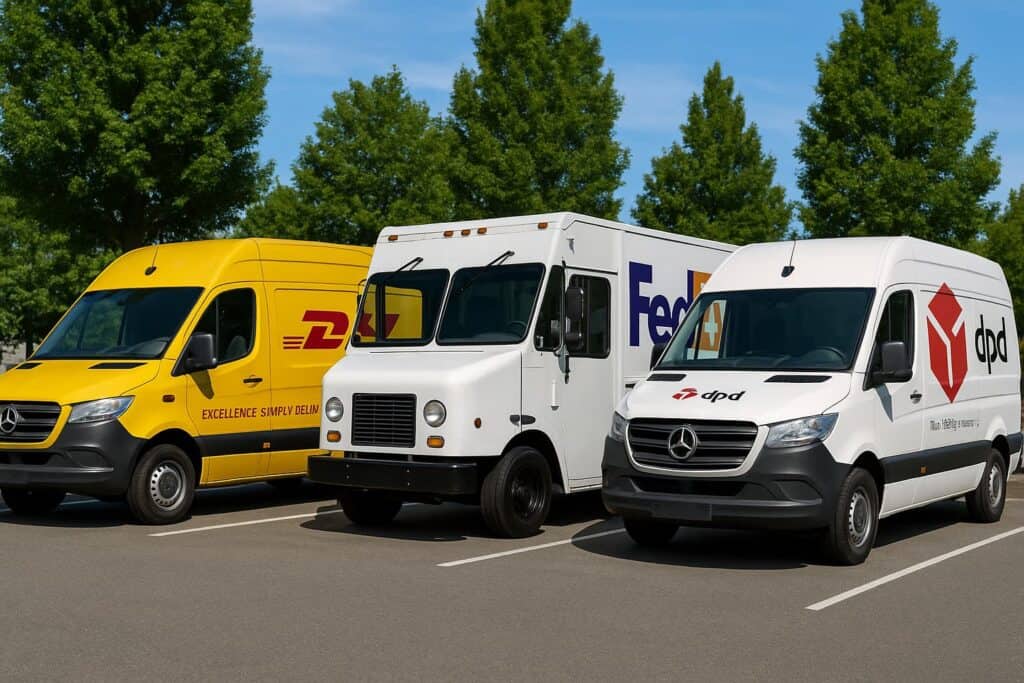
Courier integrations across Europe and beyond
Access 170+ couriers with pre-negotiated rates or connect your own contracts. From PostNL, DHL, and Colissimo to UPS, FedEx, and Evri, Sendcloud supports national and cross-border shipping across 30+ countries.
Built to connect with your tech stack
Sendcloud integrates with 100+ shop systems and tools, including:
E-commerce platforms: Shopify, Magento, WooCommerce, Squarespace, Amazon, Bol, and many more
Fulfilment centres: Hive, Active ants e-fulfilment, fulfio Fulfilment, GS-Fulfilment, Logistix, TRL Fulfilment
Marketing & communications: Gorgias, Zendesk, Watermelon, Sendcloud & Support Automation by Sendcloud
Warehouse management: Picqer, Bman, Boxwise, Pulpo WMS, eWarehousing, Lyra WMS, Stockitup, and many more
ERPs: Odoo, Billbee, Exact Online, Pickware, Oracle Netsuite, weclapp, Xentral ERP, Plentymarkets, and many more.
Robust APIs and multi-shop support help you centralise workflows at scale.
Check out the Sendcloud App Store here.
Smarter automation that grows with you
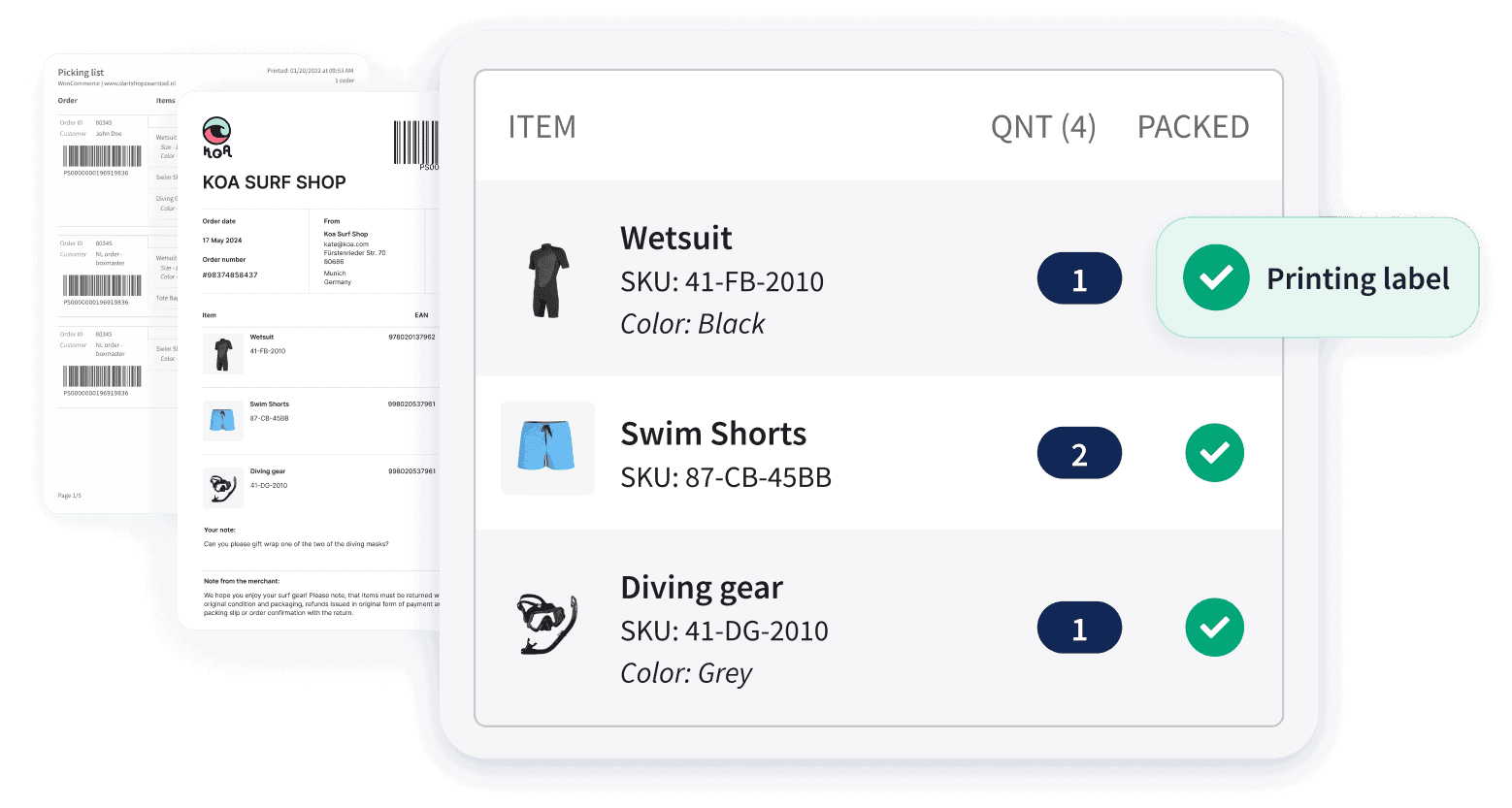
Create shipping rules for courier selection, shipping methods, or label creation — no manual work required.
Features like Pack & Go and item-level scanning reduce packing errors and speed up fulfilment by up to 58% compared to manual workflows. Claims handling is automated too.
Branded tracking that customers actually notice
Create personalised tracking pages per brand, complete with custom messages and multi-language support.
Trigger updates by event — like “Out for Delivery” or “Pickup Reminder” — and reach customers via email, SMS, or WhatsApp.
Easy, self-service returns with full control
The returns portal supports label-less returns, QR codes, and automated logic based on product, country, or return reason.
Available in multiple languages and built to match your brand’s look and feel.
Insights you can act on
Analytics powered by Shipping Intelligence gives you real-time performance data:
Shipping costs by country, courier, or method
Delivery exceptions and delays
Courier benchmarking and on-time rates
Time-range comparisons for forecasting
Built for businesses shipping 1–10,000 parcels/month
Sendcloud scales with your business — from growing merchants to enterprise set-ups with APIs and automation across multiple warehouses.
European-first, globally ready
With local rates, multi-language tracking, and customs form automation, Sendcloud is made for European merchants — and ready for cross-border growth via new TRX integrations with PostNL, DHL, FedEx UK and more.
Transparent pricing, real value
Unlike many tools, automation isn’t locked behind enterprise plans. Sendcloud offers a free plan, with paid tiers that unlock tracking, returns, and automation — all at a price point that scales with your needs. Check out the pricing here.

Real-world examples: How other brands succeed with Sendcloud
From start-ups to enterprise, e-commerce businesses across Europe use Sendcloud to simplify shipping and grow faster. Here are three examples of what’s possible when logistics, tracking, and returns are connected in one platform:
WoodWatch
When sustainable watch brand WoodWatch expanded to 100+ countries, they needed a flexible way to manage customs, couriers, and international tracking — without adding tools or headcount.
With Sendcloud, they automated customs documentation, streamlined courier selection, and cut manual shipping work in half.
“Where before we had to fill [customs forms] in manually… now we have fully automated this with Sendcloud. This not only saves us time but also reduces the chance of manual errors.” — Nick Hummel, Head of Production & Fulfilment, WoodWatch
KAA Gent
KAA Gent’s fan shop automated label printing and personalised their tracking emails using Sendcloud. The result? 100% hands-free fulfilment and a 30% drop in customer service enquiries — as fans received real-time, branded updates about their orders.
“We now print the labels in our warehouse, and we don’t have to do manual work any more.” — Jonas Oliebos, Digital Coordinator, KAA Gent
XXL Nutrition
XXL Nutrition ships 1.3 million+ parcels per year and relies on Sendcloud to connect their Magento store and WMS directly.
By automating label creation and tracking performance across couriers, they cut label errors by 50%, increased delivery speed by 28%, and drove a 40% revenue lift.
“Before Sendcloud, 1 in 10 labels would contain errors, resulting in undelivered packages and confusion about their intended recipients.” — Jordy Holthuijsen, Marketing Manager, XXL Nutrition
What’s next: Choosing the right shipping software
Shipping software isn’t just about operations, it shapes how fast you grow, how efficiently your team runs, and how customers experience your brand.
Whether you need flexibility across couriers, want to automate fulfilment, or reduce “Where is my order?” tickets, the right platform makes it easier to scale — not harder.
If you’re ready to upgrade your logistics, Sendcloud gives you everything you need in one place:
✅ Automation
✅ Courier choice
✅ Tracking
✅ Returns
✅ Analytics
✅ Support
Start your free trial or book a demo to see how Connected Shipping can work for your business!


Author and researcher
As Global Content Manager at Sendcloud, Johanna leads content strategy across e-commerce, logistics, and shipping automation. With a background in B2B SaaS and a passion for clear communication, she creates educational resources that help over 30,000 online stores optimize and scale their shipping operations.

Subject matter expert
Growth & Martech Craft Lead at Sendcloud. With a background in Product Marketing and experience in e-commerce and B2B, he shares insights and tactics that help merchants ship smarter while delivering an exceptional customer experience.
How much time can you save on shipping?

Share
Recommended For You

Shipping Intelligence
Shipping
E-commerce
Best 9 Shipping Data Analytics Software Tools (2026)
E-commerce
Enterprise
The true cost of post-purchase: what e-commerce shipping really costs enterprise retailers

Shipping to a parcel locker: all the benefits and options
Adding parcel lockers to your shipping options is a smart move. Want to know why? Read our article to discover all the benefits.