



Delivery tracking used to be an afterthought. Now it’s a core part of the e-commerce customer experience. It strongly influences whether someone buys from you again. Finding the right software can make a big difference in how you keep customers in the loop of their order status. Curious to know which software solution is best for your business? This guide compares eight tools on the market to help you make the right decision.
TL;DR: 8 shipment tracking tools compared
Tool | Best for | Price |
Sendcloud | European mid-market and enterprise retailers who want to reduce WISMO and optimize the full delivery journey with multiple carriers | Starting from €26/month up to custom pricing for enterprise retailers. A free trial is available. |
AfterShip | SMB to enterprise retailers prioritizing branded tracking pages and post-purchase CX | Starting from $9/month |
Parcel Perform | Enterprise brands focused on AI-powered delivery experience and logistics analytics | Available on request |
Narvar | Mid-market to enterprise retailers with high return volumes and fraud risk | Available on request |
TrackingMore | Developers and tech teams embedding tracking into their own platforms and D2C merchants on Shopify looking for a flexible tracking layer | Starting from $9/month |
LateShipment | E-commerce retailers looking to combine a branded post-purchase tracking experience with automated shipping refund recovery and returns management | Fixed fee per shipment |
ClickPost | High-volume D2C brands primarily | Custom pricing |
parcelLab | Enterprise retailers looking for a branded post-purchase experience platform | Custom pricing |
Now you know what tools are good to evaluate and who they serve best, let’s have a look why these solutions made it to the list and what they have to offer.
The top 8 shipment tracking software solutions
Before we start, we want to highlight that the tools in this list serve different buyers. Some are post-purchase experience layers built on top of your existing shipping setup. Others are full delivery management platforms that replace multiple point solutions. The honest answer is that no single tool is right for every online retailer.
The tool selection has been made by researching capabilities, evaluating user reviews, and having conversations with retailers in the market. One of our core values is to keep things honest and straightforward.
We wrote this list, so of course Sendcloud is on it, but don’t just take our word for it. We'd encourage you to check what other retailers say on G2 and Trustpilot to judge for yourself. Now you know how this list is set up, here’s an overview of the best-rated platforms, their features, benefits, audience and pricing.
1. Sendcloud
Sendcloud is a modular delivery management platform built specifically for European e-commerce. Unlike most tools in this list that focus on post-purchase tracking alone, Sendcloud covers the complete delivery journey from checkout, shipping, tracking, and returns, to shipping intelligence, and claims automation.
Where most tracking tools react to delivery problems after they happen, Sendcloud's approach is to detect and resolve them proactively. And when they happen, customers get notified early with a new estimated delivery time.
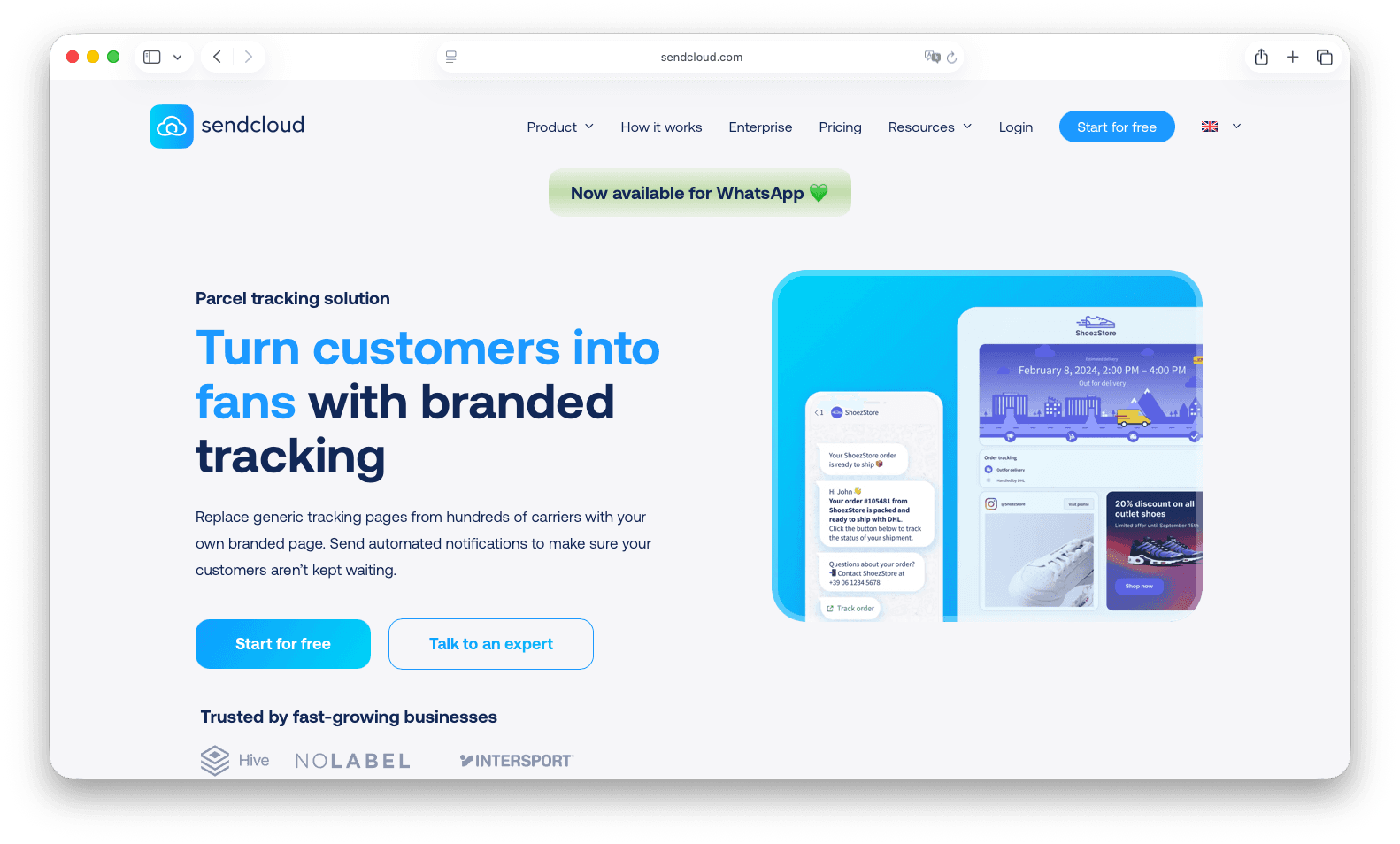
Key features
Proactive tracking notifications across 170+ carriers, reducing WISMO calls by 30 to 50%
Branded, customizable tracking pages in the customer's local language
Shipping Intelligence that benchmarks carrier performance and predicts and surfaces delivery issues before customers notice them
Tracking API to track parcels in real time, retrieve delivery timestamps, and consolidate statuses in an easy-to-read format
Automated claims management centralizing carrier claims across all carriers in one workflow, with automated responses to carrier information requests
170+ carrier integrations, 9,500+ shipping methods, 100+ integrations with WMS, ERP, and e-commerce platforms
Checkout delivery options designed to increase conversion by 2 to 4 percent point
Returns portal with configurable rules per market, carrier, or product category
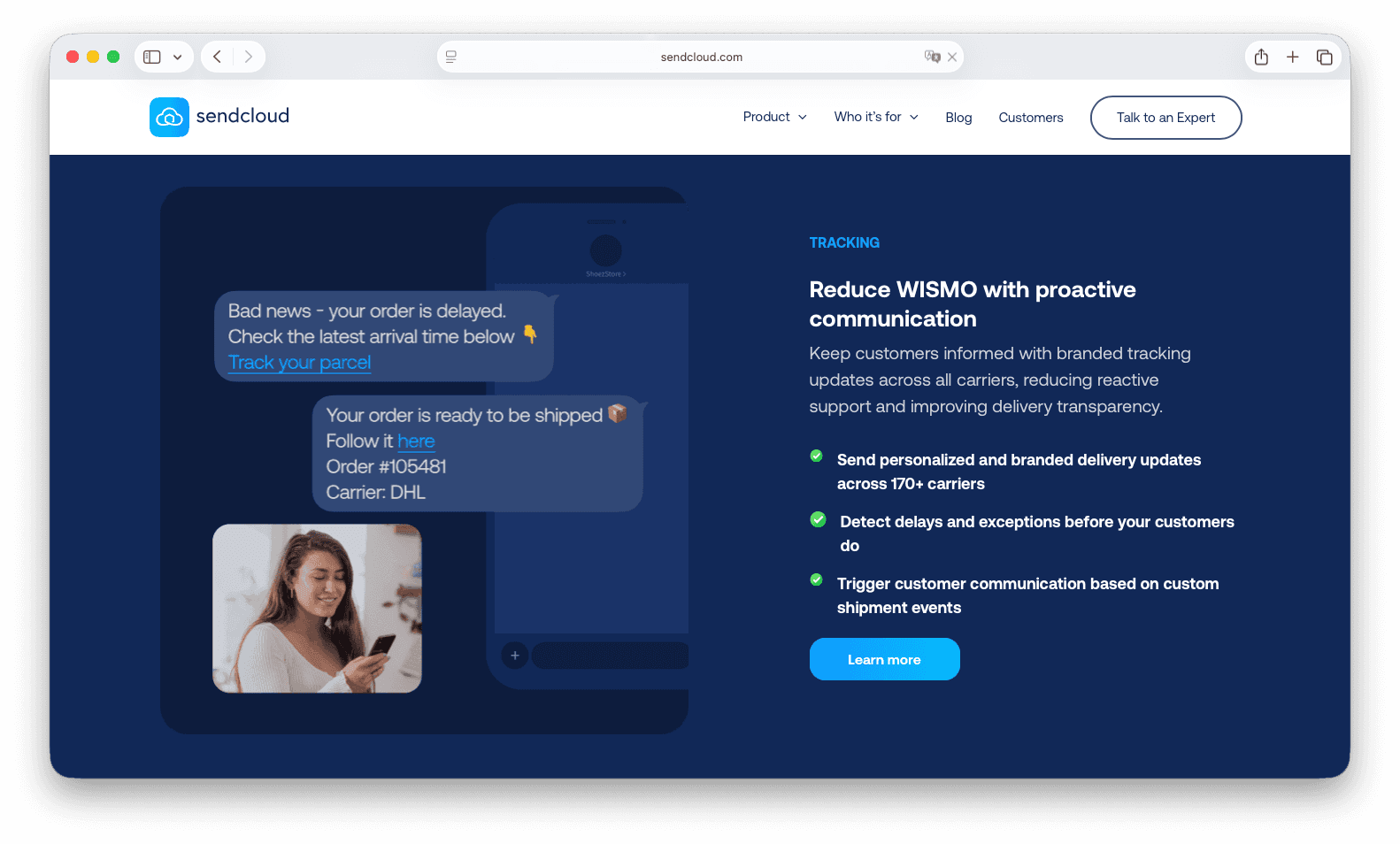
Best for: European mid-market and enterprise retailers who want to reduce WISMO and optimize the full delivery journey with multiple carriers.
Pricing: Starter plans are available from 26 euros per month. For enterprise retailers shipping over 120,000 parcels per year there’s custom pricing available.
“Since we implemented Sendcloud, our customer reviews have gone up and the number of customer service questions has gone down. This is partly due to the fact that customers are now well-informed about the status of their parcel.” - Marijn Soetekouw, Online Manager at Boots
Curious to hear what other retailers think? Read more customer stories here.
2. AfterShip
AfterShip is globally a well-known post-purchase tracking platform. It connects to over a thousand carriers and focuses on turning the tracking experience into a branded, revenue-generating touchpoint, with AI-powered product recommendations on tracking pages and multi-channel notifications via email, SMS, and Apple Wallet.
AfterShip is a strong choice for retailers who need multi-carrier tracking quickly. It doesn’t handle outbound shipping logistics such as label generation, or carrier contract management, so AfterShip typically runs alongside a separate shipping tool.
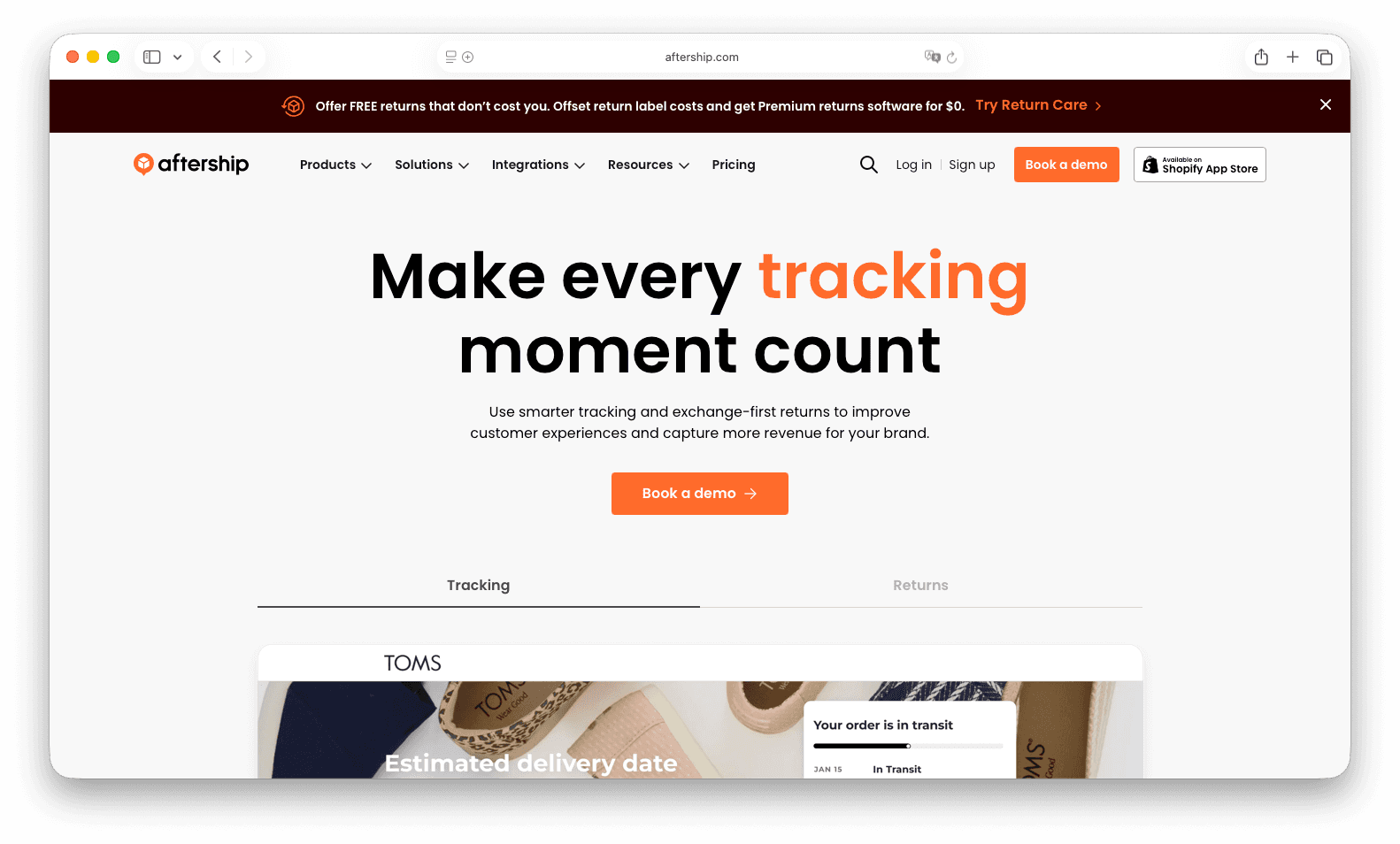
Key features
Branded tracking pages on a custom domain, configurable per customer segment
AI-powered estimated delivery dates based on weather, product category, and location
Email and SMS order status notifications with configurable triggers
Delivery performance and tracking page engagement insights
70+ native integrations including Shopify, Magento, Klaviyo, and Zendesk
Best for: SMB to enterprise retailers prioritizing branded tracking pages and post-purchase CX.
Pricing: Starting at $29 per month for up to 6,000 shipments per year. Enterprise pricing is custom and available for retailers shipping 300,000+ parcels per year.
3. Parcel Perform
Parcel Perform is an AI delivery experience platform that covers post-purchase tracking, logistics analytics, and carrier management. Beyond standard branded notifications, it launched an AI Commerce Visibility product designed to help brands perform better when AI shopping assistants like ChatGPT, Perplexity, and Google Gemini recommend products based on delivery trust signals.
Parcel Perform is a credible option for European enterprise markets. Like AfterShip and Narvar, it’s a delivery experience layer rather than a full shipping operations platform. Retailers who need label generation or carrier rate shopping will need to pair it with a separate solution.
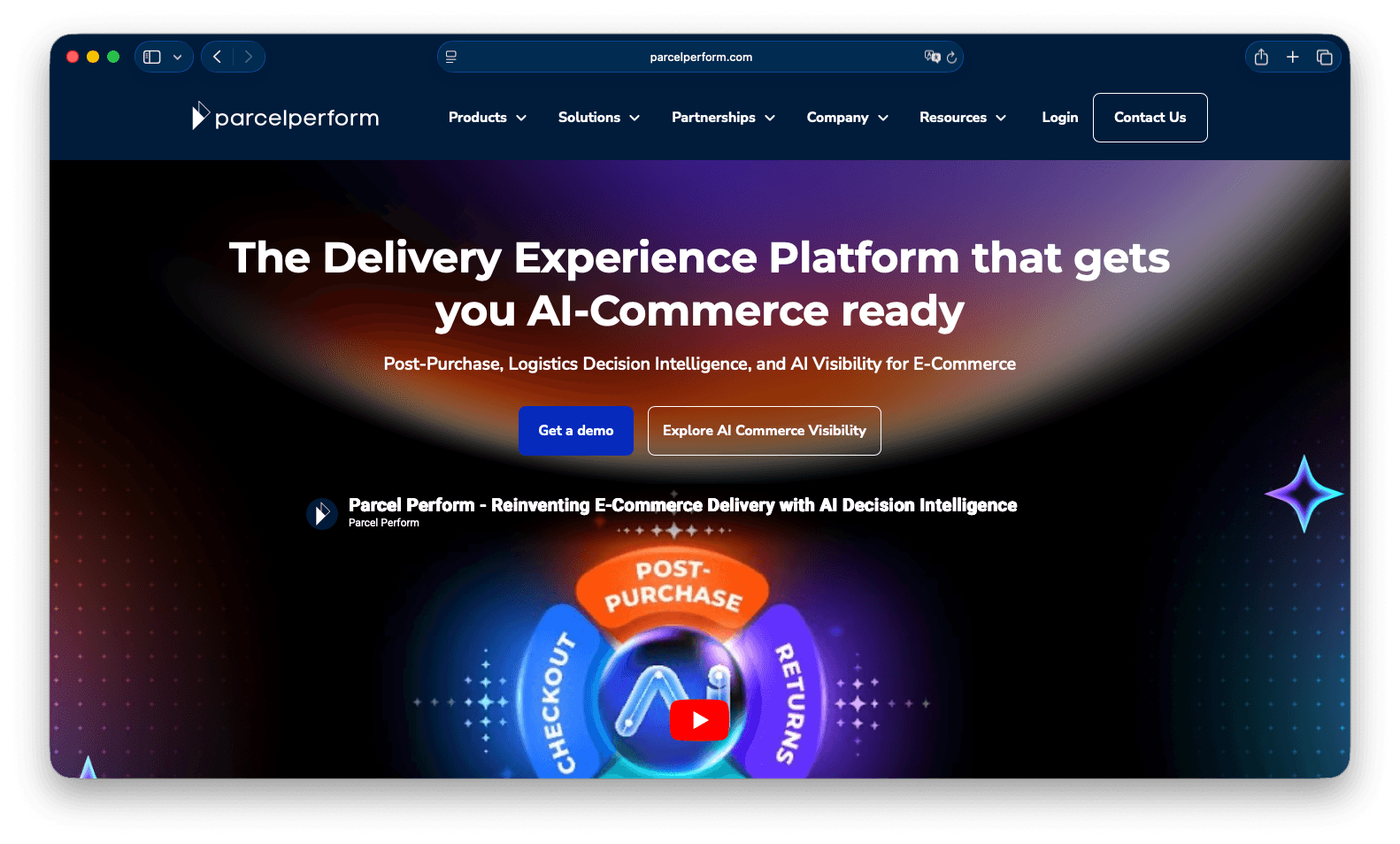
Key features
Post-purchase tracking pages and proactive delivery notifications
AI-powered estimated delivery date widget at checkout
Carrier selection optimization, booking management, and automated invoice auditing
AI Decision Intelligence pulling from WMS, TMS, and ERP data to surface actionable logistics insights
AI Commerce Visibility: monitors how delivery performance signals affect recommendations in AI platforms like ChatGPT and Perplexity
Returns management with self-service portal and exchange promotion
Best for: Enterprise brands focused on AI-powered delivery experience and logistics analytics.
Pricing: Available upon request
4. Narvar
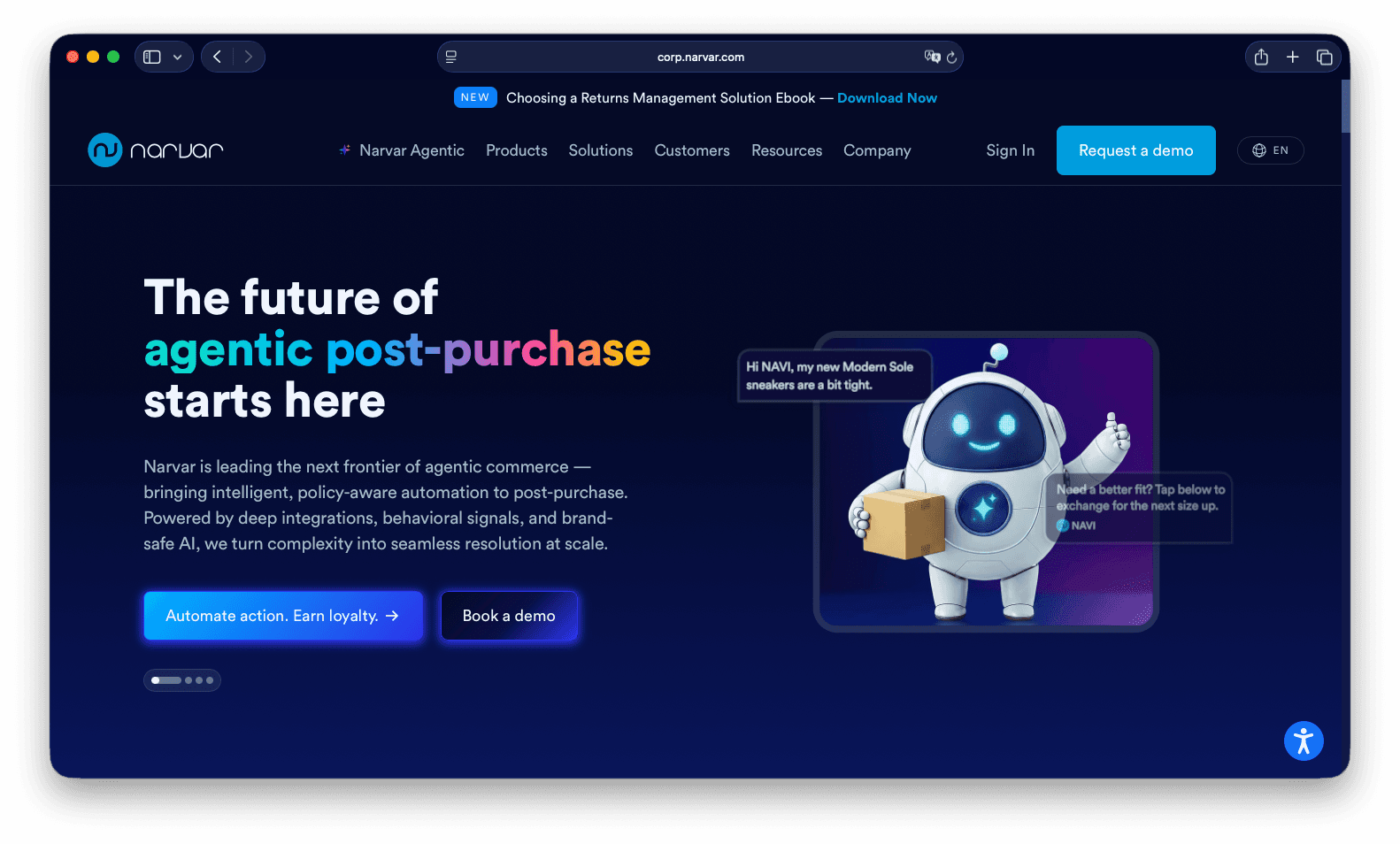
Narvar is a post-purchase experience platform with a strong focus on AI-powered fraud prevention in returns and delivery claims. Its proprietary IRIS engine is trained on consumer interactions, which powers its fraud detection capabilities for both returns and delivery claims. It connects to 1,000+ carriers globally.
Narvar is primarily US-oriented, though it has multilingual support and handles international markets. For European retailers, the carrier coverage and regulatory alignment of a European-first platform will typically be a stronger fit. For retailers with high exposure to return fraud or delivery claim manipulation, it addresses a problem most tracking tools don’t.
Key features
Branded tracking pages
AI-powered delivery date estimates at checkout and on product pages
Returns and exchanges management designed to retain revenue through exchanges rather than refunds
Delivery fraud detection for package theft and claims manipulation
Narvar Agentic: policy-aware AI agents for automated post-purchase resolution
Best for: Mid-market to enterprise retailers with high return volumes and significant exposure to delivery fraud and claims manipulation, primarily in North America.
Pricing: Available upon request
5. TrackingMore
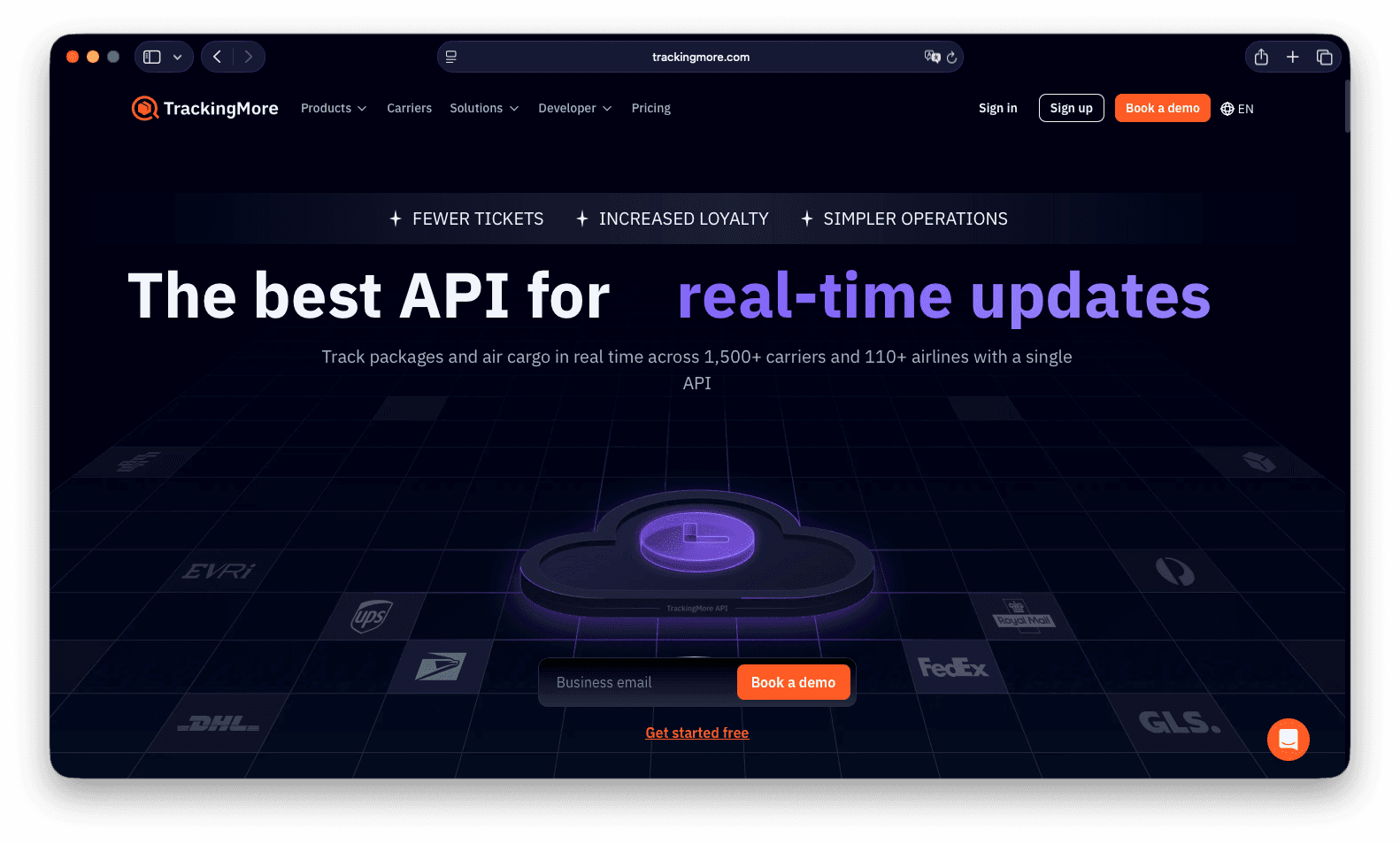
TrackingMore is an API-first tracking tool that connects to 1,592 carriers globally. It’s built primarily for developers and technology teams who want a clean, well-documented API to embed tracking into their own platforms, rather than a packaged SaaS product.
It’s well-suited to retailers or platform builders who want carrier-agnostic tracking as an infrastructure layer. Pricing is credit-based, which makes it accessible for smaller teams. It doesn’t handle label generation or carrier management.
Key features
Multi-carrier tracking API
Branded, customizable tracking pages with multilingual support
Email and SMS notification workflows with configurable triggers
Shopify, WooCommerce, Magento, Amazon, and eBay integrations
Klaviyo integration on paid plans
Transit history translation for cross-border shipments
Best for: Development teams and technology companies that need a tracking API to embed into their own platforms or products, and D2C merchants on Shopify looking for a flexible tracking layer.
Pricing: Free tier available with 50 credits per month. Paid plans start from $9/month (billed annually) for the basic plan. The Pro plan, which includes full API access and webhooks, starts from $59/month billed annually.
6. LateShipment
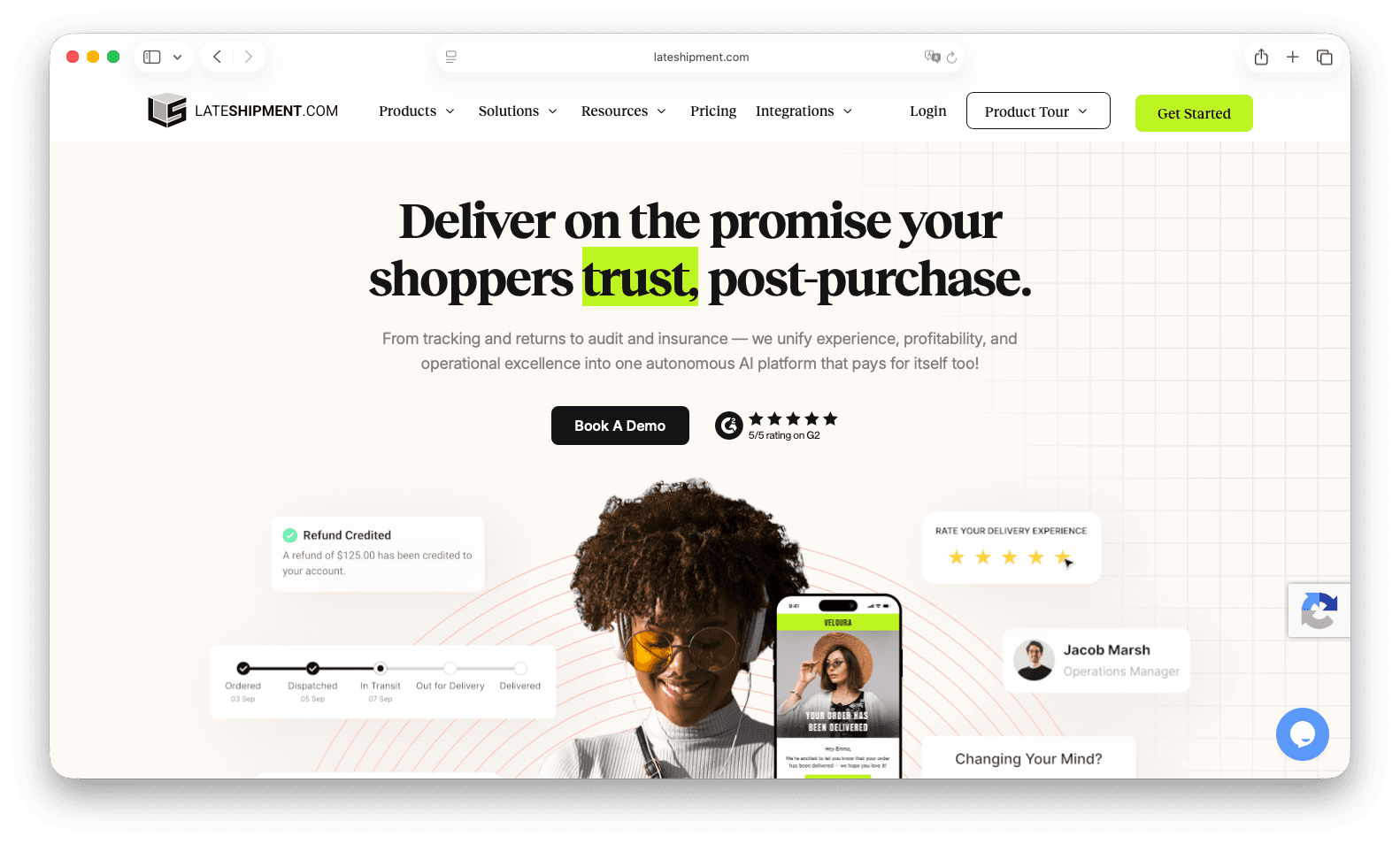
LateShipment is a post-purchase experience platform that bundles shipment tracking, returns management, shipping refund recovery, and shipping insurance. It connects to 1,200+ carriers and positions itself at the intersection of customer experience and cost recovery.
The platform is US and Canada-primary in its carrier focus, which is worth noting for European retailers evaluating coverage for carriers like DHL, DPD, or Colissimo.
Key features
Branded order tracking pages and proactive shipment notifications
Predictive incident alerts
Estimated delivery dates at checkout
Self-serve returns and exchanges portal with automated workflows and revenue retention tools
Automated shipping invoice auditing
Automated claims management
Returns intelligence and fulfillment analytics
Best for: E-commerce retailers looking to combine a branded post-purchase tracking experience with automated shipping refund recovery and returns management in one platform.
Pricing: Plans are based on the amount of shipments per month
7. ClickPost
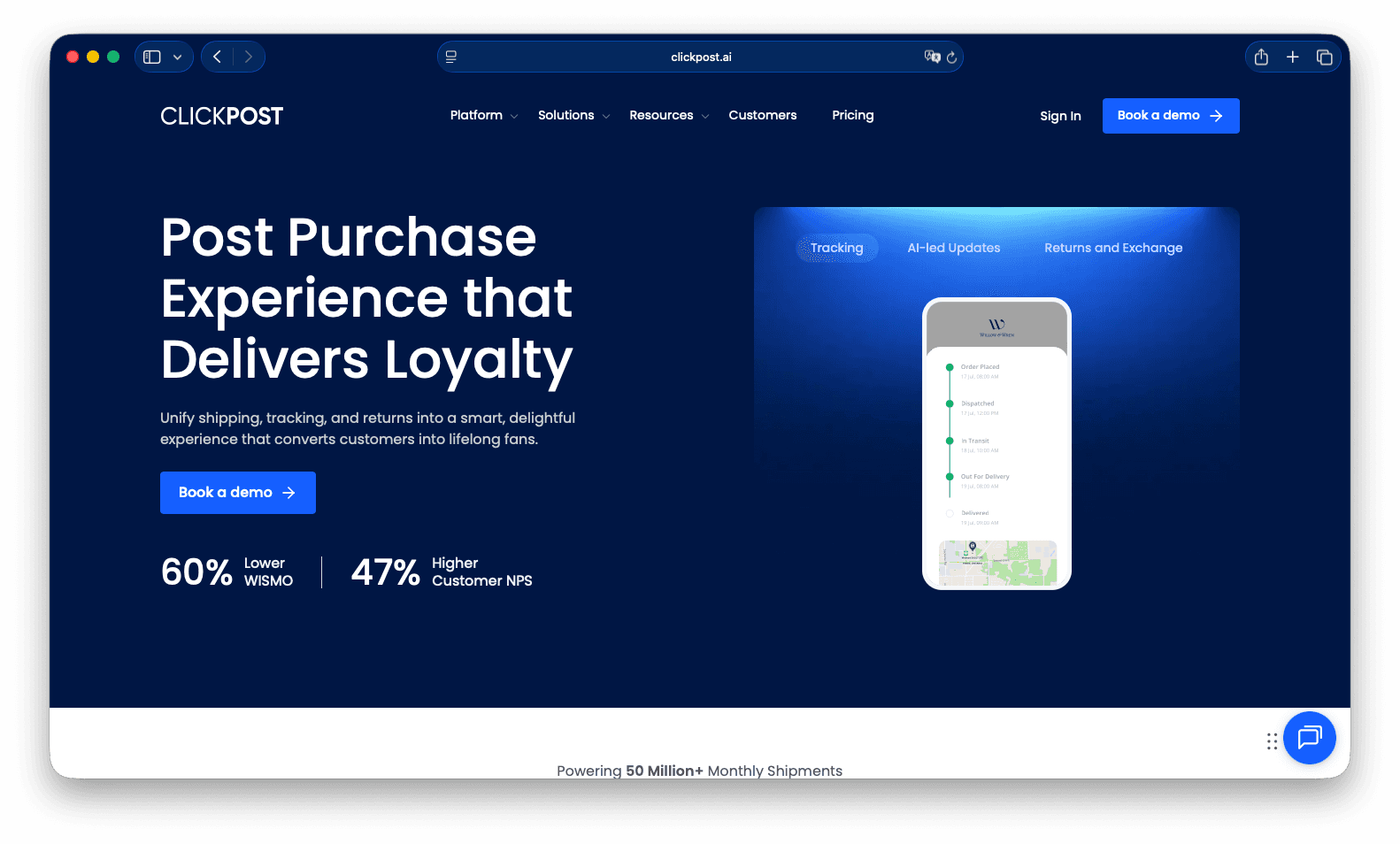
ClickPost is a post-purchase platform built around multi-carrier integration, AI-powered logistics automation, and NDR (Non-Delivery Report) management. Its strongest use case is in markets where failed delivery attempts are frequent. It automates the workflows that handle re-delivery requests, NDR resolution, and carrier follow-up.
ClickPost's carrier coverage and customer base skew heavily toward India and South and Southeast Asia. For retailers operating with European or local carriers in specific markets, the native carrier relationships of a European-first platform will be more sufficient.
Key features
Multi-carrier integration with 600+ carriers, with standardized tracking statuses
Branded self-serve tracking pages
Proactive notifications via email, SMS, and WhatsApp
AI carrier allocation to select the optimal carrier per shipment
AI voice agents for order confirmation and delivery exception resolution
Returns and exchanges management with AI-based customer segmentation
Best for: High-volume D2C brands primarily in India and South and Southeast Asia, particularly those managing frequent failed delivery attempts.
Pricing: Available upon request
8. ParcelLab
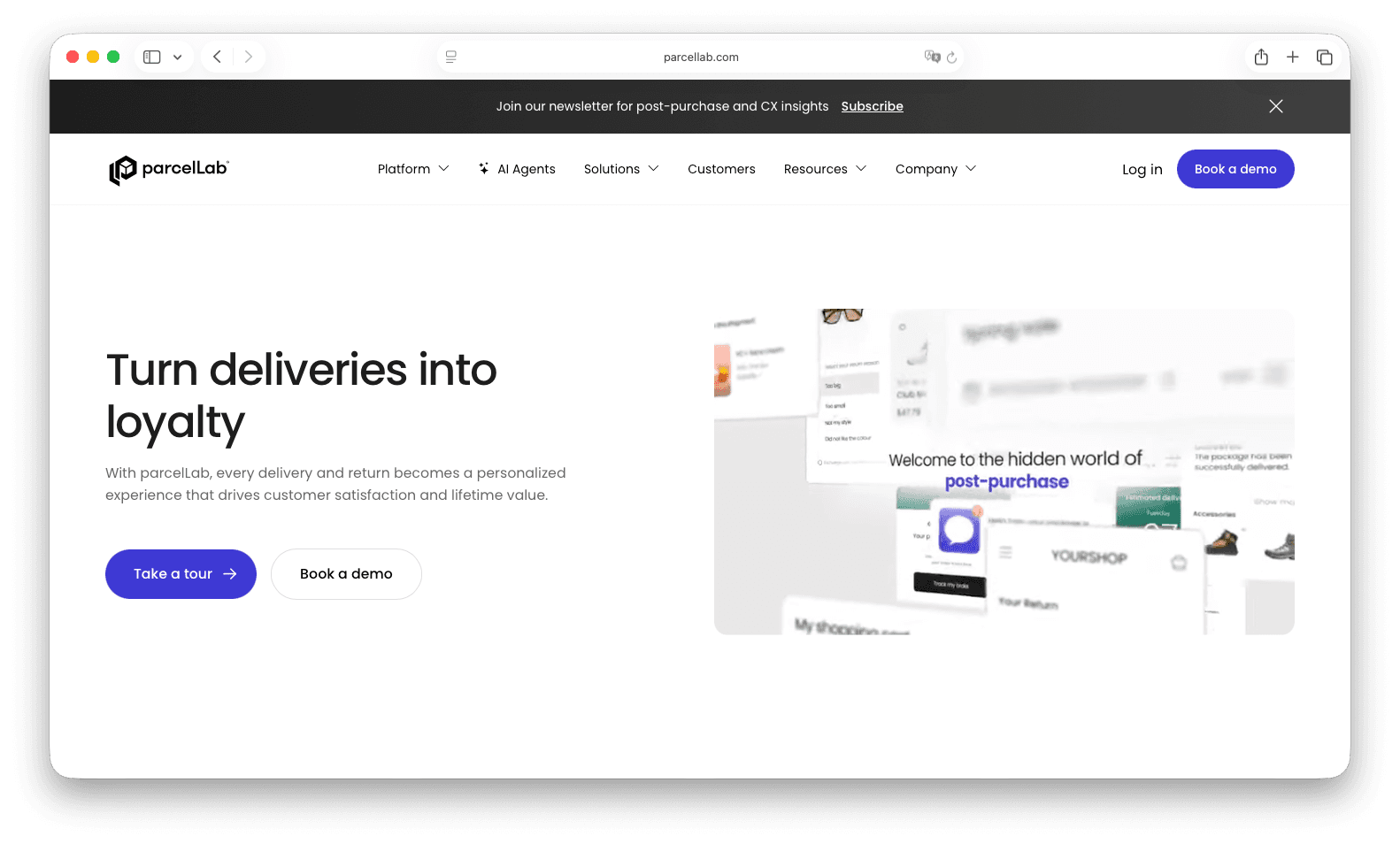
parcelLab is a post-purchase operations platform. It covers three phases of the shipping journey: pre-purchase, post-purchase, and returns. ParcelLab sits on top of your existing shipping setup and focuses on the customer-facing experience after a parcel has been dispatched.
For enterprise retailers who already have their label generation operations in order and want to invest specifically in the experience layer, it’s a credible option with European carrier coverage. For those who want to avoid fragmentation in their shipping strategy, a more complete delivery management software solution could be a better choice.
Key features
Embeddable branded tracking pages with personalized post-purchase customer journeys
Proactive delivery notifications via email and SMS
Predictive delivery dates at the product page and checkout level
Split-shipment management for orders fulfilled across multiple warehouses
Self-service returns portal
parcelLab Copilot: AI assistant for support on platform insights and optimizing processes
Returns analytics and post-purchase performance reporting
Best for: Enterprise retailers looking for a branded post-purchase experience platform.
Pricing: Available upon request
How do you choose the right shipment tracking software?
The list above shows different tools that serve different needs. This way you can decide for yourself which one suits your business and goals best. Not sure what to look for? It can be a big hassle if you figure out after implementing it wasn't the right choice after all. To help you make the best decision, here’s an overview of what to evaluate before committing to one solution.
Carrier coverage
Make sure the platform integrates with the specific carriers you use or want to use in the future. It can also be helpful to check whether global and local carriers are covered. The number in total matters less than whether your actual carrier mix is covered well.
Proactive alerts vs. reactive tracking
Most tools send status updates when a carrier reports them. Fewer platforms detect and act on delivery issues before customers notice. Shipping Intelligence and anomaly detection capabilities separate proactive platforms from reactive ones. Not sure how this is handled? Ask vendors during demo calls specifically how they handle delays that haven’t yet been flagged by the carrier.
Integration with your existing shipping stack
When you’re using a WMS, ERP, e-commerce platform or a custom solution, you want to check whether the tracking tool integrates without requiring significant development work.
Sendcloud, for instance, offers 100+ native integrations which allow you to get up and running quickly. For a more custom set-up we offer flexible APIs. Enterprise retailers are live in under 4 weeks thanks to support from our Solution Engineers.
Branded customer experience
Tracking pages are high-traffic touchpoints, often visited multiple times per shipment. Branded tracking keeps customers on your domain rather than the carrier's portal, reduces WISMO calls by giving customers direct access to status updates, and supports upsell opportunities. Confirm how much customization the platform allows and whether branded pages require more expensive pricing.
Analytics and performance data
Evaluate what type of carrier data is available. Intelligent data allows for predicting shipping events such as disruptions. These insights allow for proactive communication with customers. Next to tracking functionalities for your customers, it’s useful to look at the analytics and insights you’ll get from these platforms.
By being able to evaluate carrier performance based on benchmark data, you can cut costs, improve your negotiation power and decide to use a different carrier when too many delivery issues arise that influence both your costs and the customer experience.
Now that you know exactly what tools to evaluate and how to evaluate them, it's up to you to make a deliberate decision. The best advice is to make a top 3 selection of preferred solutions and save time for a demo call with all of them. These calls give you more insight into functionalities, but also the people behind the software which can make a huge difference.
How to reduce WISMO inquiries by up to 50% with Sendcloud
Most shipment tracking tools are optimized for the “happy flow”. Updating customers on the status of their parcel that’s on the way. But what’s often lacking is predictive insights that help to proactively inform customers.Sendcloud's Shipping Intelligence tells you what’s likely to go wrong before your customers find out.
When a delay is expected, an anomaly is found in transit data, or a delivery exception arises, Sendcloud detects it and triggers automated customer communication. If a parcel is lost or damaged, the claims process can be fully automated too. This reduces pressure on CS teams and cuts WISMO calls by 30 to 50%.
For operations teams managing multiple carriers across multiple EU markets, that means fewer support tickets, lower CS headcount pressure, and a post-purchase experience that actually reflects your brand rather than the carrier's portal.
Request a demo and see in less than 30 minutes how Sendcloud can help you optimize the complete delivery journey to delight your customers and make shipping the reason they come back to your store.
FAQs
What is shipment tracking software, exactly?
Shipment tracking software connects to carrier networks and aggregates real-time status updates for parcels in transit. Beyond basic status visibility, modern platforms also send proactive notifications to customers, flag exceptions before customers complain, and provide analytics on carrier performance across your shipping operation.
Who benefits most from shipment tracking software?
E-commerce operations and logistics teams at retailers shipping at least hundred parcels per month typically see the strongest ROI. The main gains come from fewer WISMO support tickets, better carrier performance visibility, and a more consistent post-purchase experience that drives repeat purchases.
Brands in fashion, consumer goods, health and beauty, and electronics tend to be the highest-volume users.
What is a branded tracking page and why does it matter?
A branded tracking page is a delivery status page, designed to match your brand, rather than the generic carrier portal customers are usually redirected to. Tracking pages are among the most visited pages in e-commerce. Customers check them multiple times per shipment, so redirecting them to a carrier portal is a missed opportunity to reinforce your brand and surface relevant content.
Branding tracking pages also help to reduce WISMO, because they have a clear page to go to and check status updates without needing to contact support. Most tools in this list offer branded tracking pages; the differences are in how much you can customize them and whether the feature is available on entry-level plans.
What is the difference between shipment tracking software and a delivery management platform?
Shipment tracking software focuses specifically on the post-dispatch phase: monitoring parcels in transit and communicating status updates to customers. A delivery management platform covers a broader scope.
Next to tracking, delivery management platforms offer carrier integrations, flexible delivery methods at checkout, label generation, tracking, returns management, and claims automation. Sendcloud is a delivery management platform. AfterShip, TrackingMore, and Narvar are primarily post-purchase tracking and experience tools.
How does shipment tracking software reduce WISMO inquiries?
WISMO ("where is my order") accounts for up to 50 to 60% of inbound e-commerce support tickets. Tracking software reduces this in two ways: by sending proactive notifications at key delivery milestones so customers don’t need to ask, and by providing a self-service tracking page where customers can check status themselves.
Sendcloud customers see WISMO call reductions of 30 to 50% after implementing proactive tracking updates across their carrier mix.
Can shipment tracking software integrate with Shopify, WooCommerce, and other e-commerce platforms?
Most tools in this list offer direct integrations with major e-commerce platforms. AfterShip and TrackingMore have strong Shopify integrations. Sendcloud integrates natively with Shopify, WooCommerce, Magento, and 100+ ERP and WMS platforms. If you’re running a custom-built stack, look for tracking APIs and API-first tools.


Author and researcher
Huib Adriaans is the VP of Enterprise at Sendcloud and the founder of Tracey. With 10+ years in the logistics space, he leverages shipping intelligence and data-driven insights to help merchants reduce "Where is my parcel?" enquiries and build world-class delivery experiences.
How much time can you save on shipping?

Share
Recommended For You
Enterprise
Tracking
Sendcloud’s Post-Purchase Solution, now available in the tools your team already uses
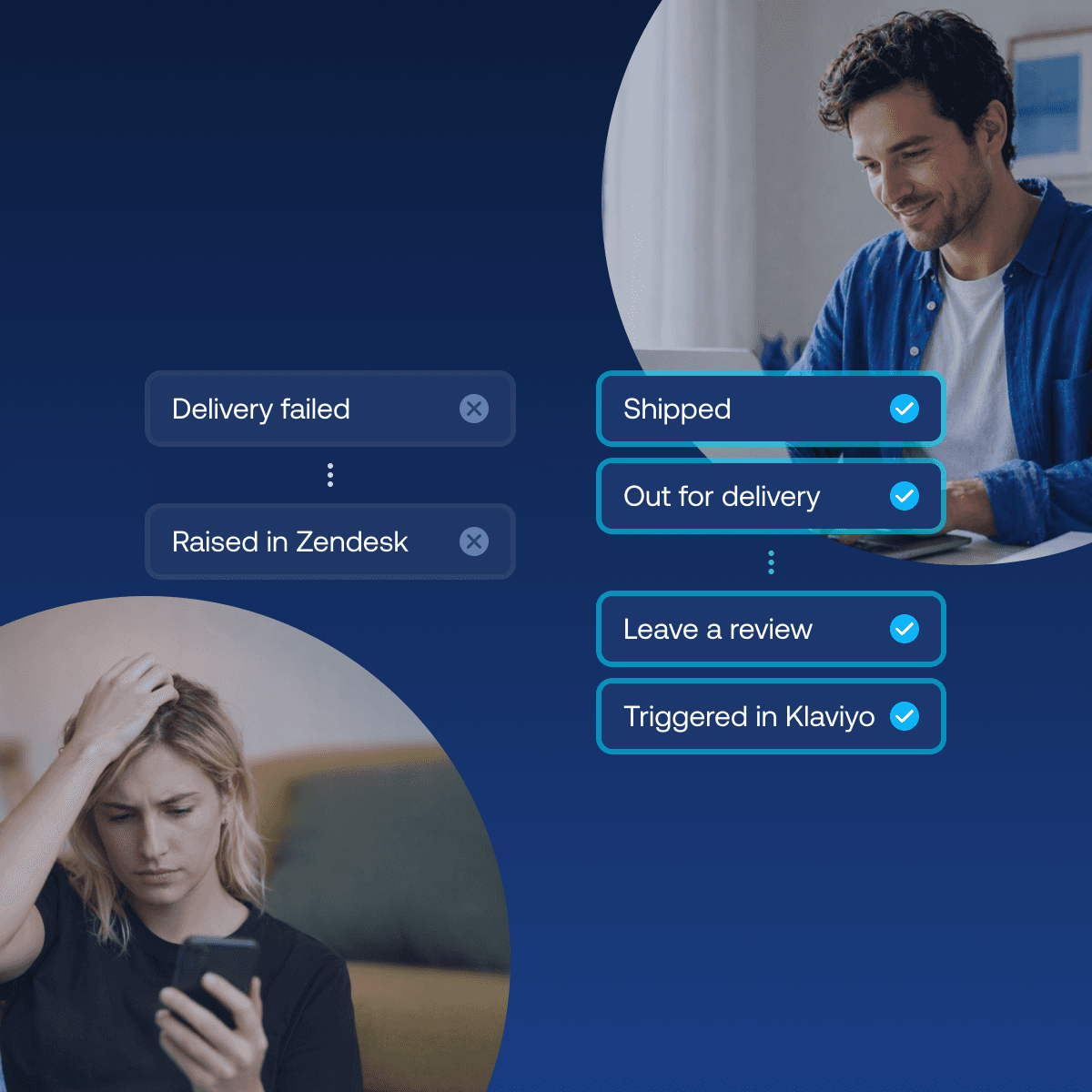
Most retailers leave post-purchase on default, letting courier notifications and out-of-the-box tracking emails speak for the brand. Sendcloud's Post-Purchase Solution changes that: delivery events now flow straight into the tools your team already uses, like Gorgias, Zendesk, Freshdesk and Klaviyo, turning tracking updates into branded touchpoints, proactive support alerts, and automated claims, no matter which courier or platform you ship with.

Shipping
Integrations
Best Shopify shipping apps: compare features, pricing & automation
Compare the best Shopify shipping apps for automation, couriers, labels, tracking, returns and international shipping. Find the right app for your store.

Shipping Intelligence
Shipping
E-commerce