


No topic keeps online retailers up at night quite like the steady rise in returns. Return rates have climbed for years, and each increase calls for a smarter approach to returns processing. Want a smoother returns process and happier customers? We'll walk you through what matters most and share 14 tips and tricks for keeping returns to a minimum.
What is returns processing?
Returns processing covers every step involved in getting an online order sent back. The process starts the moment a customer decides to return something they ordered and received. Good returns management organizes goods, finances, and information efficiently, affordably, and with the customer in mind.
So how does returns processing actually work, and what obligations and challenges come with it? Here's how to clear the hurdles of the online store return.
The legal framework for returns
Your customers have the right to return goods up to 14 days after receiving their delivery. Many businesses extend this window to 30 or even 100 days, which tends to go over very well with shoppers. It's worth considering an extension yourself, since it can have a measurable, positive effect on your conversion rate.
You also can't overlook your obligation to inform customers of their right of withdrawal in writing. If a customer withdraws, you're required to refund the purchase price and the associated standard shipping costs within 14 days.
In practice, customers can abuse the right of withdrawal and send back goods that have already been used. This creates a legal gray area: you can only refuse a refund if you can clearly prove signs of use, which is rarely straightforward.
A fraud return is an abuse of the right of withdrawal, where a customer returns goods that have already been used or worn. This behavior creates enormous costs for online retailers.
What do customers expect from returns in online stores?
Returns matter a great deal to online retailers, and to shoppers. According to our consumer research, as many as 80% of online shoppers read the return policy before they buy.
Shoppers pay particular attention to:
Availability of return information: if it's missing, 68% wouldn't order in the first place.
Shipping and return costs: if customers had to pay for the return themselves, 66% wouldn't order.
Responsibility: 53% of online shoppers want nothing to do with returns processing. They expect the retailer to handle the return and cover all the costs.
The easier and cheaper your returns process is, the more likely a shopper is to buy from your store. You can see where this is going: returns processing is an essential part of e-commerce, and not something to neglect.
The most popular forms of returns processing
A return slip in the box
Many businesses include a return slip alongside the goods right in the box. It's extremely convenient for the customer: to send an item back, they just stick the enclosed slip on the parcel and it's ready to go.
Good for your customer, bad for you as a store: with this approach, you're practically inviting customers to send things back. The result is higher return rates and a heavier environmental toll.
Returns by phone or email
Some stores require customers to request a return slip by phone or email. This approach is awkward and time-consuming for you and your customer alike, so it's rarely used.
A returns portal: the ideal approach for shoppers and stores
The best form of returns processing is almost certainly the returns portal, because you and the buyer both benefit. Handling returns through a portal creates the perfect win-win.
At Sendcloud, we offer a fully customizable returns portal that you can adapt to your store's design. Through it, customers create their own return labels, choose how they'd like to be refunded, and pick from a range of return points.
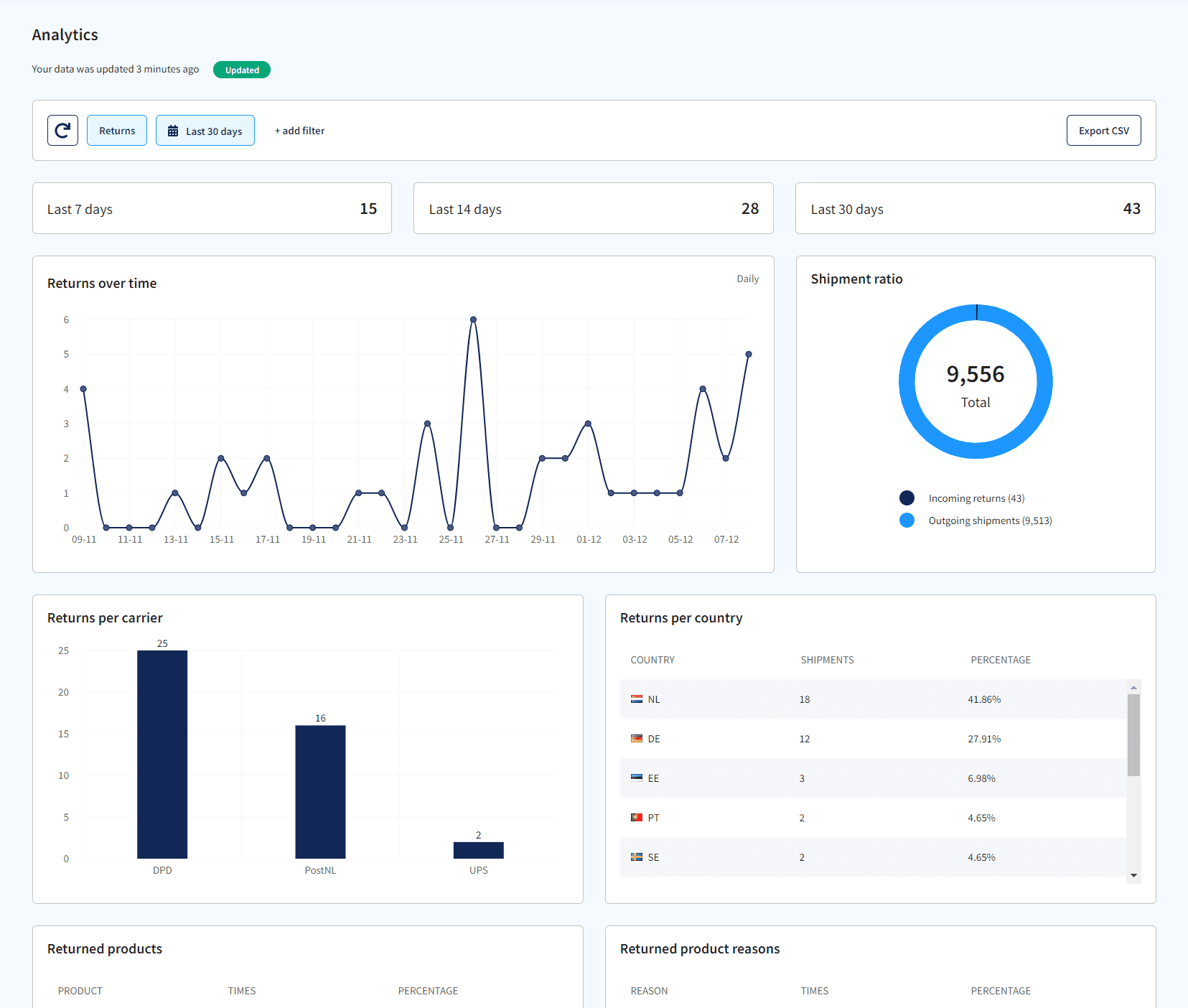
On your side, our analytics dashboard gives you a detailed overview of your customers' return behavior. That makes returns processing a breeze.
International returns processing
As online retail has grown, national borders have fallen away and goods can now be sold worldwide. That affects your returns processing too. As a rule, customers prefer domestic addresses, since they expect quicker shipping and returns.
So check your store's capabilities: can you guarantee straightforward, speedy shipping and returns worldwide? You should also give international customers returns information in their own language.
Think, too, about how customers can send goods back when they need to. Because return shipping from abroad is expensive, it's worth considering local return options.
Minimizing return rates: proven tips and tricks
Returns processing is expensive and time-consuming for you as a retailer. Studies have found that a single return can cost an online store more than €19 on average.
There's an environmental argument too: every year, product returns are responsible for hundreds of thousands of tonnes of CO2 emissions.
It's clear that reducing your store's return rate pays off. So we've put together 14+ proven tips and tricks to help you cut down on returns.
1. Detailed product descriptions
Thorough product descriptions, images, and where possible videos give customers a clear sense of the product. That's an efficient way to head off returns that happen because the product didn't match expectations.
2. User-generated content
User-generated content like blog articles or product videos can reinforce the information in your own product descriptions. Customers also trust an independent presentation of a product more than the store's own claims, so you gain extra credibility.
3. Use customer reviews
Like user-generated content, customer reviews build extra trust in your store and your products. They also have a positive effect on your customers' return behavior.
4. Gather feedback
Knowing what your customers want is worth its weight in gold. When it comes to returns in particular, it's useful to understand why something was sent back.
You can do this the classic way by providing a return label. Or better still: give customers a returns portal like Sendcloud's, which you can personalize. Through the analytics dashboard, you can then see which products are returned, how often, and why.
5. Post-purchase customer support
Your job as a retailer isn't done the moment someone buys from your store. You'll want to build a long-term customer relationship, and support after the purchase is essential to that, not least when it comes to returns.
Someone who feels lost with the product they've bought will soon start thinking about a return. This is where you come in, with the right support to steer them away from it.
6. Visible return policies
To keep your support team from being buried in return requests, a customized returns portal can save valuable capacity. Point customers to your return policy there and answer their simpler questions directly.
With Sendcloud, creating a consistent customer experience is easy: you just add your own branding to the header and footer of your returns portal. You can also add links to your social media channels to connect with your followers, and a link to your customer success or support team so shoppers can find help if a question comes up during the return.
7. A discount on the purchase price
Discounts on the purchase price are another good way to ease the load on your returns processing. A reduced price can be enough for a customer to overlook a minor flaw and decide against a return.
Until 2009, the online retailer Amazon offered customers a so-called low-price guarantee to counter high return volumes.
8. A free gift with the delivery
Who doesn't enjoy an unexpected treat? It costs you next to nothing but delights the customer all the more. The gesture makes you instantly more likeable and can bring your return rates down considerably.
9. Sturdy packaging
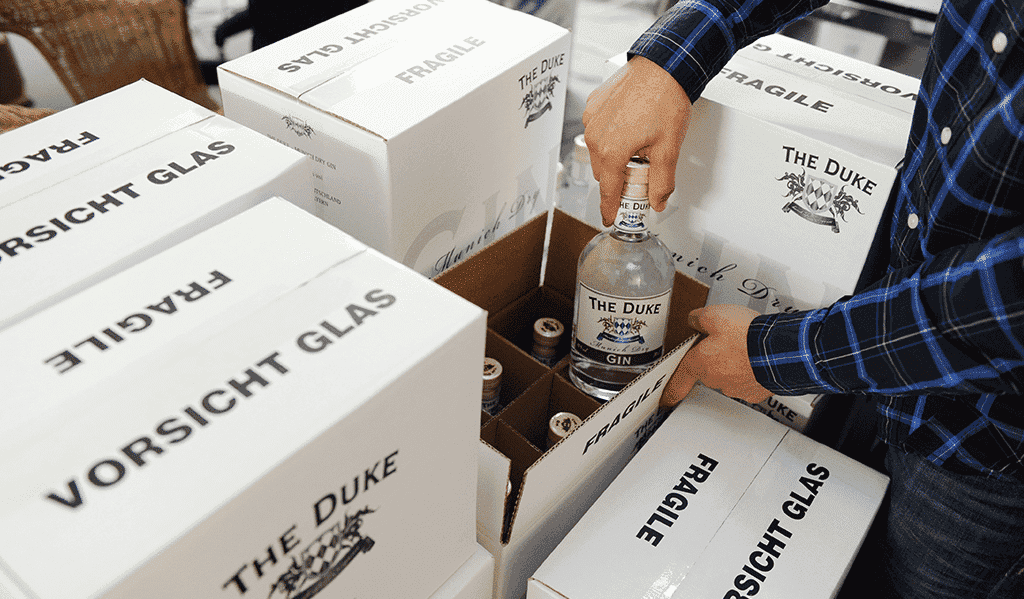
Plenty of goods are returned, rightly, because they arrived damaged. The cause is often improper packaging that lets the item get harmed in transit. It's best not to let it come to that: avoid returns due to damaged goods with sturdy packaging.
The right packaging is especially important when shipping high-value products.
10. Meet your delivery times
Your customers' trust is everything for a healthy conversion rate. Nothing builds that trust better than delivering within the times you promised.
If a delivery takes considerably longer, buyers may already have bought the same product from a competitor. The result: your delivery goes straight back and becomes a return.
Ship your parcels flexibly with the carriers of your choice. Choose from more than 170 carriers like DHL, UPS, and DPD, and delight your customers with on-time deliveries.
11. Use sizing and advice tools
Does your store sell fashion? Then, statistically, you're already dealing with very high return rates. According to our consumer research, 94% of fashion shoppers regularly send a product back.
The reason: ordering fashion in the right size is tricky, thanks to different fits and cuts. All too often a garment is ordered too big or too small and goes straight back.
Here you can ease your returns by offering advice tools that help customers find the right size. On our blog you'll find more tips on how to reduce returns in fashion.
12. Offer high-quality products
An obvious one: the best way to avoid returns is to not give customers a reason to return in the first place.
How? Hold yourself and your products to a high standard, and aim to give customers the best possible quality. Stores that are only after a quick buck, and don't believe in their own products, pay a high price in the form of costly returns.
13. Raise customers' environmental awareness
Environmental awareness among shoppers, especially younger ones, is stronger than ever.
You can put this to work for your returns by sharpening that awareness, particularly if you sell goods that appeal to this group. Inspire your customers to order responsibly. It reduces the volume of returned goods many times over.
14. Paid returns
Free returns are becoming less and less the norm: fashion retailers like Zara and Uniqlo already charge consumers for sending goods back. Paid returns are a helpful tool for cutting costs and shrinking the environmental footprint of returns.
To make paid returns easier, Sendcloud has teamed up with the payment provider Mollie. You can switch on payment for returns and collect return fees directly in the returns portal through Mollie.
You can even set return reasons as a condition in your return rules, charging different fees depending on why the product is being sent back. If a customer wants to return a sweater simply because they don't like it, they cover the return fee themselves. If an item is defective, the return stays free.

Next level: optimizing returns processing
Followed all the tips and already cut your returns down sharply? Great. Now you can optimize your returns processing to lower your costs as a store.
You can optimize your returns processing by, for example:
Choosing the right carriers
Building an attractive returns portal
Providing additional return options
Analyzing and evaluating the returns process
Sendcloud gives you the tools to optimize your returns processing and improve your entire shipping operation for you and your customers, saving costs along the way. Get in touch with us to see how.


Author and researcher
As Global Content Manager at Sendcloud, Johanna leads content strategy across e-commerce, logistics, and shipping automation. With a background in B2B SaaS and a passion for clear communication, she creates educational resources that help over 30,000 online stores optimize and scale their shipping operations.

Subject matter expert
With over a decade of experience in B2B SaaS, Ana Ondreicsik is a Product Lead at Sendcloud specializing in post-purchase experiences, tracking, and returns. She shares insights on building customer-centric solutions that improve the e-commerce delivery experience.
How much time can you save on shipping?

Share
Recommended for you
Peak Season
Post-holiday returns: What January’s hidden peak season just taught you
Post-holiday returns surge in January. Use data from Sendcloud and Returnless to plan volume, refunds, inventory and paid returns in a way shoppers expect.
Marketplaces
Marketplace returns: from operational chaos to return intelligence
January exposed the weak spots in marketplace returns. Learn what shoppers expect, where friction occurs, and how to improve returns before the next peak.

E-commerce
The power of flexible returns: How store credit can save your business €150,000 in cash flow
Discover how flexible returns and store credit can boost cash flow, customer retention, and profitability for your business.