


As an e-commerce retailer, you've probably wondered how to calculate the girth of your parcels. Many carriers use girth as the size measure for their different rates. But what exactly does it mean, and why can it matter to calculate it? In this guide you'll learn how to determine girth correctly, so you can support fast delivery times and optimize your logistics costs at the same time.

General questions about girth
Which girth limits apply at the different carriers, and how do they feed into rates? What should you keep in mind when choosing packaging? And what happens if your parcel's actual dimensions exceed your chosen carrier's maximum? Here are the answers.
What does girth mean?
Girth is a widely used measure in logistics that caps the maximum size of parcels for shipping. It determines whether a parcel's dimensions are permitted for the chosen rate, and therefore what it costs. If a parcel exceeds the given girth, this can lead to extra costs or, for larger parcels, even rejection for standard shipping, in which case the parcel has to be sent as bulky goods or on a pallet with a freight forwarder. Usually it's not only girth that's limited, but also the maximum length and weight of a shipment. The upper limits depend on the carrier and can also vary between a carrier's rates.
Why do you need to calculate girth?
Girth lets you determine whether shipping your parcel is permitted, and at what price, so you avoid unnecessary delays and potential extra costs from the start. Carriers measure your parcel's dimensions during processing, for example by laser, and occasionally reweigh it. If this check reveals a difference from the shipping order, the cost is recalculated. If your parcel turns out to exceed the maximum values, delays can also occur, since special handling such as bulky-goods shipping or pallet shipping via a freight forwarder has to be arranged first.
The most common reasons for later extra costs and possible delays are:
Discrepancies in the dimensions or weight of the shipment
Special handling needed because the maximum values are exceeded
Incorrectly created shipping labels
It's therefore always worth calculating a parcel's girth before shipping. That way you can work out your exact costs in advance and, if necessary, adjust the shipping method in time. This not only saves you later surcharges from the carrier, but also makes sure your goods reach the customer within the promised delivery time, which is a competitive advantage all year round, not just during seasonal peaks.
How is a parcel's girth calculated?
As noted above, girth expresses a parcel's space requirement. You add the longest side to the circumference, where the circumference is the distance around the two shorter sides. To measure it, place your tape measure at the widest point, at a right angle to the length, and wrap it once around the parcel. In other words, girth equals the sum of twice the width, twice the height, and one length. It's usually given in centimeters.
The formula for calculating girth is:
Girth = 1x length + 2x width + 2x height
or
Girth = length + circumference
Always measure the outer edge lengths of the box you're using.
What does a girth of 300 cm mean, for example?
A girth of 300 cm means the sum of a parcel's length and circumference is 300 cm. The girth of different box sizes can be identical, so if you change one of the three dimensions (length, width, or height) to fit your goods better, keep in mind that the other dimensions may change too. In the example below, two differently shaped parcels both have a girth of 300 cm:
Parcel 1 (length: 60 cm, width: 60 cm, height: 60 cm) → girth of 300 cm.
Parcel 2 (length: 120 cm, width: 60 cm, height: 30 cm) → also a girth of 300 cm.
Calculating girth vs. calculating volumetric weight
Alongside volumetric weight, girth plays a decisive role in price calculation and therefore in choosing the right carrier, especially for international shipping. Carriers aim to use the available load space in their trucks, planes, and so on optimally, and to run their fully automated sorting facilities efficiently. They can only achieve this by limiting the maximum volume of parcels through maximum size and weight. In short, a parcel has to be easy for the carrier to transport, and the bulkier the packaging, the more awkward and expensive shipping becomes.
Girth: limiting a parcel's proportions
Girth exists to limit parcel size taking both circumference and length into account. If only a maximum length of, say, 200 cm were specified, the parcel could quickly become too big and hard to transport depending on its circumference. Picture the bulky dimensions of a 200 x 200 x 200 cm parcel. If that parcel were 200 cm long but only 30 cm wide and 5 cm high, transport would be far easier, despite the same length. A maximum length alone isn't enough to limit a parcel's dimensions. Setting a girth caps the overall size, which automatically affects all three sides: if one side gets longer, the other two must get shorter so the parcel doesn't exceed the girth.
Volumetric weight: determining a parcel's volume
By comparison, volumetric weight describes the actual space a shipment needs in the cargo hold. The more space, the more transport costs, which is why this measure is used especially to price large but light goods, where the volumetric weight is higher than the actual weight. For example, 500 kg of feathers needs far more load space than 500 kg of lead, so carriers compare the volumetric weight with the actual weight and bill the higher of the two. Volumetric weight is calculated by multiplying all three sides of a parcel (length x width x height) and dividing by a conversion factor that varies by carrier. For girth, by contrast, you add the longest side to the circumference, that is, twice the height and twice the width.
How do the different carriers calculate girth?
Most carriers calculate and use girth the same way, but some express the maximum dimensions for standard shipping differently. Here's what to keep in mind for DHL, DPD, GLS, UPS, FedEx, and TNT.
DHL
DHL calculates girth as described above: you add the longest side to the circumference. DHL also sets a maximum size for standard parcels to keep them within the maximum girth. If your parcel exceeds the maximum size of 120 x 60 x 60 cm (length x width x height) in even one dimension (for example 70 x 65 x 30 cm), it automatically counts as bulky goods and a surcharge applies. The maximum girth is generally 300 cm for lighter parcels, rising to 360 cm for heavier domestic parcels; for international shipping it's generally 300 cm.
DPD
DPD also calculates girth with the formula 2x height + 2x width + 1x length. The maximum girth varies depending on whether you drop your parcel off at a parcel shop or have DPD collect it. For parcel-shop drop-off, your parcel may be at most 100 cm long with a girth of at most 250 cm. For collection, it may be up to 175 cm long with a girth of up to 300 cm. This applies to both DPD Classic and DPD Express.
GLS
GLS also calculates girth as the sum of length and circumference (2x height + 2x width). GLS applies a maximum girth of 300 cm. In addition, your parcel may be no higher than 60 cm, no wider than 80 cm, and no longer than 200 cm. Note that these are maximum values for the three individual dimensions, independent of their ratio in terms of girth, so you'll still need to work out your parcel's girth yourself.
UPS
With UPS you can ship parcels up to a maximum length of 274 cm with a girth of up to 400 cm. To determine the girth, measure the longest side and the circumference of your parcel and add them. Once your parcel exceeds a girth of 300 cm, it counts as a large package and is subject to a chargeable minimum weight of 40 kg. For parcels over the maximum limits for length, weight, or girth, an oversize surcharge applies. Some countries have their own local requirements.
FedEx
With FedEx you can ship parcels up to a length of 274 cm, with a girth of no more than 330 cm. This applies to domestic, Europe-wide, and international services. Any shipment that exceeds the maximum limits has its rate recalculated. To calculate girth for FedEx, take the length of your parcel and add twice the width and twice the height.
TNT
TNT is one of the few carriers that doesn't use girth to limit parcel dimensions. Instead it uses maximum overall dimensions, so girth applies indirectly. With TNT you don't need to check your parcel's girth as long as the dimensions are within the maximum. TNT's maximum for domestic shipments is 3.02 m x 2.03 m x 1.78 m (length x width x height), while for Europe-wide or intercontinental express shipments a parcel may measure up to 2.4 m x 1.2 m x 1.5 m. Additional fees may apply depending on the service, and for international shipments the maximum dimension and weight limits can vary by country.
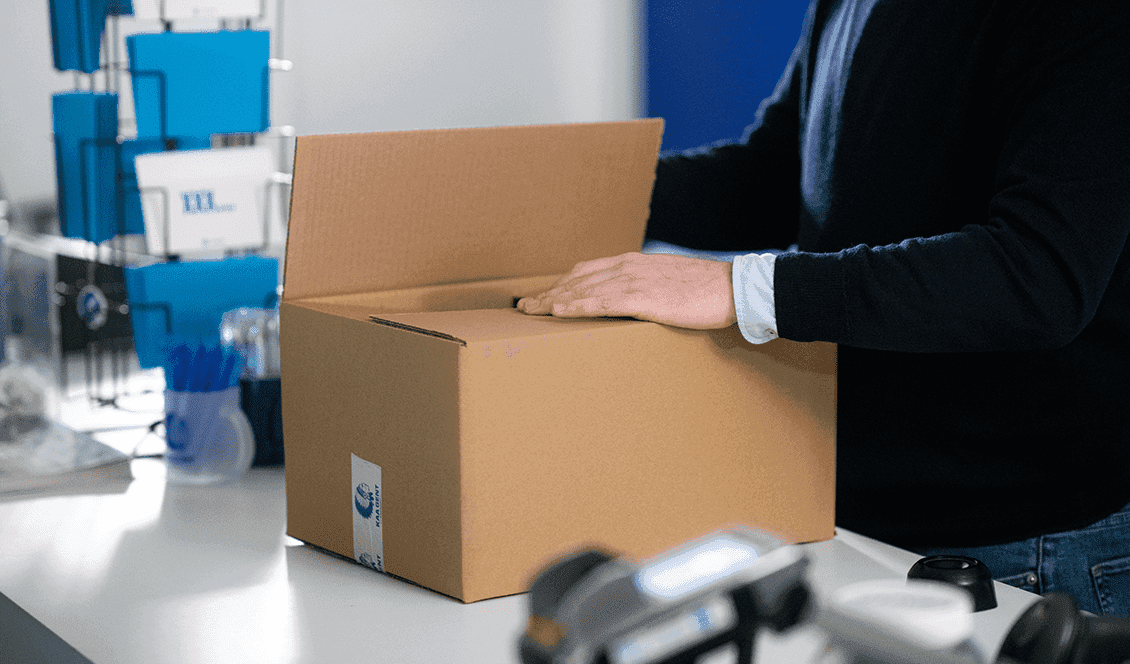
What to keep in mind when packing your parcels
If you release parcels with impermissible dimensions for shipping, you risk not only late delivery and higher costs but also failed delivery. Here are practical tips to keep an eye on your parcels' girth and avoid delays and later extra costs right when you pack:
Always choose packaging that's optimally matched to the size and weight of your goods.
Pack as compactly and space-efficiently as possible, but don't crush anything. Leave enough space between the goods and the box, and fill it with suitable material.
Avoid boxes that are too small, where the contents push the box outward, which can push the packed girth over the limit.
Avoid boxes that are too large with too much empty space. When stacked in vehicles or warehouses, they can be crushed and take on a shape that no longer matches the original girth.
When buying packaging material, pay attention to stability and load capacity, especially when the box dimensions are only just within the carrier's maximum girth.
Use common parcel sizes to ensure eligibility for standard shipping and its rates. There are also special boxes whose edge lengths are matched exactly to individual carriers' maximum girths.
Note that some box manufacturers state inner rather than outer dimensions, so it's best to measure yourself so the actual girth is correct.
Access the most popular carriers flexibly with Sendcloud
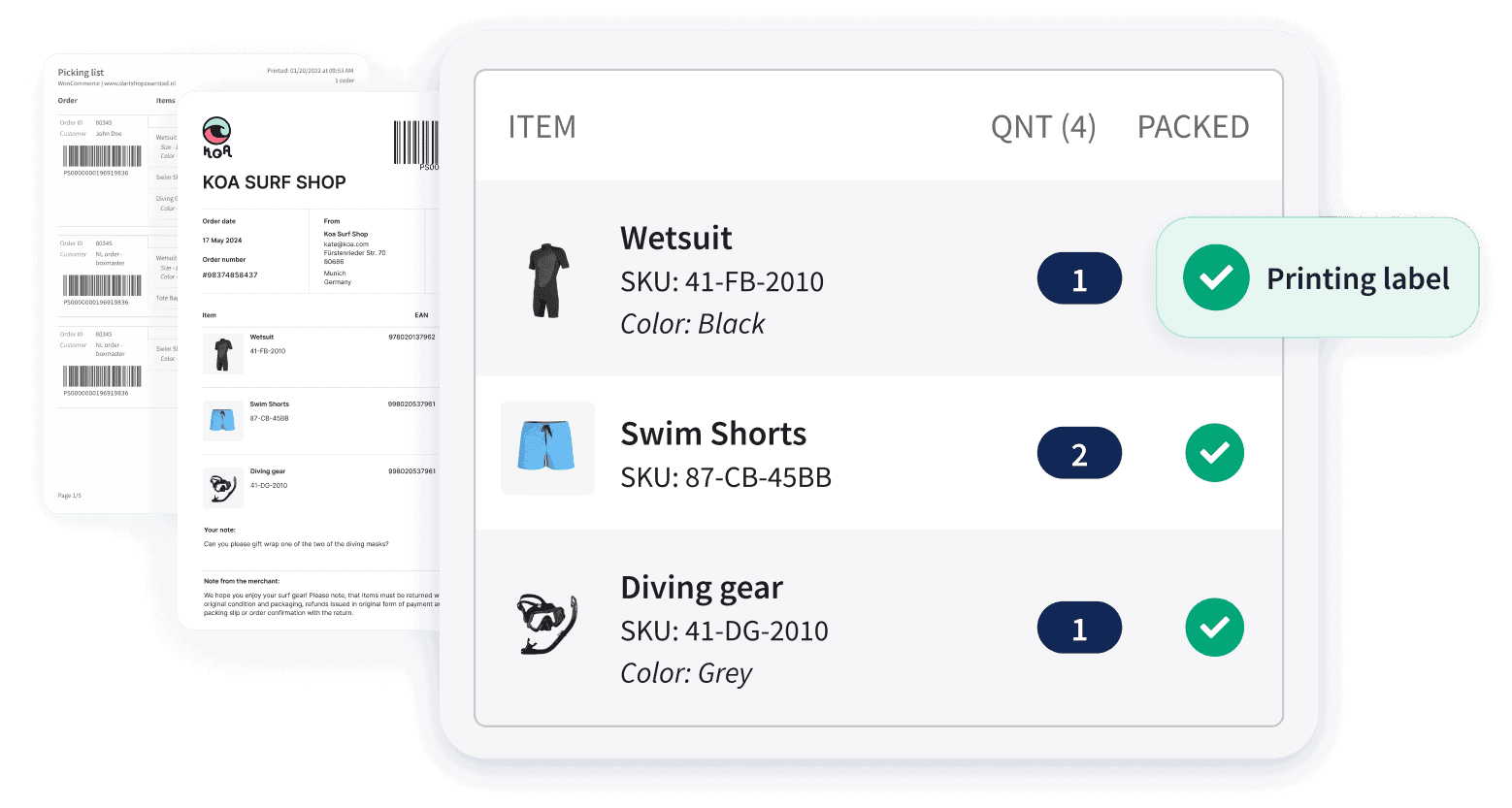
With the Sendcloud multi-carrier platform you can choose from various carriers and always offer your customers the best service for each product. You save time, organize your logistics better, and further optimize your shipping costs. You can also automate your entire shipping process with smart shipping rules and print labels in a single click.
Would you like to try it out for yourself? Then create your Sendcloud account now and try the Sendcloud shipping platform for 14 days free of charge with no obligation! Automating your logistics offers you numerous benefits and savings—take advantage of them and save time and money!

Author and researcher
Combining expertise in event marketing and communication design, Alexandra leads global event and partner marketing initiatives at Sendcloud for the e-commerce and logistics industry.


Subject matter expert
Huib Adriaans is the VP of Enterprise at Sendcloud and the founder of Tracey. With 10+ years in the logistics space, he leverages shipping intelligence and data-driven insights to help merchants reduce "Where is my parcel?" inquiries and build world-class delivery experiences.
How much time can you save on shipping?

Share
Recommended for you

Shipping
Integrations
Best Shopify shipping apps: compare features, pricing & automation
Compare the best Shopify shipping apps for automation, carriers, labels, tracking, returns and international shipping. Find the right app for your store.

Shipping Intelligence
Shipping
E-commerce
Best 9 Shipping Data Analytics Software Tools (2026)
E-commerce
Enterprise