


If you run an online store, you have probably been very busy lately. More and more consumers are shopping online, and e-commerce has become the fastest-growing sector of all. Let's take a look at the 2023 e-commerce statistics together and what we can learn from them.
The rise in shipments has not only changed how carriers approach e-commerce logistics, but also how European consumers see things. Online shoppers have changed their buying behavior, giving online retailers unmatched opportunities!
How will e-commerce keep evolving? Will current trends, both in delivery and in each market, keep heading in the same direction? That is what our study answers. Based on around 9,000 consumers in Europe and the United States, it identifies market trends and unlocks the secret of e-commerce logistics by looking at the differences between countries and generations.
E-commerce has become the norm for millions of online shoppers
It's no secret that brick-and-mortar stores are struggling to keep up with online sales. E-commerce giants dominate the market and are transforming consumer habits.
Today, an omnichannel strategy seems to be the best way for businesses to grow. That is even more true now that consumers have made online shopping part of their daily lives.
Online retailers need to understand what their customers expect from them. That doesn't just mean following trends, but knowing exactly what online shoppers want!
What are the key e-commerce statistics and trends in 2023?
If you want to go further and discover all the 2023 e-commerce statistics (which we recommend), download the full consumer study and turn these insights into a competitive advantage.
In this article, we cover the e-commerce statistics our study revealed on the following topics:
The checkout experience
Delivery
Tracking
Returns
Green delivery
Based on empirical reasoning, we share our vision of the future of e-commerce, along with tips to optimize the customer experience in your online store.
Insight #1: rethink your checkout
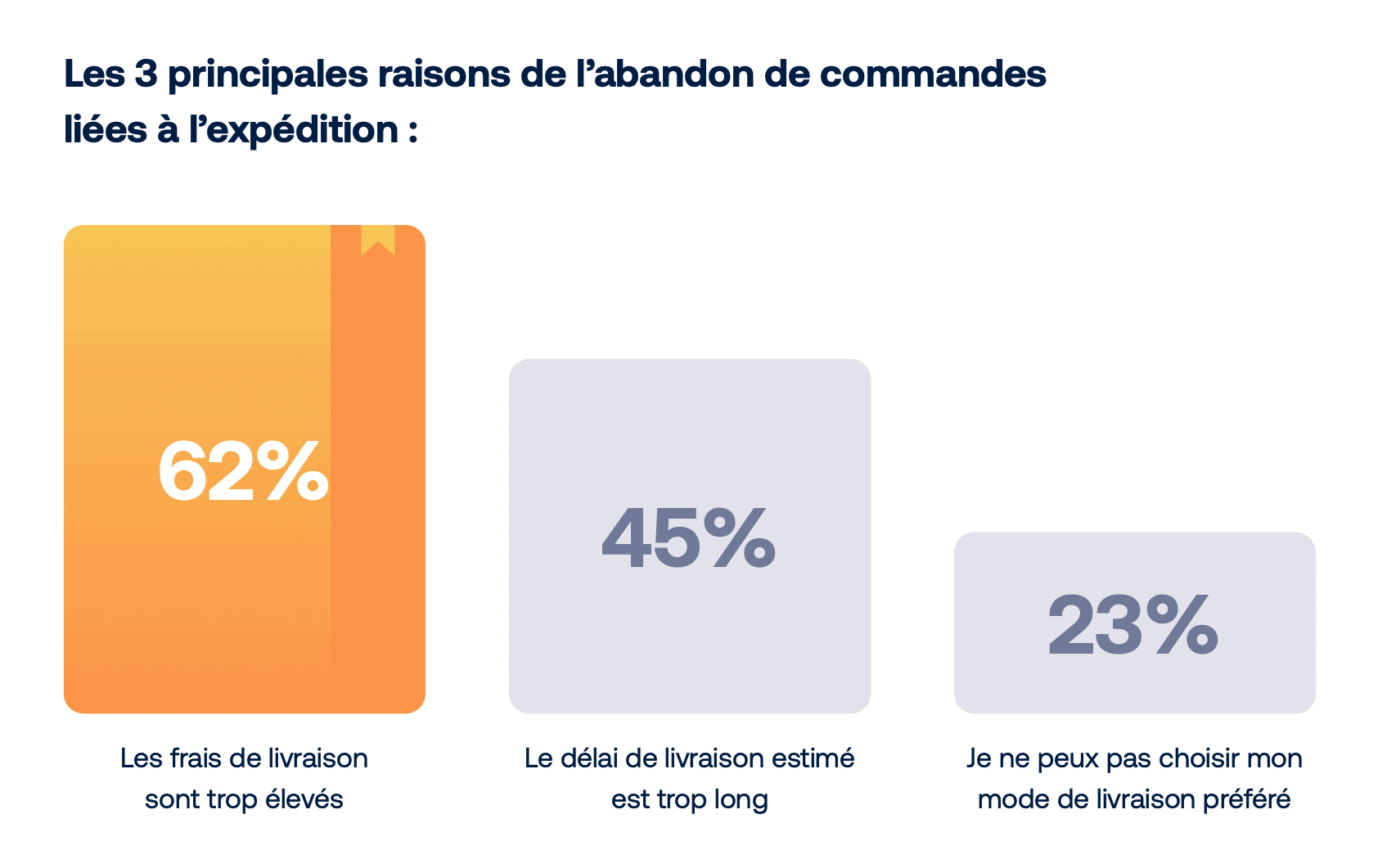
Are you worried about cart abandonment? If so, you are not alone. Cart abandonment has always been a major problem in e-commerce. What makes shoppers abandon their cart? Here is what our study reveals:
High shipping costs: For 57% of online shoppers, excessive delivery costs are a reason to abandon their cart.
41% drop their order partway through if the estimated delivery time is too long.
Expert tip
Design your checkout from the customer's point of view. The checkout is what leads to the sale, so it should be just as customer-focused as your product pages. Keep the following recommendations in mind:
Offer your customers flexible payment and delivery methods;
Avoid surprises at checkout, especially hidden delivery costs;
Communicate clearly about delivery from the start.
A transparent, welcoming checkout builds trust and keeps shoppers from leaving behind a cart full of items. Would you like to offer multiple delivery options easily? Try the Sendcloud platform for free.
Insight #2: free delivery isn't always the norm
For years, online retailers have been asking the same question about delivery: "free or not?" Although many experts have called free delivery a winning strategy to increase conversion, the real answer is probably a little more complex.
Do online shoppers expect free delivery on every order? Let's be clear, free delivery is obviously very popular. It's a gesture of goodwill toward the customer. Nothing beats a "gift" like this to show your customers that they matter.
Still, not all consumers are the same. Many are willing to pay more for delivery if you guarantee speed, convenience or even their preferred carrier. Peace of mind is worth the extra cost. Here are some key points from our study:
Free shipping threshold: the higher the purchase amount, the lower the willingness to pay delivery costs. Take a look at your minimum order amount and consider shipping high-value items for free.
Delivery speed: French consumers name delivery speed as one of the most important factors when shopping online. Across all consumers in Europe and the United States, 31% prefer scheduled-day delivery. So also give customers the option to choose when they want their order delivered.
Delivery time: On average, French customers expect a standard delivery to arrive within 3-4 days. The maximum number of days they are willing to wait is 5! That means your standard shipping option doesn't need to be super fast (and therefore more expensive).
There are clear advantages to offering free delivery, if you can afford it. However, it is not the only way to keep your customers happy.
Expert tip
Offering tiered delivery costs is a smart move. Set up a free delivery threshold. Online shoppers appreciate the gesture, and you encourage them to add more items to their cart.
Offer express delivery methods at a higher cost. That way, you meet the needs of all your customers. Millennials in particular love premium delivery services, so don't forget them.
Give your customer a choice and offer other delivery options too: slower but greener shipping options, or work with local pickup points.
Be fully transparent about delivery costs right from the start, and state your free delivery threshold.
Insight #3: tracking is a powerful touchpoint
Everyone loves looking forward to something. That is why tracking notifications are so appealing.
Customers like to keep an eye on the shipping status of their order and know exactly when to expect their parcel. On average, 26% of French consumers say they would not order from an online store that does not offer tracking.
What's more, using tracking emails means your customer service team gets fewer questions about where parcels are. A must-have!
Expert tip
Add selling points or special offers to your tracking emails. Customers like receiving tracking notifications, so they are more likely to be open to other offers. As is often the case, it's about finding the right balance. Don't bury the order progress information under too many marketing messages. Tracking should be part of an authentic customer experience!
Personalize your tracking emails. Instead of sending your customers to the carrier's often unappealing tracking page, choose a custom page that matches your online store's branding.
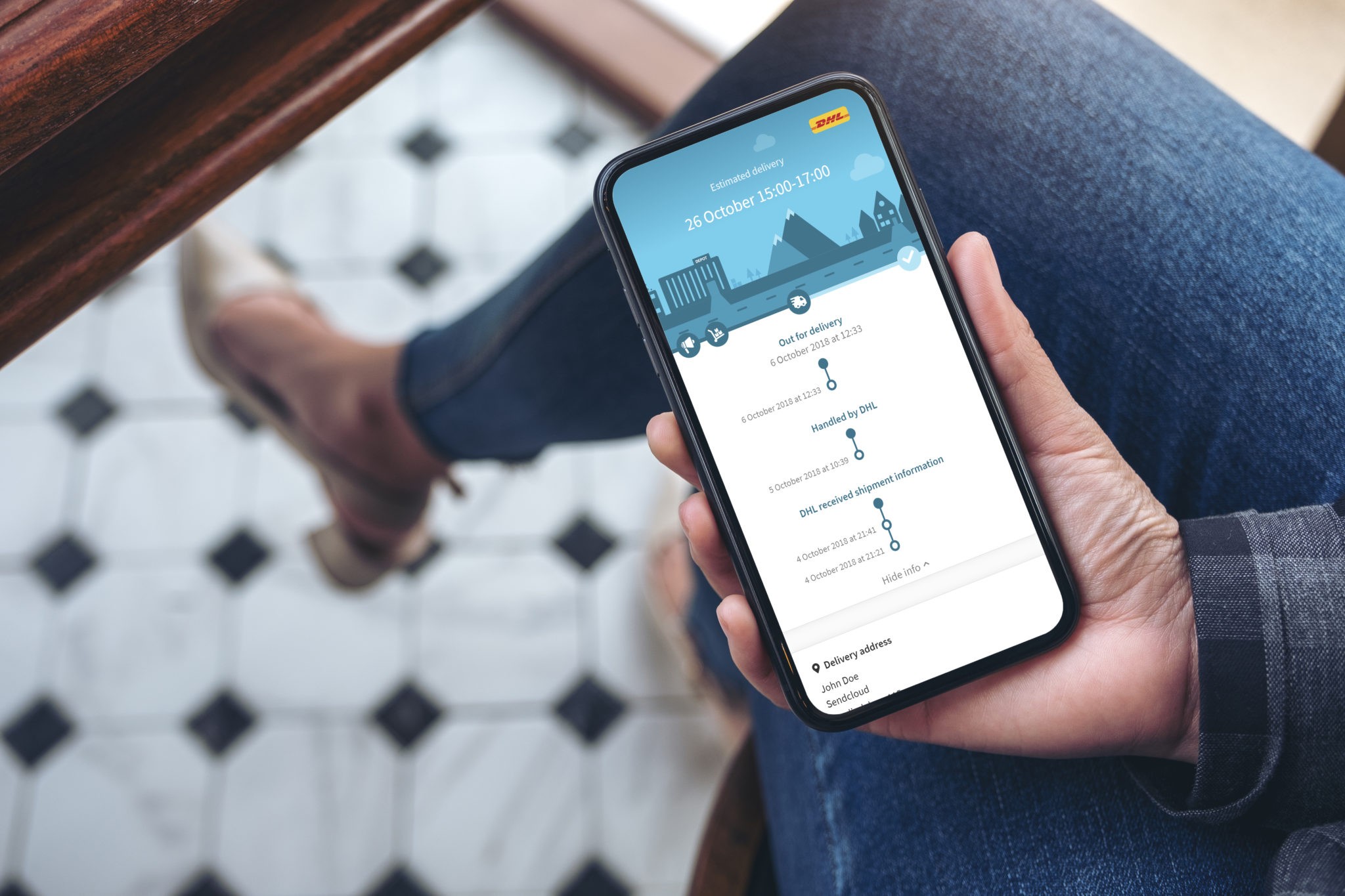
Only 16% of online retailers say personalized tracking notifications and a custom tracking page matter to them. Tracking remains an underused opportunity for online retailers to build customer loyalty, since tracking emails, unlike other types of communication, are almost always opened.
Insight #4: your returns policy drives conversion
Returns are a fact of life for online stores. Another interesting e-commerce statistic: the current state of returns shows that 51% of European online shoppers always return a product if they are not satisfied. Fortunately, you can turn this necessary evil into a powerful tool to grow your business.
Not trying to discourage your customers? Yes.
With a flexible, customer-focused returns policy, you give online shoppers exactly what they expect from you. Here are a few key takeaways:
Although you officially have 14 days to refund your customer, consumers expect to be refunded within 5 days, no more!
According to consumers, the most important part of a returns policy is information about return costs (57%). So always be transparent about return costs in your returns policy.
44% of consumers would not order from an online store if the return period is shorter than 30 days. And 30% need more time: they only order when they have at least 60 days to return an item.
This means your returns policy plays an important role in your customers' decision-making process. A customer-friendly returns procedure builds a strong bond with your potential customers.
Expert tip
There are many ways to turn returns into a positive customer experience:
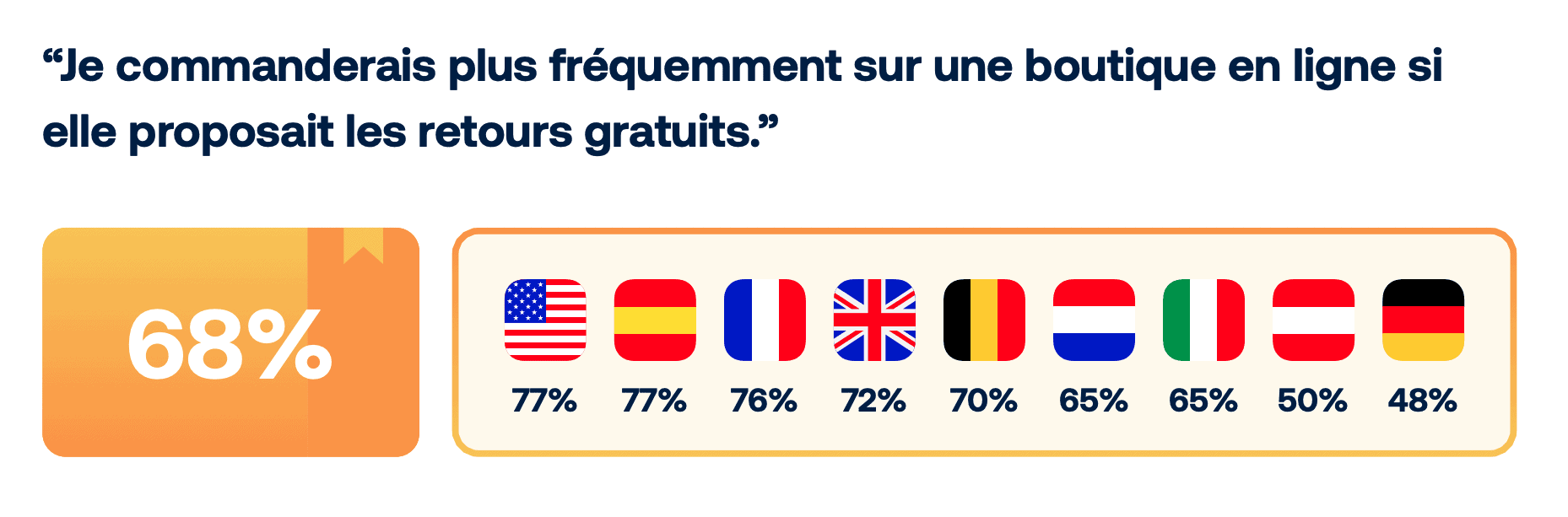
Consider offering free returns
Provide ready-to-use return labels
Extend the return period to at least 30 days
Let customers handle their returns through your store or a return portal, rather than sending them to third-party carrier websites.
Treat your returns policy as the customer relationship tool it is. Choose a smooth, customer-focused returns process and your customers will thank you!
Insight #5: becoming more environmentally friendly is not a choice, but a "must."
COP26 in 2021 helped speed up progress toward the goals of the Paris Agreement and the United Nations Framework Convention on Climate Change. Change is coming, and businesses need to prepare for it. But the demand doesn't only come from governments and NGOs, it also comes from your customers. In fact, 64% of French online shoppers expect online stores to offer green (carbon-neutral) delivery in 2023.
Yet only a minority is actually willing to pay for sustainable delivery. So there is still plenty of work to do!
Insider tips
Consumers are more concerned about packaging waste than about CO2 emissions. Consider switching to recycled and recyclable packaging. If you decide to do so, tell your customers about it.
If you find carbon-neutral delivery options too expensive, go for delivery to pickup points and parcel lockers instead. These are greener options and they don't come with extra costs.
What does the future of e-commerce look like?
The e-commerce statistics gathered here give a clear picture of the current state of e-commerce and how it may evolve. Offering a customer-focused experience is clearly a competitive advantage. Today's online shopper expects flexibility, speed and convenience. For you as an online retailer, that means offering a wide range of delivery methods to satisfy every type of customer.
Want to get more insights from our e-commerce delivery overview? Download our full study and learn more about consumer habits and the latest e-commerce statistics you need to know to turn your logistics into a competitive advantage.


Author and researcher
As a former e-commerce and logistics specialist at Sendcloud, Mickaël shared insights on shipping trends, logistics best practices, and e-commerce strategy for online retailers.
How much time can you save on shipping?

Share
Recommended for you

Shipping Intelligence
Shipping
E-commerce
Best 9 Shipping Data Analytics Software Tools (2026)

VAT on shipping costs: how does it work?
Why do you pay VAT on shipping costs? Which VAT rate should you use, and how do you pass it on smartly to your customer? Find the answers in this guide.

5 tips to speed up your online store for more conversions
Speeding up your online store is essential for more conversions. Read 5 tips here that help you improve your site speed!