The power of flexible returns: How store credit can save your business €150,000 in cashflow


Last updated:

Returns are no longer just a logistical headacheu0003u0014theyu0005re an opportunity. Picture this: A customer loves your brand, but the item they ordered isnu0005t quite right. Instead of asking for a refund and walking away, they accept store credit and come back for another purchase. They stay engaged, your cash flow remains healthy, and your business thrives.
At our latest Sendcloud Connect event, we heard firsthand how a flexible returns policy pays off. Milco Leijen, Owner at Performance Hackers, shared a striking insight: "With the implementation of store credit (at 16.08 Wear), we saw that we saved u00157u00153u00150,000 in cash flow, which we normally would have to pay back to our customers." Instead of losing that revenue, they reinvested it into marketing and business growth.
So, how can flexible returns, particularly store credit, work for your e-commerce business? Letu0005s dive into why this strategy is gaining traction and how you can implement it effectively.
Why flexible returns matter more than ever
The returns landscape is evolving. Until recently, free returns were the industry standard, seen as a must-have to keep customers happy. But with return rates climbing and margins tightening, merchants are rethinking their approach. The solution isnu0005t to make returns harder but to make them smarter: Offering return options that benefit both the customer and the bottom line!
Different ways to offer flexible returns to your customers
There are various flexible return options that businesses can offer to improve customer experience and protect their bottom line:
Instant exchanges: Instead of waiting for a return to be processed, customers get their replacement item shipped immediately.
Partial refunds: Offering a partial refund instead of a full one can encourage customers to keep an item instead of returning it, especially for minor issues.
Localised return hubs: Partnering with local drop-off points or lockers makes returning items easier for customers and reduces logistics costs.
Returnless refunds: In cases where returning the product isnu0005t cost-effective (e.g., low-value items), some retailers allow customers to keep the product while still receiving a refund or credit.
The benefits of store credit for returns
Instead of issuing refunds, converting returns into store credit provides a win-win solution:
Boosts cash flow: Instead of losing revenue to refunds, store credit keeps money in the business.
Increases customer retention: Customers who accept store credit are more likely to shop again.
Improves profitability: Margins remain intact as customers reinvest their return value into new purchases.
This shift isnu0005t just theoretical. Many retailers are already optimising their return policies to improve efficiency and customer satisfaction. Hereu0005s how a smart returns management strategy can make a difference.
Real-world impact: Lessons from 16.08
16.08, a fashion brand from the Netherlands, faced the same challenge many retailers do: balancing returns with profitability. Instead of simply absorbing return costs, they worked with Performance Hackers and Sendcloud to turn returns into a retention tool.
By implementing store credit, they:
Saved u00157u00153u00150,000 in cash flow by reducing refund payouts.
Encouraged repeat purchases, as loyal customers favoured using store credit for their next purchase, sometimes even adding more items to their basket.
Maintained return rates, showing that store credit doesnu0005t significantly increase returns while still simplifying the process.
At Sendcloud Connect, attendees were eager to learn how 16.08 structured their return options, set up store credit vouchers, and incentivised customers to choose credit over refunds. One key takeaway? Customers donu0005t mind store creditu0003u0014if they see value in it. Thatu0005s why many retailers are offering small perks, like an extra 5u000310% value, to nudge customers towards store credit.
How to implement store credit returns successfully
1. Offer store credit as a default return option
Make store credit the preferred option at checkout. A little incentive (like receiving bonus credit or avoiding return shipping fees) can encourage customers to choose it over a refund.
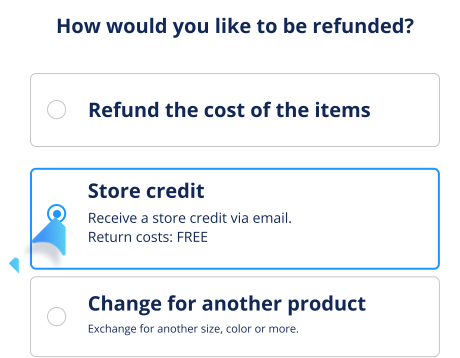
2. Integrate with your e-commerce platform
Integrating platforms like Shopify and WooCommerce with Sendcloud make it easy to manage store credit, even for multiple brands. Orders from the platforms sync automatically, all managed in a single dashboard.
3. Use a return portal
Using a return portal, merchants can customise return policies and offer tailored options based on the customeru0005s location.
4. Educate customers about the benefits
Clear communication is key. Customers need to know why store credit benefits them whether itu0005s extra value, exclusive perks, or a smoother return experience.
5. Use data to optimise the process
Tracking return patterns helps businesses refine their return policies. For example, insights from a return portal reveal which customers are most likely to use store credit, allowing you to personalise your approach.
The future of returns: A smarter approach
Flexible returns are no longer a nice-to-have. Theyu0005re essential for modern e-commerce. Businesses that adopt store credit strategies can safeguard their cash flow while keeping customers engaged. As more retailers shift towards smart return policies, those who embrace this change will stay ahead of the competition.
Want to make returns work for your business instead of against it? Discover how Sendcloudu0005s returns management software can help.


Author and researcher
Zeldi specialises in guiding online retailers towards insights that empower them to grow and thrive. An innate explorer, she’s always on the lookout for valuable tips, tools and trends to help e-commerce owners overcome the most puzzling processes and enjoy a front-row seat on a journey to success.

Subject matter expert
With over a decade of experience in B2B SaaS, Ana Ondreicsik is a Product Lead at Sendcloud specializing in post-purchase experiences, tracking, and returns. She shares insights on building customer-centric solutions that improve the e-commerce delivery experience.
How much time can you save on shipping?

Share
Recommended For You

Shipping Intelligence
Shipping
E-commerce
Best 9 Shipping Data Analytics Software Tools (2026)

VAT on shipping costs: how does it work?
Why do you pay VAT on shipping costs? Which VAT rate should you use, and how do you pass it on smartly to your customer? Find the answers in this guide.

5 tips to speed up your online store for more conversions
Speeding up your online store is essential for more conversions. Read 5 tips here that help you improve your site speed!