


Brexit has had a major impact on shipping to the United Kingdom and on the ecommerce market in Europe. With the new regulations brought in by the UK's exit from the European Union, shipping parcels to the UK is no longer as simple as it used to be. But don't worry, it isn't complicated either. In this article, we'll go step by step through what you need to ship to the United Kingdom after Brexit and see why shipping automation can bring you big advantages.
If you'd like to dig deeper into other topics in the world of online shopping, I recommend some of our articles on ecommerce logistics and on how to offer cheap shipping with your ecommerce store.
Back to our guide, here's what we'll cover:
What impact is Brexit having on ecommerce?
Effects of Brexit on customs policies and delivery times to the United Kingdom
Effects of Brexit on tariffs and VAT
Brexit shipping: which ecommerce businesses are affected?
Effects of Brexit on online stores that ship products to the United Kingdom
Effects of Brexit on global businesses that ship to both the United Kingdom and the EU
Effects of Brexit on companies that import goods from the United Kingdom
Brexit shipping: what do you need to know to ship to the United Kingdom?
The EORI number for shipments to the United Kingdom
A VAT number registered in the United Kingdom
Customs and longer transit times
The correct customs declaration forms for post-Brexit shipments
Brexit shipping: what measures have the main Italian carriers taken
BRT (Bartolini): Brexit shipping
GLS Italia: Brexit shipping
DHL: Brexit shipping
Poste Italiane: Brexit shipping
UPS: Brexit shipping
FedEx: Brexit shipping
Conclusion: get your ecommerce store ready to ship to the United Kingdom
What impact is Brexit having on ecommerce?
Even after Brexit, the United Kingdom remains the leading market in the EU and is confirmed as the main one for ecommerce, worth 104 billion dollars and growing 7% in 2022. 93% of British people shop online, each spending over 900 euros a year. On top of that, UK shoppers are happy to buy from overseas: 52% of overseas online orders come from the United States and China. Europe comes right after: here, 9% of purchases at European level come from Germany.
Thanks to how far ecommerce has developed in the United Kingdom, residents of the European Union also love buying from British online shops. The United Kingdom is the second most popular destination for online shopping in Europe (after China). For more ecommerce statistics, I recommend our ecommerce report.
Effects of Brexit on customs policies and delivery times to the United Kingdom
The United Kingdom is no longer part of the European Union or the Schengen area, which means it no longer enjoys the benefits of open borders, such as the free movement of goods and people. So shipping to England means shipping to a non-EU country. This requires compliance with customs rules and mandatory documents for every shipment entering and leaving the United Kingdom.
As for delivery times, which were initially one of the biggest concerns, they haven't changed much. Times have become slightly longer, but carriers adapted quickly to the new situation.
Effects of Brexit on tariffs and VAT
VAT laws are one of the most debated points in the Brexit negotiations. In fact, although the agreement between London and Brussels promotes free trade, the EU and the United Kingdom are effectively treated as two separate markets, with resulting trade barriers for the exchange of goods.
This means that ecommerce businesses that want to ship their products to the United Kingdom have to deal with additional taxes and obligations.
In fact, since January 1, 2021, goods entering or leaving the VAT territory of the European Union to the United Kingdom must be treated as imports or exports under the VAT Directive (Council Directive 2006/112/EC of 28 November 2006) on the common system of value added tax.
We cover this in detail in the following sections.
Brexit shipping: which ecommerce businesses are affected?
Brexit is having the biggest consequences for businesses in the following categories:
European Union online stores that sell products to consumers in the United Kingdom
Global businesses that sell in both the United Kingdom and the EU
British online stores that sell domestically, globally or in the European Union
British companies that ship domestically or internationally
Companies that import products from the United Kingdom
Effects of Brexit on online stores that ship products to the United Kingdom
The post-Brexit trade and cooperation agreements between the United Kingdom and the European Union have avoided import duties.
Even so, trading goods with the old Empire will require more paperwork and longer delivery times for ecommerce businesses.
Specifically:
Since January 2021, the United Kingdom and the European Union have officially been separate markets. If you sell to the UK through your online store, you'll have to deal with:
customs
taxes
additional paperwork
Any type of goods coming in (or going out) will have to clear customs. Customs clearance will extend delivery times, and especially the time it takes to handle returns.
Since customs times are outside your control and your carrier's, we recommend planning ahead. Give your customers across the Channel as much information as possible about delivery times and procedures.
Transparent processes and regular updates on the status of the parcel will help you avoid plenty of negative reviews if something unexpected happens.
Later in the article, we'll give you all the information you need on paperwork and tax payments to process orders correctly and avoid hiccups.
Effects of Brexit on global businesses that ship to both the United Kingdom and the EU
Global businesses that sell in both the United Kingdom and the European Union have had to update their shipping and sales policies. For the United Kingdom, separate shipping and sales rules will apply compared with the rest of the EU. This means the two areas have to be treated separately.
Effects of Brexit on British companies that sell abroad
British companies aren't doing any better. Shipments from the United Kingdom to the European Union are treated the same as international and global shipments and are subject to customs clearance. This means customs forms are required, along with payment of import or export taxes and duties. That's why it's important to build a winning strategy for international shipping.
Effects of Brexit on companies that import goods from the United Kingdom
If your company imports products or supplies from the United Kingdom, your processes could be affected, with longer lead times and higher costs.
Another problem could be finding the workforce needed to fulfill all orders. The current free movement of EU citizens to the United Kingdom is a factor that could change. According to the BBC, 19% of EU migrants work in logistics facilities, which means finding employees could become more difficult in the near future.
Brexit shipping: what do you need to know to ship to the United Kingdom?
After Brexit, the United Kingdom is no longer part of the European Union's single market: movements of goods will be subject to VAT, taxes and other customs rules.
Let's look at everything you need to know to ship without any problems.
The EORI number for shipments to the United Kingdom
To be recognized as an economic operator (and be able to trade with the United Kingdom), you'll need an EORI number.
Without an EORI number, your goods can't clear customs. They'll be blocked and held until you can provide the complete paperwork.
So don't ship without an EORI number! To get one, you'll first need a VAT number in the United Kingdom. Then you can apply online for the EORI number. If you want to learn more about this topic, I recommend our detailed article on the EORI code.
Customs and longer transit times
By leaving the Schengen area, Great Britain no longer benefits from open borders and the free movement of goods and people. This means stricter customs rules for parcels entering and leaving the United Kingdom and the EU.
Thanks to the agreements between London and Brussels, duties don't have to be paid on shipments to the United Kingdom worth less than £135. If the value of the goods exceeds that amount, the recipient has to pay import duties, which are also calculated based on the parcel's country of origin.
If you want to learn more about customs declarations, I recommend taking a look at our article on customs forms.
A VAT number registered in the United Kingdom
Since your goods clear customs in the United Kingdom and you'll pay UK VAT on them, your ecommerce business will need to be linked to a UK VAT number. You'll have to apply for one.
How does paying VAT work?
For orders up to £135, it will be your responsibility to charge your customers VAT at the time of purchase and pay it to the British government.
For orders over £135, the VAT burden falls on the importer.
The correct customs declaration forms for post-Brexit shipments
This is the paperwork you'll need to attach to each shipment so British customs can keep the Queen happy and sleep soundly.
Declaration of origin: The preferential agreements between the EU and the UK mean no import duties are applied to goods from European Union countries. To keep your goods from being taxed, customs must be able to verify where they come from.
HS code: HS codes identify the product category and apply the correct VAT percentage during the customs clearance process.
Complete recipient details: Besides the address, you'll also need to include the VAT number or tax code, phone number and email. If the recipient's details aren't complete, the parcel will be blocked.
Commercial invoice in English (4 copies): the invoice must include the VAT number, EORI number, invoice number and date, number of items, gross weight and net weight, a description of each item, the individual amount of each item and the total amount (in euros and pounds).
Free export declaration (4 copies): to be attached to the invoices.
And of course, don't forget to correctly fill out your international waybills or to follow best practices for returns management at an international level.
Brexit shipping: what measures have the main Italian carriers taken
If you have lots of customers buying goods from Great Britain, choosing the right partner is more important than ever to stay competitive. Let's look at how the main Italian carriers have responded to support your online store through this transition.
BRT (Bartolini): Brexit shipping
True to its reputation as a practical and reliable carrier, BRT offers three dedicated services for shipments to the UK. The difference lies in the weight and number of packages to ship.
DPD classic road: for single-package delivery (both B2B and B2C). The package can't weigh more than 31.5 kg and can have a maximum length of 175 cm. Expected delivery times are 4-5 days from pickup.
Euroexpress: a service only for B2B multi-package deliveries or deliveries over 51.5 kg. It also lets you ship pallets with maximum dimensions of 12x80x180 and a maximum weight of 997 kg. Expected delivery times are 6-8 days from pickup.
FedEx Air: Where BRT's trucks can't go, its partners' wings can. This service covers every type of shipment (both B2B and B2C) and every type of package (from envelope to pallet). Expected shipping times are 2-3 days from pickup.
GLS Italia: Brexit shipping
GLS Italia hasn't created any dedicated services… because it doesn't need to. This carrier has long experience with international shipping, and its current range of services more than covers any need.
DHL: Brexit shipping
If there's one carrier that doesn't fall short when it comes to handling international parcels and customs, it's DHL. The experience and procedures of this shipping giant have long been well established. However, if you're a DHL customer who has never had to deal with customs and you'd like to know more about their procedures, you can contact your account manager and get all the details for the following services:
DHL Global Forwarding
DHL Supply Chain
DHL Freight
Deutsche Post
DHL Parcel
Poste Italiane: Brexit shipping
Poste Italiane isn't the first service that comes to mind for international shipping, but if most of your ecommerce store's traffic is domestic and you only send the occasional parcel to the United Kingdom, these are the services you can use:
Internazionale Espresso and Poste Delivery Business International Express
Crono Int.le/Export Box and Poste Delivery Business International Standard B2C
Road Europe and Poste Delivery Business International Standard B2B (note that imports for this service are temporarily suspended, so it could cause problems with returns)
UPS: Brexit shipping
UPS doesn't have dedicated services for handling Brexit, since its import-export offering is extensive and full of options. However, its customer service team is available to provide clarification and detailed information on preparing customs clearance paperwork and the related UPS services.
FedEx: Brexit shipping
FedEx is another shipping giant that has nothing to add to its international services when it comes to handling customs and sorting shipments efficiently.
Like DHL and UPS, all they can do is give their customers every kind of information about the paperwork needed to get orders to their destination successfully and without hiccups.
They also offer additional services for handling customs and documents:
FedEx Global Trade manager
Document Preparation Center
Conclusion: get your ecommerce store ready to ship to the United Kingdom
We'll leave you with one tip to get your ecommerce store as ready as possible to ship to the United Kingdom: simplify your shipping process. Complexity is increasing, more and more customs forms are required, and the order fulfillment process is becoming slower and more cumbersome. Not to mention choosing the right carrier for each shipment.
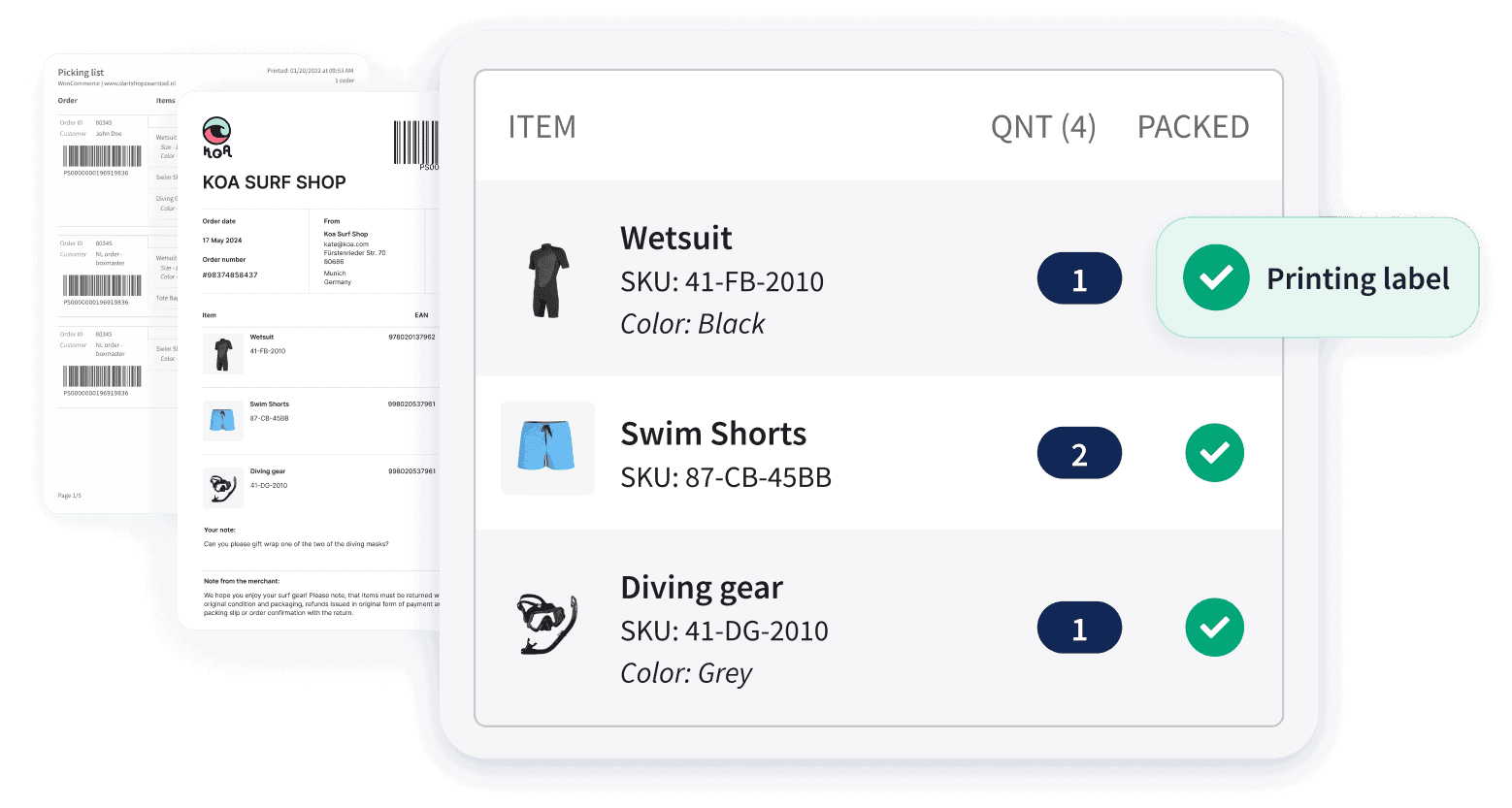
With Sendcloud, the shipping platform for ecommerce, you can forget about all this complexity, thanks to:
Pre-filled customs forms and labels ready in one click
Automatic tracking notifications
A multi-carrier solution, to compare carriers quickly and switch them in one click
Return portal so customers can handle returns on their own
Not convinced yet? You can try all of Sendcloud's features free for 14 days!
If you're interested in other ecommerce logistics topics, we recommend taking a look at our articles on:
Carriers and prices for shipping food parcels.
Volumetric weight: how to optimize costs;
What to do and how to optimize bulky shipments.

Author and researcher
How much time can you save on shipping?

Share
Recommended for you

Shipping
Integrations
Best Shopify shipping apps: compare features, pricing & automation
Compare the best Shopify shipping apps for automation, carriers, labels, tracking, returns and international shipping. Find the right app for your store.

Shipping Intelligence
Shipping
E-commerce
Best 9 Shipping Data Analytics Software Tools (2026)
E-commerce
Enterprise