How to pack a parcel: Parcel packing tips for e-commerce merchants


Last updated:
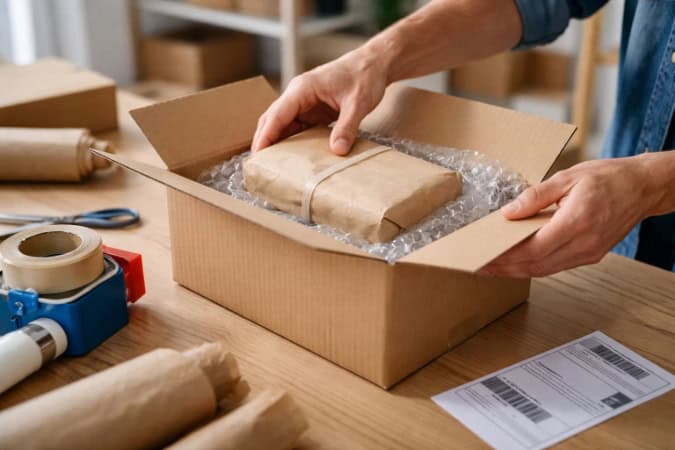
Packing a parcel might seem simple, but getting it wrong can lead to smashed products, sky-high shipping surcharges, and some very unhappy customers. From choosing the right box to sealing it up securely, there’s a bit more to it than just tossing something in a mailer and hoping for the best. That’s why parcel packing is a key part of any smart e-commerce shipping strategy.
This guide breaks down how to pack parcels properly, with practical tips for different product types, common mistakes to avoid, and ideas to level up your packaging game. Whether you’re just getting started or looking to make your packing process more efficient, you’ll find everything you need to get your parcels out the door safely… and looking good while they’re at it.
What is parcel packing in e-commerce?
Parcel packing is the process of preparing an order for shipment: choosing the right packaging, protecting the items inside, sealing everything securely, and adding the label. For e-commerce businesses, it’s a crucial step that affects shipping costs, product safety, and how customers experience your brand.
Terms like shipping packaging or shipment packing often get tossed around interchangeably, but the goal is the same: get the order to the customer in one piece. What makes parcel packing different is the scale and complexity: multiple SKUs, fast turnaround times, and the need for consistency with every order.
Done well, it helps prevent returns, avoids extra costs (like dimensional weight charges), and makes unboxing a moment your customer actually enjoys.
Step-by-step: How to pack a parcel
Packing a parcel the right way isn’t rocket science, but it does take a bit of care and the right materials. Here’s how to do it, step by step:
1. Pick the right packaging
Choose a box or mailer that fits your item snugly without being too tight.
→ Too big, and you’ll pay more for shipping due to dimensional weight.
→ Too small, and things might arrive damaged.
Use sturdy cardboard for heavier items, padded mailers for soft or small goods, and double-wall boxes for fragile or bulky products.
For most products, corrugated cardboard boxes are your best bet. They’re lightweight, durable, and made for shipping. If you’re sending fragile or heavy items, go for double- or triple-wall boxes. They’re far more resistant to crushing or bending under pressure.
You can also check a box’s BCT (Box Compression Test) and ECT (Edge Crush Test) ratings to see how much weight it can handle. These measurements tell you how well a box holds up when stacked or squeezed, which matters when parcels are handled, sorted, and piled during transport.
⚠️ Watch out for surcharges. Couriers may charge extra if your parcel is oversized, oddly shaped, too heavy, or packed in a way that prevents automatic processing. These fees are added later and can vary by courier.
Different couriers (like DHL, UPS, or DPD) have their own limits for parcel size and weight, so it’s worth double-checking their guidelines before you ship, just to avoid issues at drop-off or delivery.
2. Wrap and protect the item
Wrap the product in protective material like bubble wrap, kraft paper, or padded sleeves. For electronics or glassware, extra cushioning is a must. Avoid materials that shed or leave a mess inside the box. Your customers will thank you!
3. Fill the empty space
Once your item is wrapped, fill any gaps with void-fill like paper, air pillows, or eco-friendly alternatives. This keeps things from shifting around in transit. If the item rattles when you shake the box, it needs more support.
4. Seal it up securely
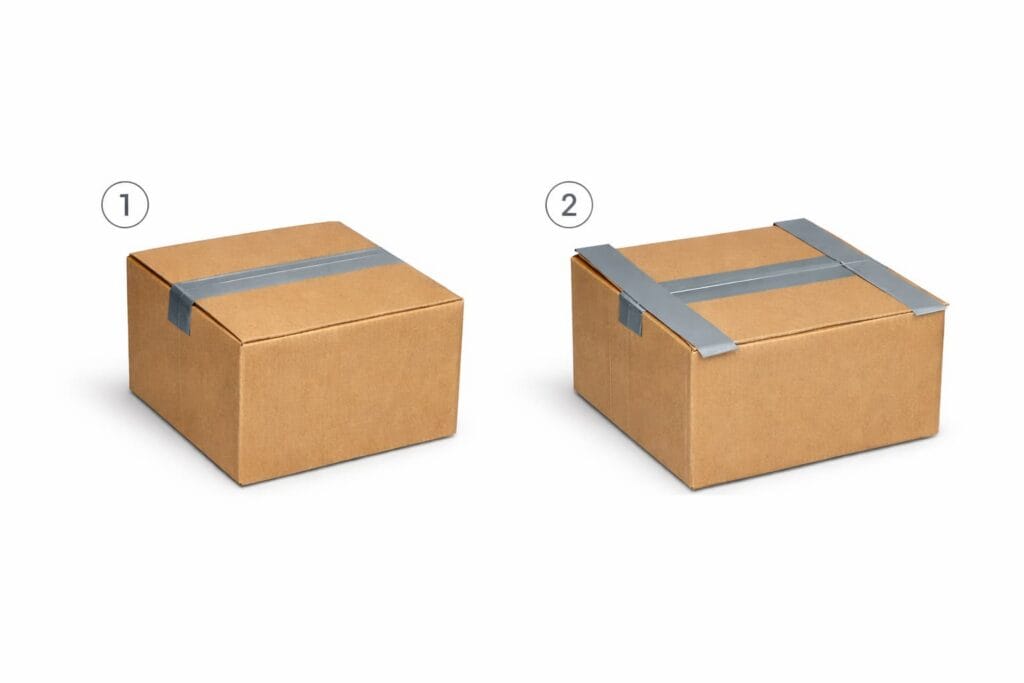
Use strong packing tape to seal all seams, especially the top and bottom. Avoid using cellophane or masking tape; they’re not designed for shipping. Reinforce edges if the parcel is heavy or likely to be handled roughly.
5. Label clearly and correctly
Print and attach your shipping label on the largest surface of the box. Make sure it’s flat, easy to scan, and not covering any seams or openings. If your parcel includes a return label or customs info, tuck it inside or attach it in a pouch.
→ 💡Pro tip: Need help getting started? Grab our free shipping label template
If you’re shipping internationally, include any required customs forms and make sure they’re visible and protected on the outside of the parcel.
Not sure which printer to use? Our label printer blog covers the options that work best for e-commerce.
6. Double-check before sending
Before your parcel goes out the door, give it one last look. Is it sealed properly? Is the label readable? Nothing forgotten? A quick checklist can save you time (and returns) later.
✅ Quick parcel packing checklist
Run through this before you ship:
Correct box or mailer selected (not too big or small)
Product securely wrapped and protected
Empty space filled to prevent movement
All seams sealed with strong packing tape
Label placed on a flat surface, easy to scan
Return slip or customs info included (if needed)
Customs documents included and securely attached (for international shipments)
Final check: no damage, missing items, or loose edges
Common parcel packing mistakes (and how to avoid them)
Using the wrong box size
Too much empty space? You’ll end up paying extra due to dimensional weight. Too little space? The risk of damage goes way up.
Weak or messy sealing
A single strip of tape isn’t enough, especially for heavier parcels. Use proper packing tape and apply the “H-taping” method (top and bottom seams, plus edges). This prevents splits and makes it clear the box hasn’t been tampered with.
Incorrect or poorly placed labels
Labels that are creased, placed over seams, or hard to scan can delay delivery. Always stick your label flat on the top surface, in a clearly visible spot. Don’t forget to check for barcode visibility.
Missing packing slips
Packing slips help customers confirm what’s inside, especially when sending multiple items or international orders. Forgetting one can cause confusion, especially if the customer needs to return something.
Poorly packed fragile items
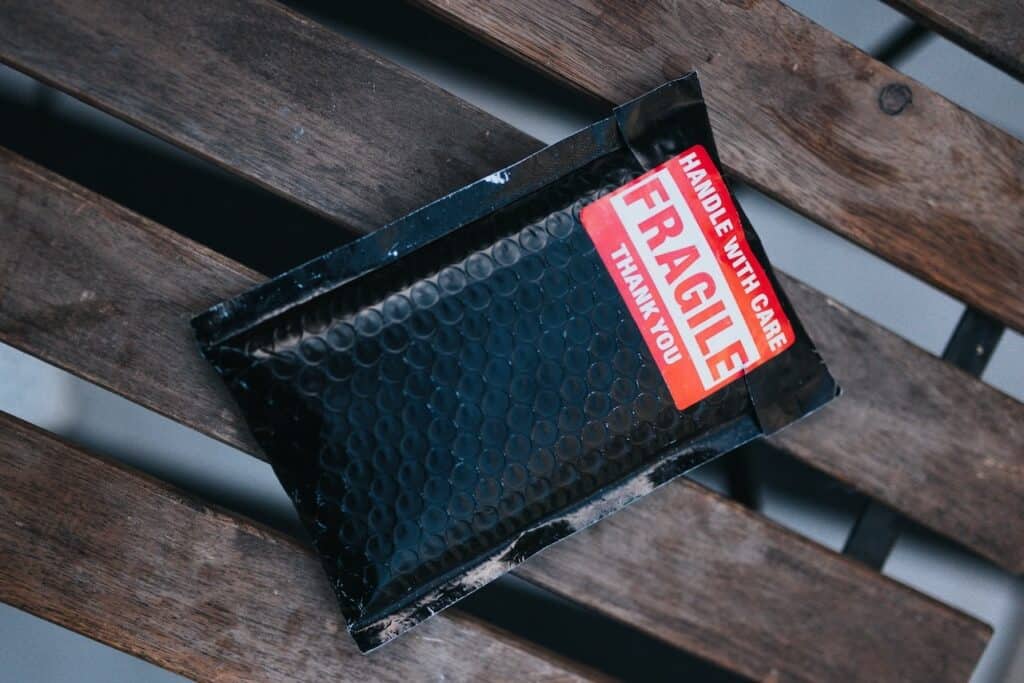
Glass, ceramics, and electronics need extra care. Always use cushioning, double-boxing if needed, and label the parcel as “fragile” if it helps with handling.
Skipping compliance basics
If you’re shipping within the EU, don’t overlook packaging regulations. Rules like the European Packaging and Packaging Waste Directive (94/62/EC) require businesses to manage packaging waste responsibly and, in countries like Germany, that includes registering with systems like VerpackG.
Learn more about EU packaging regulations and VerpackG compliance
How to pack a parcel: Best practices by product type
Some products are easy to pack. Others need a bit more thought. Here’s how to handle a few common categories in e-commerce to make sure everything arrives safely and cost-efficiently.
Product Type | Packaging Tips | Recommended Materials |
|---|---|---|
Electronics | Protect against static, shocks, and drops. Wrap items tightly and keep them from moving inside the box. Use strong outer packaging. If shipping items with lithium batteries, check your courier’s limits. Many restrict the number per box or require special labelling. | Anti-static bags, bubble wrap or foam sheets, corner protectors, snug-fit cardboard box |
Clothing & soft goods | Fold items neatly to avoid wrinkles. Use moisture-resistant inner packaging. Consider branding for a better unboxing experience. | Compostable polybags, tissue paper, waterproof mailers, recycled kraft paper |
Fragile items | Wrap each item separately, and use the box-in-box method for extra protection. Choose sturdy outer packaging, ideally double-wall corrugated boxes with a high BCT/ECT rating to handle stacking during transit. Avoid relying solely on “fragile” labels. | Bubble wrap, foam inserts, corrugated inner box, double-wall outer box, paper void fill |
Liquids & perishables | Use sealed containers and line boxes with leak-absorbing materials. For chilled items, insulate well and check courier rules before sending. | Leak-proof bottles, insulated liners, cooling gel packs, absorbent pads, waterproof tape |
Branded and sustainable packaging
Packaging should be part of your brand as well. The moment your customer opens a parcel is also the moment they decide whether to come back, leave a review, or snap an unboxing video. So it’s worth making it feel like an experience, not just a delivery!
You don’t need to go overboard. Even small touches, like a branded sticker, custom tape, or a thank-you card, can create a more memorable moment. Read more about the unboxing experience here.
And if you want to take it further, custom boxes with your logo or fully branded sleeves are now easier to access than ever (even in low volumes).
Box types & materials: what actually matters
When choosing packaging, the outside isn’t the only thing that counts. The structure of the box itself plays a big role in how well your products travel and how they look when they arrive.
Most shipping boxes are made from corrugated cardboard, which comes in different flute types: A-flute offers extra cushioning for fragile items, C-flute is the most common choice for everyday shipping, and E-flute works well for smaller products where presentation and print quality matter.
For heavier or high-value goods, double-wall corrugated boxes add strength without adding much weight.
Picking the right material helps prevent damage, keeps shipping costs under control, and supports a cleaner, more premium unboxing experience, especially when paired with recyclable or recycled materials.
Sustainability matters, too. More shoppers care about packaging waste and materials than you might think. Switching to recycled or plastic-free fillers, compostable mailers, or FSC-certified boxes isn’t just better for the planet; it can improve your brand perception and help reduce return packaging headaches.

How to pack faster (without cutting corners)
Once your packaging looks the part, the next challenge is packing it all quickly and correctly. When orders start stacking up, even the best-looking branded boxes won’t help if your process is too slow or error-prone.
Packing manually might work for a while, but it doesn’t scale well. Mistakes creep in, returns go up, and shipping delays follow. That’s where a smarter pick & pack workflow makes a real difference!
Here are a few ways e-commerce teams streamline their packing operations:
Batch orders to group similar shipments together and pack more efficiently
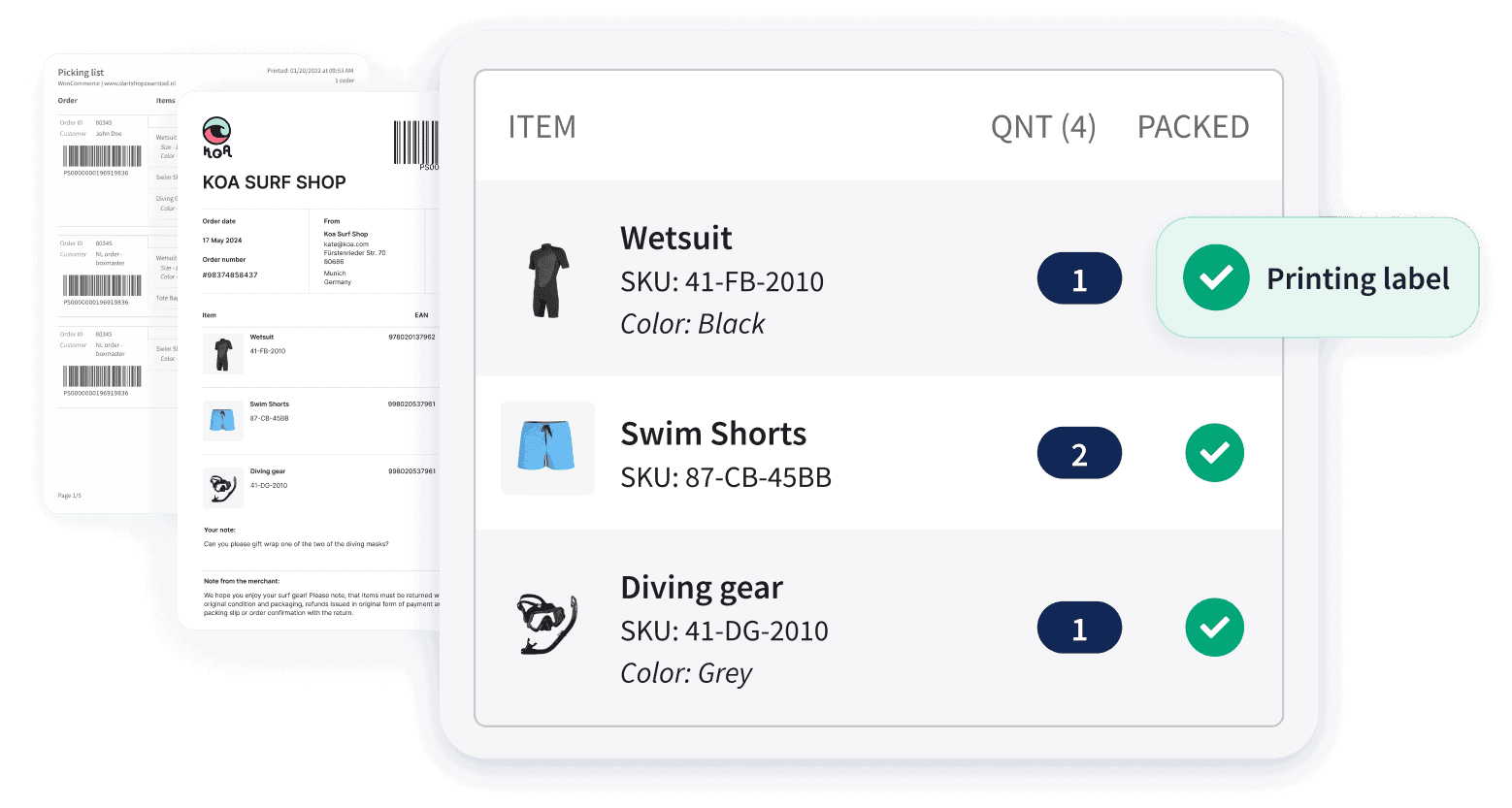
Use barcode scanning to confirm the correct items before they’re packed
Add images to picking lists so packers can visually double-check products
Pre-set filters (by delivery option, courier, or shop) to organise packing sessions
Automation tools can help here, especially when you want the speed and accuracy of a WMS, without the WMS complexity. Features like scanner mode, visual confirmation, and paperless packing are easy wins for teams looking to scale smarter.
Curious how automated packing works? Take a look at Pack & Go.
Final checks before you ship
Packing might seem like a small step, but it plays a big role in how customers experience your brand — and how smoothly your operations run behind the scenes. The right materials, methods, and workflows can reduce returns, lower shipping costs, and make life easier for your team.
Whether you’re just getting started or scaling fast, a bit of attention to parcel packing goes a long way. Use the tips in this guide to avoid common mistakes, improve speed, and deliver a better unboxing experience with every order.
Ready to make parcel packing easier?
Sendcloud helps you pack faster, cut down on mistakes, and scale without the stress. No WMS needed. See how much smoother shipping can

Author and researcher
Kate is part of the Product Marketing team at Sendcloud, focused on helping merchants simplify shipping, scale operations, and turn delivery into a competitive advantage.
Subject matter expert
Kate is part of the Product Marketing team at Sendcloud, focused on helping merchants simplify shipping, scale operations, and turn delivery into a competitive advantage.
How much time can you save on shipping?

Share
Recommended For You

Consumer trends in e-commerce 2026: What European shoppers really want
We surveyed 8,000 European shoppers to map the biggest consumer trends in e-commerce, from checkout to post-purchase, loyalty and returns.
Shipping
Shopify Shipping: The Complete Guide for E-commerce Stores
Learn how Shopify shipping works, how to set it up, and how to optimise costs, delivery options, and performance as your shop grows.
E-commerce
Best Shopify apps for e-commerce stores (including shipping & automation tools)
Discover the best Shopify apps by category and learn how to build a scalable app stack without adding complexity.