



Selecting the right couriers for your business is a daunting task, often done based on gut feelings and courier pitch decks. Everyone promises you the best rates, transit times, and quality levels. Which one meets your needs best? And what do your customers prefer?
We’ve collected the most important tips and insights to help you select the couriers most suitable for your business and customers.
Optimising your courier selection is more critical than ever
With rising costs and increasing competition, it becomes even more crucial to choose the right couriers for your business. Shipping parcels to multiple destinations can eat up a large part of your revenue.
Besides costs, customer expectations are also important to consider for long-term success. Offering the right shipping methods and ensuring reliable delivery are key when it comes to customer satisfaction.
Local customer preferences influence courier selection
Understanding local preferences is essential when shipping internationally. Customers in one country might prefer fast delivery, while those in another might prioritise cost over speed. Adapting to these preferences helps you choose couriers that will meet your customers' expectations and improve their overall experience.
Here’s an overview of some of the most interesting differences in customer preferences per region:
44% of Dutch shoppers expect free shipping on €150 orders while only 25% of American shoppers expect the same.
Shoppers in the UK and in The Netherlands expect orders faster than consumers in other countries.
French shoppers have a high preference for service point delivery, while most consumers in Europe prefer standard home delivery.
National couriers are slightly preferred over international options.
Over half of European shoppers are concerned with the impact of online shipping and expect CO2 neutral delivery options.
More shipping insights can be found in our E-commerce Delivery Compass, including the preferences of over 9,000 consumers in Europe and the United States.
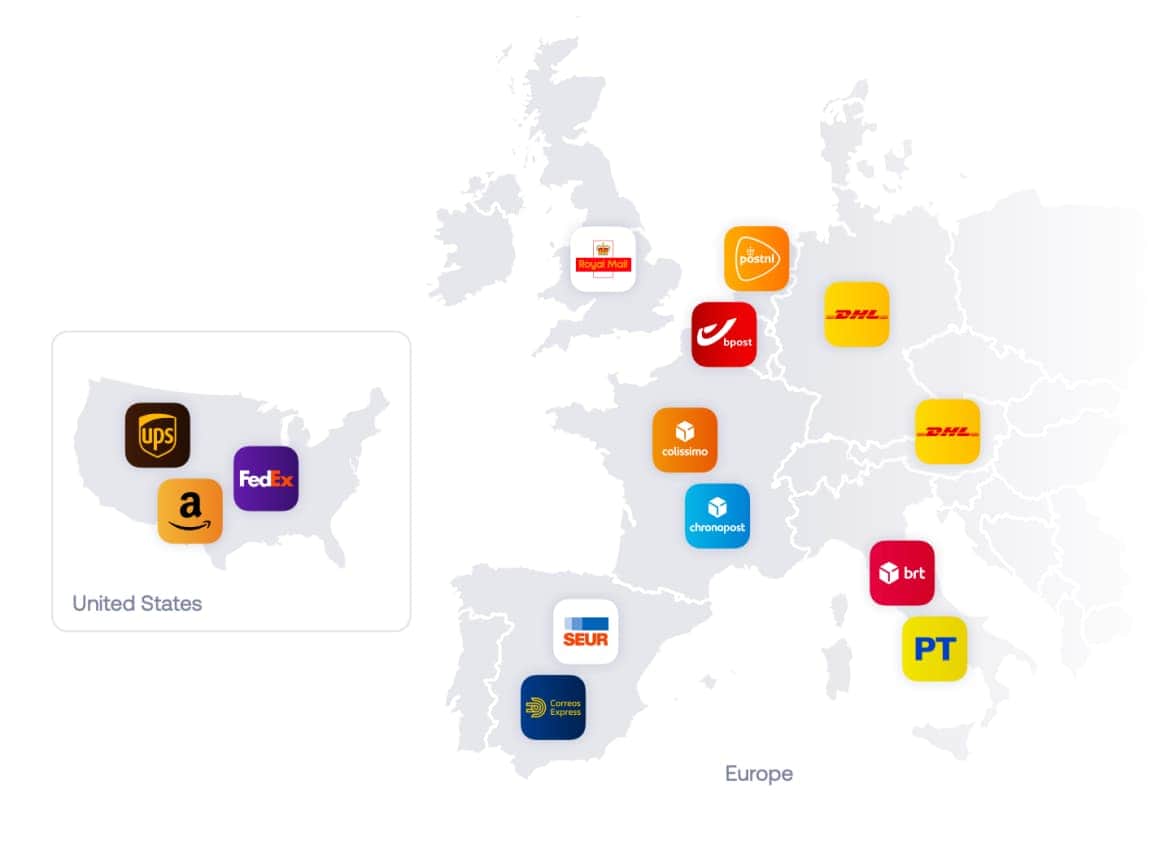
Most popular couriers per country
6 tips to select the right couriers when shipping to multiple countries
Struggling to determine the right courier for your business? Here’s your answer. Implementing the following tips will help you make the right decisions based on data instead of your gut feeling.
1. Make shipping needs for your business and customers crystal clear
As mentioned before, local preferences differ. What countries are you shipping to, and what promises do you want to make to your customers regarding shipping?
You can create a blueprint with different factors influencing which couriers are best to use:
Speed: How fast do you want your orders to arrive?
Costs: Evaluate the base shipping rates per courier and country.
Reliability: Are you willing to take more risks with parcels potentially getting lost, or do you prefer a more premium shipping method?
Region: What countries do you ship to, and will you expand anytime soon?
Parcel dimensions and weight: Depending on your assortment, some couriers specialise in handling large or vulnerable parcels, which can result in reduced costs.
Creating an overview of your needs, ranking them by priority, and aligning them with courier offerings can help you make informed decisions.
2. Be aware of the total cost of shipping
Only looking at rates can be misleading and short-sighted. Choosing the cheapest option can save you a certain amount of money per shipment. But have you considered shipping disruptions, delays, and other unexpected events involved with a certain courier?
The cheapest courier isn’t always the best choice. Reliability and speed should be considered too. When parcels arrive late, customers will start calling your support team, leading to additional operational costs.
Here are a few other components to consider when reviewing courier offers:
Performance
Reliability
Shipping price
CS costs
Transit times
SLA compliance
These six components should be weighed together to determine if the total cost of shipping, including the base costs of shipping a parcel, is better than that of another courier.
Shipping intelligence can help you gain performance insights of couriers across these different components.

Consider all components to determine the total cost of shipping.
3. Benchmark courier performance
When you’re able to compare courier performance based on easy-to-understand events, it allows you to make objective choices. Use delivery speed, the number of shipping exceptions, performance over time, and even SLA reviews to select the best couriers for your shipping needs.
Courier data is often unstructured and might differ per courier, making it hard to compare them. Investing in shipping data and intelligence is recommended because it can save a significant amount of money on all operations related to logistics.
At Sendcloud, we use your logistics blueprint to help you evaluate your current courier performance. You can also evaluate more than 60 other couriers you're not using yet.
The logistics blueprint includes information about your shipping processes, such as:
The days of the week you ship
The cut-off times per courier
The delivery promises you make to your customers
The delivery promises your courier makes to you
This information is then used to match with real-time shipping data to evaluate how well a courier is performing.
4. Review insurance options
20% of e-commerce returns happen because parcels are damaged. Damaged, lost and delayed shipments negatively impact brand image. When shipping internationally, shipments are en route for a longer period and handled by different parties, increasing the risks involved.
This is where insurance comes in. Many domestic and international couriers cover a certain value with some or all of their shipping services. Make sure to check the coverage in the terms and conditions or the offers of the couriers you’re considering.
You also have the option to add additional insurance. A few benefits of adding additional insurance include faster handling of claims and full coverage of the sales price.
Especially for international shipments, you need to deal with waiting times while couriers investigate issues. Keep in mind that your customers aren’t that patient—they expect a quick response from you. If you need to wait for courier input, you risk receiving negative reviews
5. Look into customs and duties handling
Customs clearing is needed when a shipment arrives at a country’s border for importation. Within the EU, you don’t need to deal with customs as it’s a single union, but when shipping outside the EU or from the US to the EU, you’ll always have to handle customs.
Customs clearance ensures all legal and regulatory requirements are met, allowing your products to enter another country without issues. Ensuring accurate documentation and taking care of duties and taxes are crucial for smooth customs clearance.
By choosing couriers with a strong track record in handling customs procedures efficiently, you can minimise the risk of delays and complications. Some couriers also offer ‘paperless trade’, an electronic process allowing you to transmit your customs documents digitally.
If you choose a courier offering paperless trade, such as DHL Express or UPS Express, and use shipping software you can fully automate the customs documentation process.
6. Partner up with multiple couriers
Single-courier shipping strategies are outdated and risky. Here’s why partnering with multiple couriers can help you improve your international shipping strategy:
It reduces risks by easily moving from one courier to another during service outages or strikes.
It increases delivery speed by choosing couriers with optimised routes and local expertise.
It allows you to offer the most preferred delivery options in different countries.
It helps to make customs clearance easier, as some couriers offer paperless trade or have more experience with international regulations than others.
It allows you to compare courier performance and improve negotiation power.
It enables you to ship faster and save costs by optimising your courier portfolio for speed and expenses.
It allows you to offer more than one courier at checkout, avoiding abandoned shopping carts.
Shipping software makes it easy to evaluate courier performance and prices, helping you find the best couriers to partner with and offers multiple benefits from automation, flexibility, and an improved delivery experience for your customers.
Factors to consider when choosing e-commerce couriers
As mentioned before, each courier has its benefits and is specialised in certain areas of delivery. When selecting couriers to ship with, especially for international e-commerce, it's important to evaluate a variety of factors to ensure efficient, reliable, and cost-effective shipping:
Shipping costs and additional fees: Look beyond base costs. What volume discounts apply, and what about additional fees like surcharges? These factors can influence your overall shipping costs, especially when shipping large volumes of parcels.
Delivery speed: Review transit times per courier and the percentage of on-time deliveries per courier. Frequent exceptions can negatively impact overall delivery performance.
Reliability: Research the courier's history of reliability, including delivery success rates and handling of lost or damaged goods.
Special handling: Depending on the products you ship, you might need couriers more specialised in handling those products than others, such as large or fragile parcels.
Scalability and flexibility: Choose couriers that can adapt to your business’s changing needs, such as seasonal volume spikes or new market entries.
Coverage: Evaluate coverage in the regions you ship to most frequently. Consider the offered service points and different shipping methods in those regions, and assess local networks, especially when shipping to remote areas.
Courier’s reputation: Evaluate customer reviews and preferences for specific couriers in certain markets.
A step-by-step approach to test new couriers
When you already have a courier portfolio set up, it might be harder to switch couriers. Luckily, this doesn’t need to be rocket science with the right tools and guidance.
Here’s a summarised step-by-step approach to test new couriers and figure out if they are the right ones for your business.
Check available benchmarking data via your shipping platform
Move a part of your shipping volume to a new courier
Measure performance results over a certain period of time
Compare results between the couriers you’re using
Complete your switch by moving volumes, or decide to remain with your current courier(s)
How Hive uses shipping software to give D2C retailers the logistics power of Amazon
Hive is building a full-suite operations software for rapidly scaling D2C brands, covering the entire value chain from sourcing to final delivery. Hive’s mission is to help D2C companies put logistics needs on autopilot. They let D2C brands integrate their e-commerce stores with Hive’s top-in-class warehousing solution.
The company aims to reduce delivery times to two days across Europe and to next-day delivery for their core markets. To achieve this goal, they needed a solution that offers a variety of delivery choices while ensuring all their shipping data is synced and consistent.
Now they’re using Sendcloud to instantly connect with multiple couriers.
“New courier integrations usually require a lot of time and technical resources. But with the Sendcloud API, we can go live with a new delivery option in minutes.” - Oscar Ziegler, Co-Founder & CEO, Hive
With the Sendcloud API, Hive is able to centralise all data. This means they can sync data from their customers’ shop systems, unify inconsistent courier tracking data, and cross-check it with data generated during the fulfilment process.
Check out other customer success stories to get inspired by how e-commerce pioneers use shipping software to scale their business.

Use Sendcloud’s shipping software to select and ship with the best couriers for your business
Turn shipping into an accelerator for growth. Sendcloud’s software helps you to optimise your shipping strategy from selecting the right couriers and offering the best options at checkout to automating picking, packing, shipping and handling returns.
With 170+ local and international courier integrations and different APIs we help you save time, increase speed, ship worldwide and offer the best delivery experience overall.
Thanks to the billions of shipments we process, we offer unified and structured data allowing you to feed your own business analytics and benefit from predictive analytics to always be on top of your shipping game.
Curious to see how it works? We’re happy to show you around and discuss the possibilities that suit your e-commerce business best. Book your free demo today.


Subject matter expert
Bart Michiels is Product Lead at Sendcloud with expertise in parcel carrier performance, shipping technology, and logistics operations. He shares data-driven insights to help online retailers optimize their carrier strategy and delivery experience.
How much time can you save on shipping?

Share
Recommended For You
Enterprise
Tracking
Sendcloud’s Post-Purchase Solution, now available in the tools your team already uses
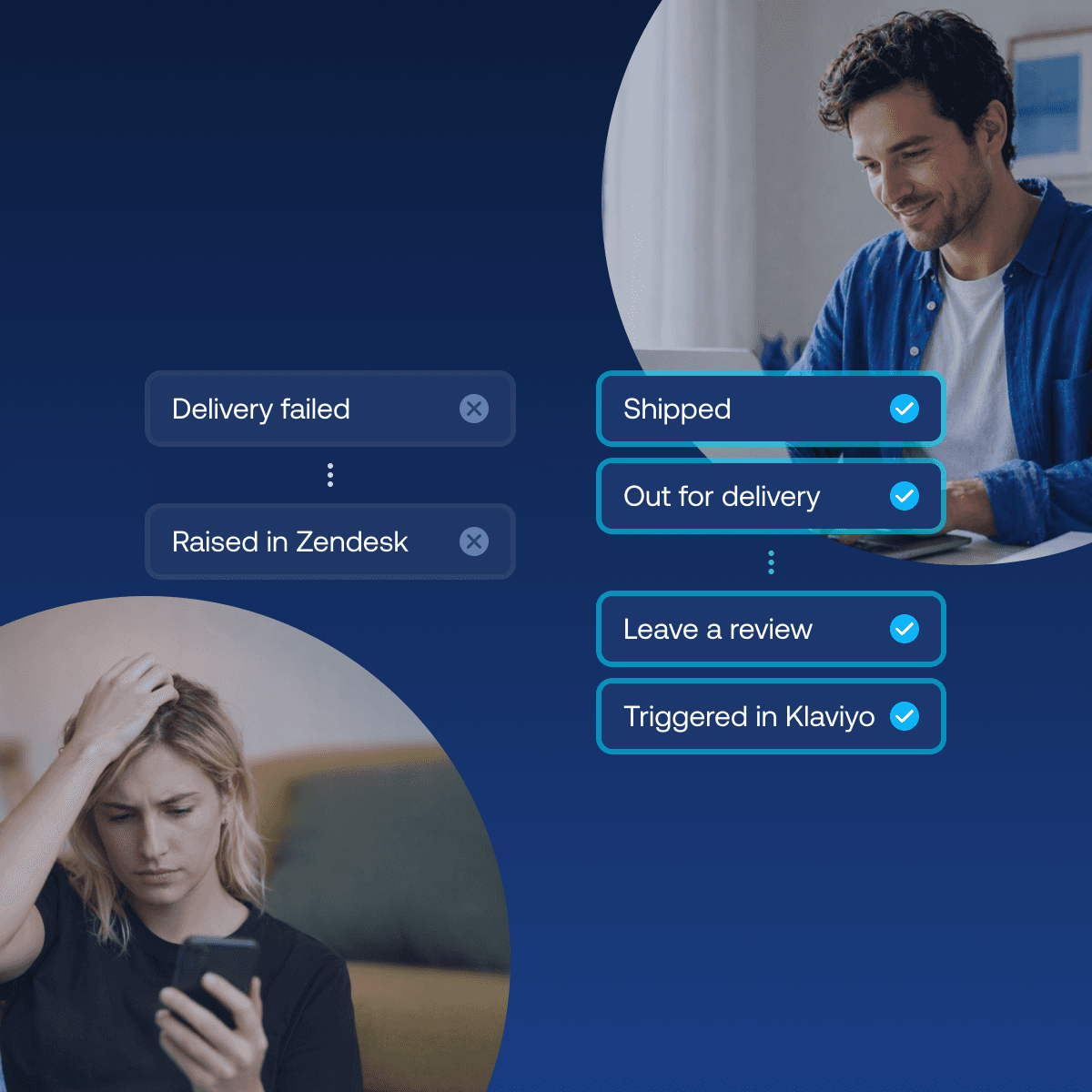
Most retailers leave post-purchase on default, letting courier notifications and out-of-the-box tracking emails speak for the brand. Sendcloud's Post-Purchase Solution changes that: delivery events now flow straight into the tools your team already uses, like Gorgias, Zendesk, Freshdesk and Klaviyo, turning tracking updates into branded touchpoints, proactive support alerts, and automated claims, no matter which courier or platform you ship with.

Shipping
Integrations
Best Shopify shipping apps: compare features, pricing & automation
Compare the best Shopify shipping apps for automation, couriers, labels, tracking, returns and international shipping. Find the right app for your store.

Shipping Intelligence
Shipping
E-commerce