Best Shopify apps for e-commerce stores (including shipping & automation tools)


Last updated:

Shopify merchants often struggle with too many apps, fragmented workflows, and manual operations as they scale, making it harder to manage growth efficiently. This guide to the best Shopify apps shows how to choose tools by use case and growth stage, helping you build a connected, scalable app stack that reduces complexity.
The best Shopify apps can quickly improve how your store runs. Choosing the right ones, though, is where things get complicated.
Shopify makes it easy to get started with your store. Add a few products, install a couple of apps, and you’re live. Simple.
As your store grows, so does your stack. New tools get added for marketing, support, and optimization. Each one solves a specific need. Over time, costs increase, tools overlap, and workflows spread across different systems.
It’s something we hear often from Shopify merchants: plenty of tools, but not always a setup that works smoothly.
In this guide, we’ll help you – based on insights from our Shopify experts Dirk Bothof and Loes Keijsers – to:
find the best Shopify apps by use case
understand when you actually need them
and build a setup that stays manageable as your business grows
When Shopify’s native setup stops being enough
Most Shopify stores start simple. And that’s exactly how it should be.
In the beginning, the built-in features and a few apps are enough to keep things running smoothly. Orders are manageable, workflows are clear, and you have a good overview of what’s happening.
As your store grows, that starts to change.
For many merchants, the first signs show up somewhere around 500 orders per month.
That’s when:
manual processes begin to take more time than expected
small fulfillment errors become more frequent (and more costly)
shipping across multiple countries adds complexity
support tickets – especially delivery-related – start to increase
It doesn’t break overnight. It just gets harder to manage.
Where things start to slow down
The friction usually shows up across a few areas:
Area | What starts happening |
|---|---|
Operations | Manual workflows, scattered tools, limited overview |
Shipping | Multiple couriers, little visibility, harder to scale |
Customer experience | More WISMO questions, limited communication, manual returns |
Scaling | Tools don’t connect well, processes stop working, teams get stretched |
What merchants start looking for
At this point, most merchants want:
fewer manual steps
better visibility
more control
and a setup that can handle growth without adding complexity
That’s where choosing the right apps and how they work together starts to matter.
What makes a Shopify app “the best”?
Not every app in the Shopify App Store will actually make your store better.
Some look fancy or great on paper, but add little real value. In practice, they often increase complexity instead of reducing it.
The apps that really make a difference tend to have a few things in common:
They solve a real problem you’re dealing with right now
They’re easy to set up and don’t require constant maintenance
They work well with the tools you already use
They have a clear impact: saving time, increasing revenue, improving customer experience, or giving better insight into performance
They still make sense as your order volume grows
One thing that comes up often when talking to Shopify merchants is how quickly app stacks can grow.
“There are so many Shopify apps that the costs quickly add up. And as you add more, you risk conflicts between tools or even slowing down your store. Most merchants don’t have a lack of tools – they have too many. That’s when things start to break.” – Dirk Bothof, Product Lead at Sendcloud
Instead of building a long list of tools, focus on building a stack that works together.
Quick shortlist – the best Shopify apps
If you’re exploring Shopify apps, it helps to start with a small group that consistently shows up in high-performing stores.
Each of the tools below solves a specific job. From marketing and support to operations and performance…and tends to become more relevant as your store grows.
Note: App availability and popularity can vary by region, but all tools listed in this blog are available in the Shopify App Store and used by merchants across Europe.
Sendcloud – best for shipping, fulfillment, and post-purchase operations
Klaviyo – best for email, SMS, and lifecycle marketing
Gorgias – best for e-commerce customer support
Zendesk – best for scaling support teams
Rebuy – best for personalization and increasing AOV
Picqer – best for warehouse and fulfillment operations
Tiny SEO Speed Image Optimizer (TinyIMG) – best for store performance and technical SEO
These apps cover the core areas most Shopify merchants need to think about – from marketing and operations to customer trust and performance insights:
attracting and retaining customers
managing operations and fulfillment
supporting customers efficiently
improving conversion and performance
Next, we’ll break these down by category, including when each type of app starts to matter and how they fit into a setup that scales without becoming difficult to manage.
The best Shopify apps by category
Instead of looking at apps as separate tools, it helps to think in terms of what job they do in your business.
As your store grows, different parts of your operation become more complex at different moments. That’s usually when a new category of apps starts to matter.
Shipping & fulfillment apps
Shipping is often one of the first areas where things start to feel less efficient. It’s usually treated as a backend task.
In practice, it touches much more than that. It influences what customers see at checkout, how smoothly orders are processed, and how many support questions you end up handling.
In the beginning, creating labels manually or using a single courier works fine. But as order volume increases, small inefficiencies start adding up. More orders mean more room for errors, more time spent on repetitive tasks, and more pressure on your operations.
On top of that, shipping information often ends up spread across different places – your Shopify backend, courier portals, inboxes – making it harder to keep a clear overview.
Sendcloud – shipping platform for automation and multi-carrier setup
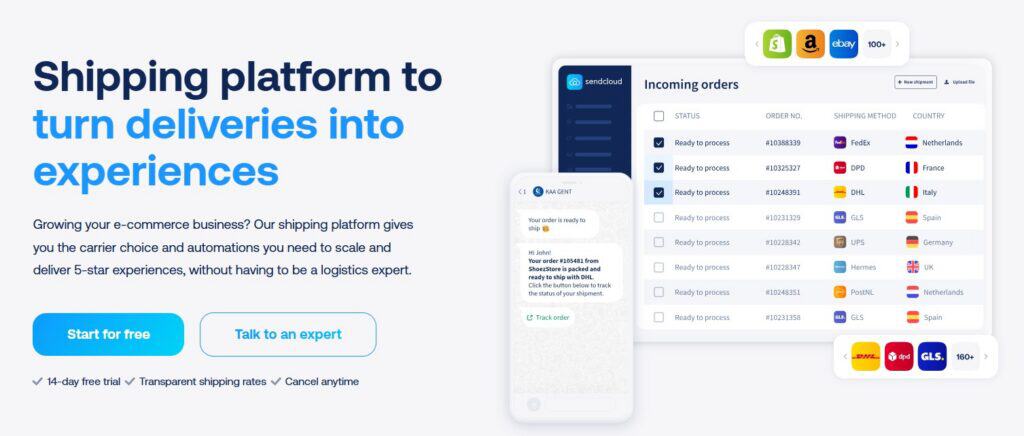
What it does: Connects Shopify to multiple couriers and helps automate shipping, tracking, and returns
When you need it: Once shipping starts taking up more time, or when you’re dealing with multiple couriers or destinations
Why it matters: Brings your shipping workflows into one place, reduces manual work, and gives you more control as volume grows
As your setup becomes more complex, having everything connected – from checkout to fulfillment to post-purchase – makes a noticeable difference in how smoothly your operations run.
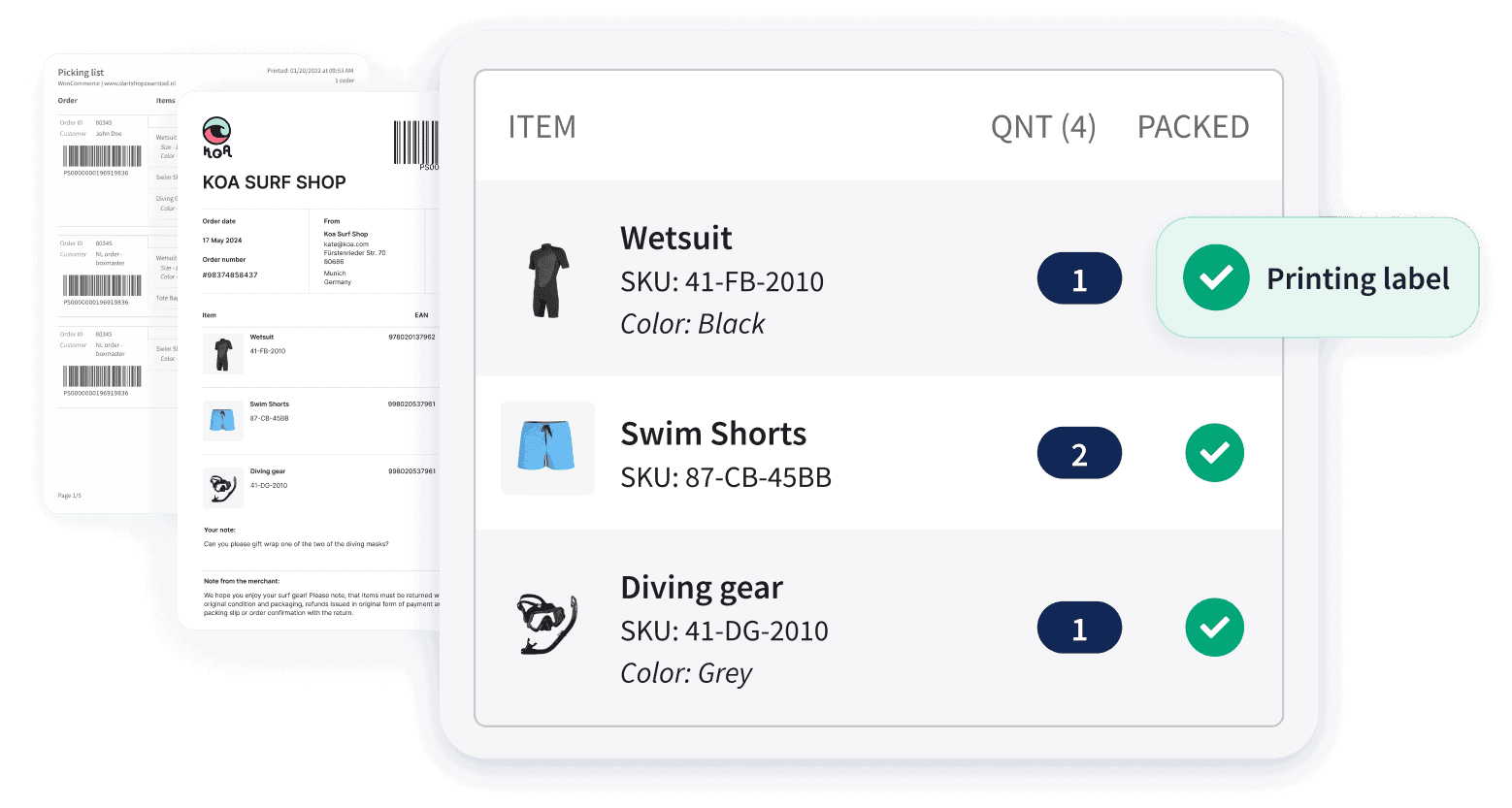
Picqer – best for scaling Shopify merchants
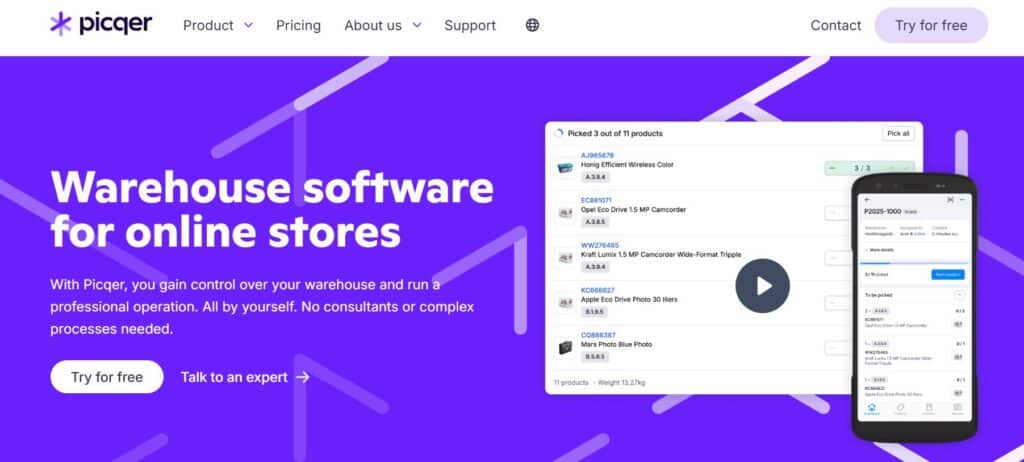
What it does: Lightweight warehouse management system (WMS) for picking, packing, and inventory
When you need it: When order volume increases and manual fulfillment starts slowing you down
Why it matters: Adds structure to your warehouse without adding too much complexity
Shippingbo – best for more complex fulfillment setups
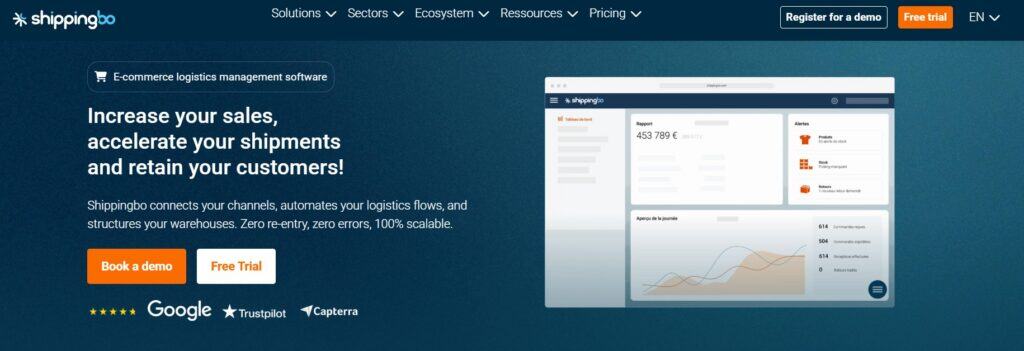
What it does: Advanced WMS/OMS for multi-warehouse and more complex operations
When you need it: When you’re managing larger volumes, multiple locations, or more advanced logistics flows
Why it matters: Gives you more control over complex fulfillment processes
Marketing & retention apps
Once you have a steady flow of visitors and orders, the focus often shifts from acquiring customers to keeping them.
That’s where lifecycle marketing becomes important. Reaching customers at the right moment with the right message.
Klaviyo
What it does: Email and SMS marketing automation
When you need it: Once you have enough traffic and customer data to build meaningful campaigns
Why it matters: Helps you stay in touch with customers through automated flows like abandoned cart, post-purchase, and winback
For many stores, email becomes the highest ROI channel once traffic stabilizes.
Leat

What it does: Loyalty and engagement platform
When you need it: When you want to increase repeat purchases and customer lifetime value
Why it matters: Encourages customers to come back and builds longer-term relationships
Customer support apps
As order volume grows, so does the number of customer questions. Especially around orders and delivery.
Handling these efficiently becomes harder when information is spread across systems.
“We consistently see tools like Klaviyo and Gorgias appear in merchant stacks, especially as businesses start scaling their operations.” – Loes Keijsers, Product Manager at Sendcloud
Gorgias

What it does: E-commerce helpdesk that connects support with Shopify data
When you need it: When support requests start taking up a significant part of your day
Why it matters: Brings conversations, orders, and customer data together, so your team can respond faster
Zendesk

What it does: Advanced support platform for larger teams
When you need it: When you need more structure, automation, and multi-channel support
Why it matters: Helps teams scale support operations without losing overview
Conversion & upsell apps
Improving conversion and average order value often has a direct impact on revenue, without needing more traffic.
Rebuy

What it does: Personalization and upsell engine
When you need it: Once you have consistent traffic and want to increase revenue per visitor
Why it matters: Uses customer and product data to show relevant offers at the right time
SEO & performance apps
Site performance plays a big role in both visibility and conversion.
Even small improvements in speed can have a noticeable impact.
Tiny SEO Speed Image Optimizer (TinyIMG)
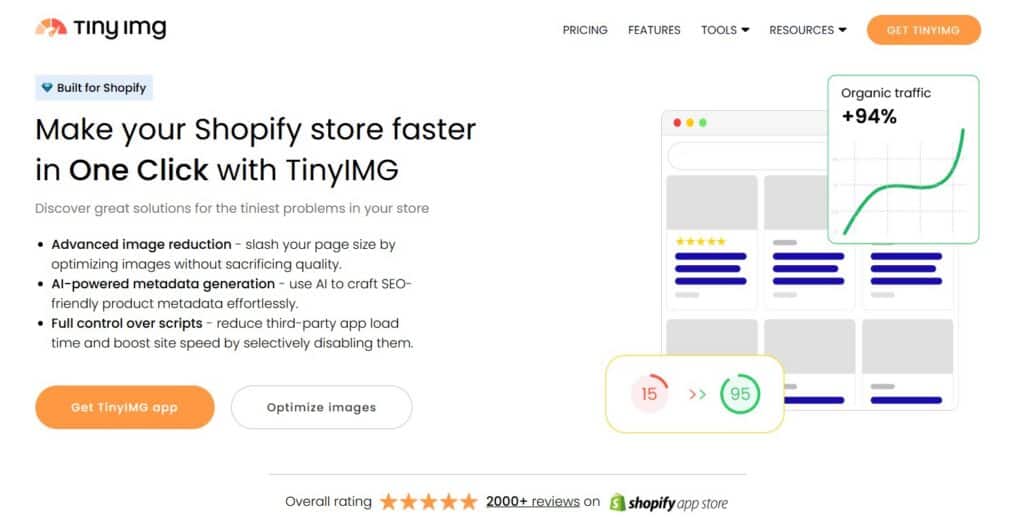
What it does: Optimizes images and improves page speed
When you need it: When your store starts slowing down or you want to improve SEO performance
Why it matters: Faster pages lead to better user experience and higher conversion rates
Reviews & social proof apps
Customer trust plays a major role in conversion. Reviews and social proof help reduce hesitation and give new customers confidence to buy.
For many stores, reviews are one of the first things customers look at before deciding to buy.
AfterShip Reviews
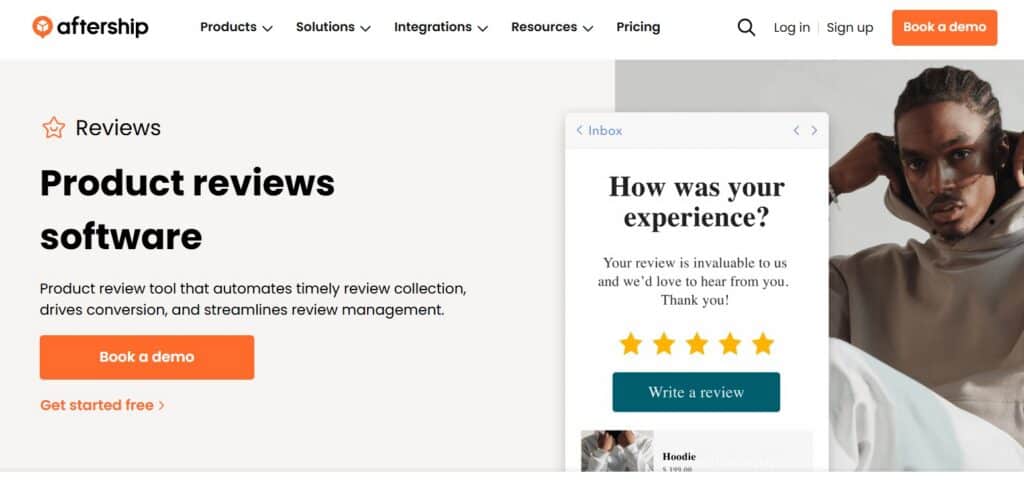
What it does: Collects and displays product reviews and ratings
When you need it: When you want to build trust and improve conversion rates
Why it matters: Helps turn customer feedback into visible social proof that influences purchase decisions
Analytics & reporting apps
As your store grows, understanding your numbers becomes just as important as driving traffic or managing operations.
Basic Shopify analytics are often enough early on, but as you scale, merchants start looking for deeper insights into profitability and customer behavior.
TrueProfit

What it does: Tracks real-time profit by combining revenue, costs, and ad spend
When you need it: When you want a clear view of profitability beyond Shopify’s default analytics
Why it matters: Helps you understand what you’re actually earning, not just what you’re selling
Lifetimely
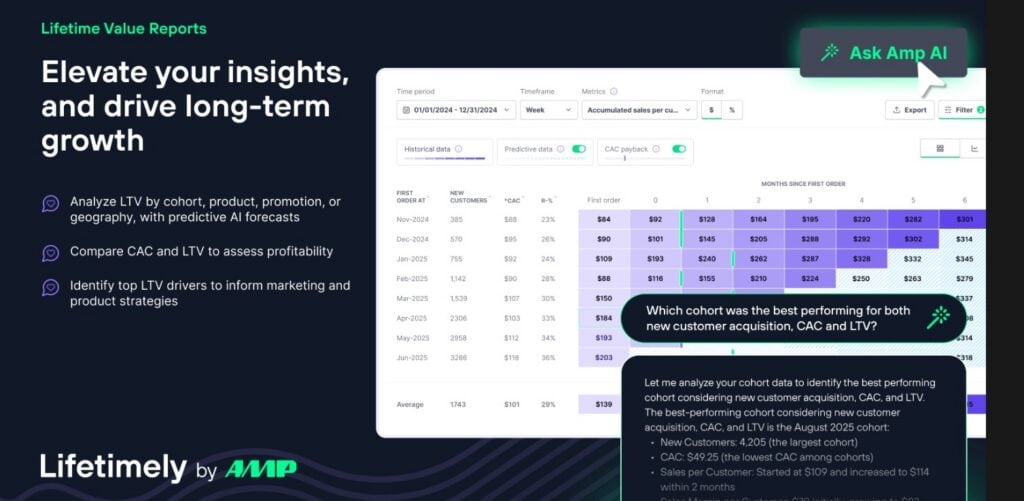
What it does: Analytics platform focused on customer lifetime value (LTV) and retention
When you need it: When you want deeper insights into customer behavior and long-term growth
Why it matters: Helps you make better decisions around acquisition, retention, and pricing
How the best Shopify merchants build their app stack
We’ve worked with thousands of Shopify merchants over the past 12+ years. And there’s a clear pattern, both from what we hear in conversations and what we see in our data.
The setups that scale well aren’t built around individual tools. They take shape around how those tools work together.
As stores grow, that difference becomes more noticeable. Some setups stay manageable. Others become harder to control, with tools that don’t fully connect or workflows that require more manual work than expected.
A simple way to structure your Shopify app stack
Core layer = Your foundation
Shopify (commerce engine)
Sendcloud (shipping layer)
Operations layer = Keeps orders moving efficiently
Sendcloud
WMS like Picqer or Shippingbo (when needed)
Support layer = Handles customer questions and issues
Gorgias or Zendesk
Sendcloud (for shipping data, delivery status, claims)
Experience layer = Shapes the post-purchase experience
Sendcloud tracking & delivery updates
Klaviyo for email and SMS communication
Growth layer = Drives revenue and expansion
Rebuy (upsell & personalization)
Marketing tools
Marketplaces or cross-border tools
As you can see, shipping tends to sit right in the middle of all of this – connecting checkout, fulfillment, delivery, and support. When that part isn’t set up well, the rest of the stack becomes harder to manage.
What this looks like in practice
As your store grows, these layers become more important. And more connected.
For example:
A shipping update can trigger a Klaviyo email
Delivery data can help support teams respond faster in Gorgias
Courier performance can influence your shipping setup and checkout options
When these pieces work together, your operations feel more predictable – even as volume increases.
Why this approach works
Many merchants start by adding apps whenever a new problem appears.
That works for a while. But over time, it often leads to:
overlapping tools
disconnected workflows
more manual work than expected
The setups that scale well are usually more intentional. Fewer tools, better connected, and easier to manage as things grow.

How to choose the right Shopify apps for your store
With so many options in the Shopify App Store, it’s easy to keep adding tools whenever a new problem comes up. As your store grows, each new app also adds another layer to manage.
That’s why it helps to evaluate each app more carefully before adding it.
A simple way to evaluate Shopify apps
A few questions can help you decide if an app is actually worth adding:
What is my biggest bottleneck right now? Focus on solving one clear problem at a time
Will this reduce manual work or add another step? The goal is to simplify your workflow, not expand it
Does it integrate with the tools I already use? Disconnected tools are one of the main causes of inefficiency
Am I duplicating functionality I already have? Overlap is one of the biggest drivers of app sprawl
Will this still work when my order volume grows? Switching tools later often creates more work than choosing the right one early
Where most merchants go wrong
Many stores end up with more apps than they can comfortably manage. We often see merchants add tools reactively, solving one problem at a time without a clear structure.
Over time, apps start to overlap, workflows become less consistent, and managing everything takes more effort than expected.
A good rule of thumb
Keep your setup focused and connected.
A smaller set of tools that work well together will almost always outperform a large, fragmented stack.
Conclusion
There’s no single “best” Shopify app.
The right tools depend on where your store is today. And where you want to go next.
What matters most is that your setup:
✅ solves your current bottlenecks
✅ works well together as a system
✅ and stays manageable as you grow
If you’re starting to feel the complexity of shipping, fulfillment, or post-purchase operations, it’s usually a sign that your setup needs to evolve.


Author and researcher
As Global Content Manager at Sendcloud, Johanna leads content strategy across e-commerce, logistics, and shipping automation. With a background in B2B SaaS and a passion for clear communication, she creates educational resources that help over 30,000 online stores optimize and scale their shipping operations.

Subject matter expert
Partner Marketing Manager at Sendcloud, Clíodhna shares valuable industry insights from top e-commerce experts.
How much time can you save on shipping?

Share
Recommended For You

Integrations
TikTok Shop: How to start selling and manage shipping efficiently
TikTok Shop is expanding across Europe. Learn how to start selling, manage shipping and scale fulfilment efficiently as order volumes grow.

Shipping
Shopify shipping rates and costs explained (+ how to reduce costs)
Learn how Shopify shipping rates work, compare pricing methods, and discover practical ways to reduce shipping costs and protect margins.
Shipping
Shopify Shipping: The Complete Guide for E-commerce Stores
Learn how Shopify shipping works, how to set it up, and how to optimise costs, delivery options, and performance as your shop grows.