Shopify shipping rates and costs explained (+ how to reduce costs)


Last updated:

TL;DR: Many Shopify merchants focus on finding the cheapest shipping rates, but hidden costs such as failed deliveries, returns, support tickets, and courier surcharges can quickly impact profitability. This guide explains how Shopify shipping rates work, compares different shipping pricing models, and shares practical ways to reduce Shopify shipping costs through smarter courier selection, free shipping thresholds, shipping automation, and multi-carrier strategies. You'll also learn how Shopify plan limitations can affect live courier rates, shipping flexibility, and long-term shipping cost optimisation.
Setting up your Shopify shipping rates can have a bigger impact on your business than you might think.
Charge too much, and customers may abandon their baskets. Charge too little, and shipping costs can quickly eat into your margins.
The challenge? Shipping costs aren’t always as straightforward as they seem.
A shipping method that looks cheap upfront isn’t always the most cost-effective option as your business grows. Delivery delays, failed deliveries, returns, and support tickets all add costs that are easy to overlook.
In this guide, we’ll explain how Shopify shipping rates work, the different ways to set them up, and how to lower shipping costs without sacrificing profitability or customer experience.
To help shape this article, we spoke with Sendcloud Product Managers Loes Keijsers and Dirk Bothof about the shipping challenges they see Shopify merchants face most often.
Let’s dive in.
How Shopify shipping rates work
Shopify gives merchants several ways to charge customers for shipping.
You can set flat rates, create rates based on order weight or value, offer free shipping, or display real-time courier rates at checkout.
Shopify Shipping (Shopify’s built-in shipping functionality) also gives merchants access to pre-negotiated discounted shipping rates from selected couriers. The rates available to you depend on factors like your Shopify plan, destination, courier, parcel size, and shipment weight.
Behind the scenes, two settings determine which shipping rates customers see at checkout:
Shipping profiles: Control which products use specific shipping rules.
Shipping zones: Group countries or regions that share the same shipping rates.
As your business grows, these settings become more important. A shipping setup that works for domestic orders may not be the best fit for international shipments, where courier costs, delivery expectations, and shipping performance can vary significantly.
The good news? Shopify doesn’t limit you to a single shipping strategy.
Most merchants combine multiple shipping rate types to balance customer expectations, conversion, and profitability. Let’s look at the most common options and when to use them.
Looking to improve more than just your shipping setup? Check out our guide to the best Shopify apps for growing e-commerce businesses.
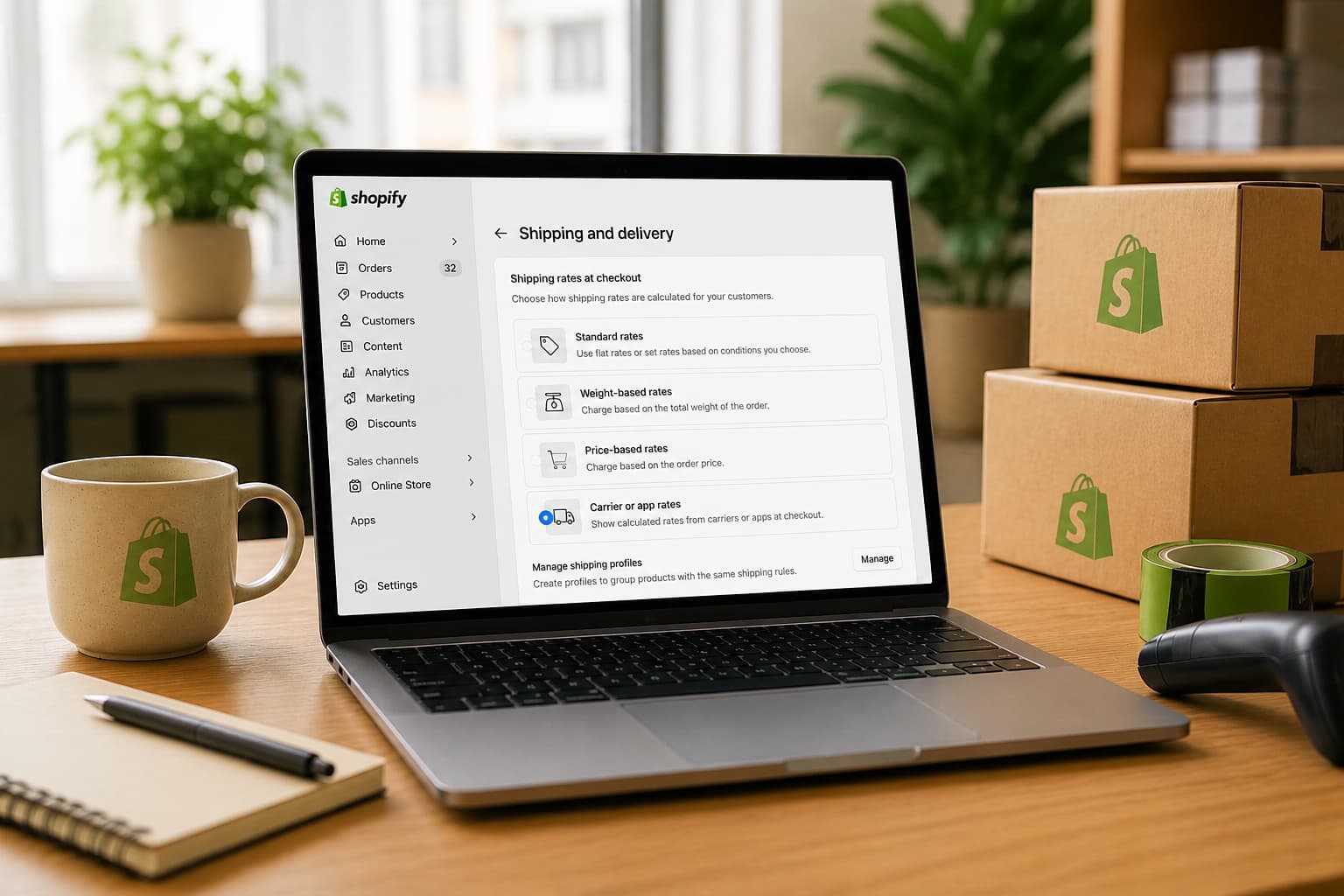
Shopify shipping rates explained
Shopify offers multiple ways to structure shipping rates. The right setup depends on your products, margins, destinations, and customer expectations.
No single pricing model works for every business. The key is understanding the trade-offs of each approach and choosing the one that best supports your shipping strategy.
Here’s a quick comparison of the most common Shopify shipping rate types.
Shipping method | Best for | Main advantage | Main drawback |
Flat rate shipping | Simple product catalogues and domestic shipping | Easy to set up and understand | Can hurt margins if shipping costs vary |
Weight-based shipping | Products with varying weights or sizes | More accurate pricing | More complex to maintain |
Price-based shipping | Free shipping strategies and AOV growth | Encourages larger orders | Doesn’t always reflect actual shipping costs |
Courier-calculated rates | Merchants looking for real-time pricing | Highly accurate checkout rates | Requires CCS and doesn’t automatically optimise profitability |
Many Shopify merchants start with flat-rate shipping because it’s simple to manage. As order volumes grow, however, more flexible shipping strategies often become necessary to protect margins and improve the delivery experience.
Where most Shopify merchants get shipping rates wrong
Many merchants set up their shipping rates when they launch their store and rarely revisit them.
The problem? What works when you’re shipping 20 orders a week often breaks down when you’re shipping 200.
As businesses grow, shipping becomes more complex. New markets, additional couriers, rising customer expectations, and increasing order volumes all put pressure on a shipping setup that may have worked perfectly in the beginning.
Here are some of the most common mistakes Shopify merchants make—and how to avoid them.
Using the same rates everywhere
Shipping costs and delivery performance vary by destination, courier, and service level.
Yet many merchants apply the same shipping rates across multiple regions.
What works well for domestic orders may not work for international shipments, where costs and customer expectations can differ significantly.
As you expand into new markets, shipping rates should reflect local realities—not assumptions based on your home market.
Not sure what shoppers expect in different countries? Our E-Commerce Delivery Compass breaks down delivery preferences, shipping expectations, and buying behaviour across European markets, helping you build a shipping strategy that fits each region.
Setting free shipping thresholds blindly
Free shipping can be a powerful conversion driver, but many merchants choose thresholds based on competitors or guesswork rather than their own data.
Instead, free shipping thresholds should be built around:
Average order value
Product margins
Shipping costs
Customer purchasing behaviour
The goal is to offer free shipping profitably.
Optimising only for label price
One of the biggest mistakes merchants make is focusing solely on the cheapest shipping label.
As Loes Keijsers, Project Manager at Sendcloud, explains:
“The cheapest shipping method isn’t always the cheapest option in the long run once you factor in customer support costs, reimbursements, and customer experience.”
A lower shipping rate may look attractive on paper, but it doesn’t automatically translate into lower shipping costs.
Ignoring hidden operational costs
Shipping costs go beyond courier pricing.
Failed deliveries, support tickets, returns, reshipments, and claims all create operational costs that are easy to overlook.
Individually, these costs may seem small.
At scale, they can have a significant impact on profitability.
Relying on a single courier
No courier performs equally well in every market.
As merchants expand internationally, delivery performance, transit times, service coverage, and customer preferences often vary from country to country.
A courier that performs well domestically may not be the best option for cross-border shipping.
That’s why many growing merchants adopt a multi-carrier strategy rather than relying on a single provider.
Not reviewing shipping performance regularly
Many merchants track shipping spend but rarely review shipping performance.
That means opportunities to improve delivery reliability, reduce support workload, and lower operational costs often go unnoticed.
Review metrics such as:
Delivery success rates
Shipping exceptions
Transit times
Claims volume
Courier performance
For most merchants, a quarterly review is enough to identify meaningful trends without overreacting to short-term fluctuations.
Businesses with rapidly changing product catalogues or international expansion plans may benefit from reviewing performance more frequently.
The difference between cheap shipping and low total shipping costs
Many merchants evaluate shipping costs based on a single number: the shipping label price.
But shipping costs go far beyond what you pay a courier to deliver a parcel. In reality, the cheapest courier isn’t always the cheapest shipping strategy.
A lower shipping rate may save money upfront, but it can also create additional costs elsewhere in your operation.
Delivery delays, failed deliveries, customer support tickets, returns, and manual work all affect the total cost of shipping.
Think of it this way:
Cheapest courier strategy | Lowest total shipping cost strategy |
Focuses on label price | Focuses on overall shipping performance |
Uses one courier | Uses the best courier for each market or shipment type |
Reactive customer support | Proactive delivery communication |
More delivery exceptions | Fewer delivery issues |
Higher support workload | Lower support workload |
Limited visibility into performance | Continuous optimisation based on data |
Hidden costs that are easy to overlook
Customer support costs
Even small delivery issues can create a significant support burden. Between 2% and 8% of shipments generate WISMO (“Where Is My Order?”) inquiries, and every support ticket takes time and money to resolve.
One of the most effective ways to reduce WISMO inquiries is to keep customers informed throughout the delivery journey. Shopify merchants can do this with proactive shipment notifications and branded tracking experiences that reduce uncertainty and help customers find delivery updates themselves.
Failed deliveries and delays
When a shipment is delayed, lost, or delivered unsuccessfully, the cost goes beyond the original label. Merchants may need to handle customer complaints, arrange replacements, or process refunds.
Returns and redeliveries
Poor delivery performance can lead to failed delivery attempts, return-to-sender shipments, reimbursements, and additional operational work.
These costs are often overlooked when comparing shipping rates, but they can have a significant impact on profitability—especially for international shipments.
When returns start increasing, an efficient returns process becomes just as important as controlling outbound shipping costs. A well-organised Shopify returns setup can help reduce operational overhead while improving the customer experience.
Hidden courier charges
The shipping rate you see isn’t always the shipping cost you pay.
Courier invoices often include:
Fuel surcharges
Remote area fees
Oversized parcel charges
Peak-season surcharges
Over time, these additional charges can significantly increase shipping spend.
Invoice errors can also go unnoticed, especially as shipping volumes increase. That’s why it’s worth reviewing courier invoices regularly and comparing billed costs against expected shipping rates.
Want to learn more? Read our guide on identifying hidden shipping overcharges.
Operational inefficiencies
Manual courier selection, repetitive shipping tasks, claims handling, and inefficient fulfilment processes all increase shipping costs.
What feels manageable at low order volumes often becomes expensive as your business scales.
A simple example
Imagine two couriers:
Courier A charges £5 per shipment.
Courier B charges £5.50 per shipment.
At first glance, Courier A looks like the obvious choice.
But if Courier A generates more delivery issues, customer support tickets, claims, and reshipments, the additional operational costs can quickly outweigh the £0.50 saving on each label.
As Dirk Bothof, Project Lead at Sendcloud, explains:
“Shipping is more complex than label costs. There are costs associated with returns, pickups, delivery delays, and reduced customer trust. These effects become even more significant when shipping internationally.”
That’s why leading e-commerce brands don’t just compare shipping rates. They compare total shipping costs.
How to optimise Shopify shipping rates
The best shipping strategy balances cost, conversion, operational efficiency, and customer expectations.
The good news? Small adjustments can often have a significant impact without adding complexity to your operation.
Here are the shipping optimisations that typically deliver the biggest results.
1. Set better free shipping thresholds
Free shipping remains one of the most effective ways to increase conversion and average order value.
The challenge is setting a threshold that encourages larger purchases without hurting margins.
Set the threshold too low and you risk eroding margins. Set it too high and customers may never reach it, reducing its impact on conversion.
A common mistake is choosing a threshold based on competitors. Instead, start with your own numbers.
A simple rule of thumb is to set your free shipping threshold around 20–25% above your AOV.
For example:
Average order value: £50
Free shipping threshold: £60–£65
This gives customers a reason to add one more item to their basket while helping offset the cost of shipping.
When calculating thresholds, consider:
Average order value
Average shipping cost
Product margins
Customer purchase behaviour
The goal here is to maximise profitable orders!
“The extra revenue should help cover shipping costs, while for the customer it often feels like adding ‘just one more item’ to reach free shipping.” — Loes Keijsers, Product Manager at Sendcloud
2. Optimise shipping zones
Shipping costs vary significantly between countries and regions.
Using the same rates everywhere can lead to inaccurate pricing and unnecessary margin loss.
Instead, review your shipping zones regularly and group destinations based on similar shipping costs and delivery expectations.
For example:
Domestic orders may qualify for lower shipping rates or free shipping.
Nearby European markets may require different pricing.
Remote or high-cost destinations may need separate shipping rates.
As you expand internationally, shipping zone optimisation becomes increasingly important because courier costs and customer expectations differ from market to market.
3. Use multi-carrier shipping strategically
There is no single courier that performs best everywhere.
Courier performance can vary by country, service level, parcel type, and customer expectations. A courier that performs well domestically may not offer the same experience for international deliveries.
For example, a courier that performs well for domestic deliveries may not offer the same experience internationally. Some postal couriers rely on handoffs to local delivery partners, which can increase transit times and create additional points of failure during the delivery journey.
A multi-carrier strategy gives merchants more flexibility to:
Compare rates and performance
Adapt to courier price increases
Reduce dependency on a single provider
Optimise shipping by market or shipment type
The goal is to find the right courier for each shipment. That’s often where the biggest shipping cost savings are found.
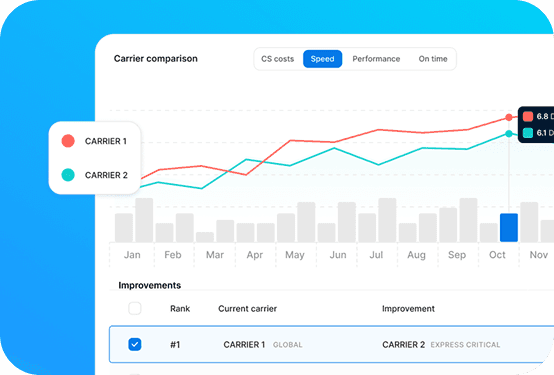
4. Compare courier performance, not just rates
Many merchants compare couriers based on price alone.
The better approach is to evaluate overall courier performance.
When reviewing your courier setup, look at:
Delivery success rates
Transit times
Shipping exceptions
Customer support volume
Claims and damage rates
A courier that costs slightly more per shipment may reduce delays, claims, and support workload enough to lower your overall shipping costs.
“Choose your courier based on your products and customer expectations, not just on price. In the end, it comes down to all costs: support costs, claims, reimbursements, and customer experience.” — Loes Keijsers, Product Manager at Sendcloud
As your order volume grows, these operational differences become more visible—and more expensive to ignore.
5. Reduce operational shipping costs
Shipping costs don’t stop at the label.
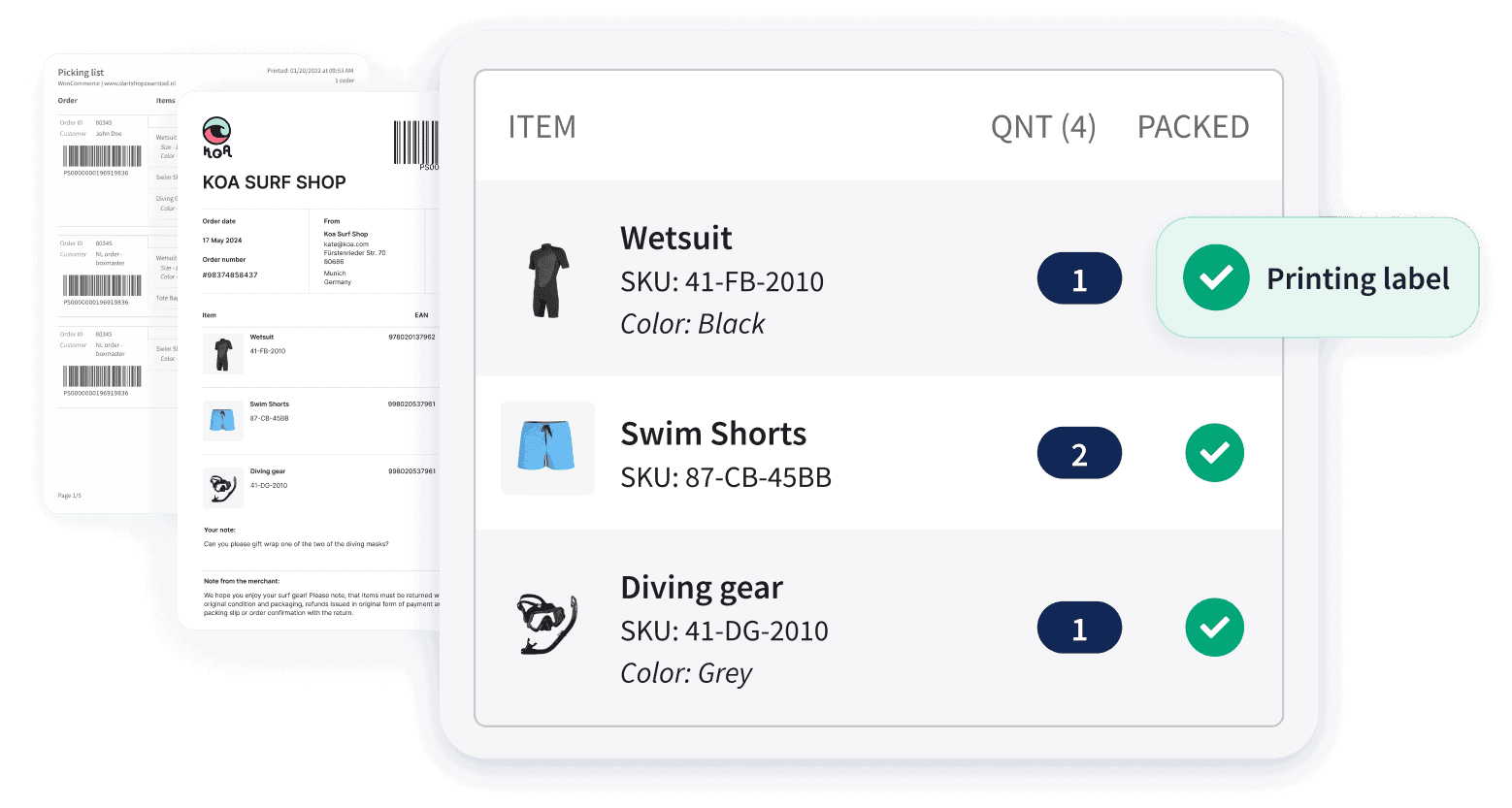
Manual processes, fulfilment errors, customer inquiries, and inefficient workflows all increase the total cost of shipping.
Some practical ways to reduce operational costs include:
Automating courier selection with shipping rules
Batch processing orders
Standardising packaging sizes
Reducing failed deliveries through address validation
Sending proactive tracking updates
According to our shipping experts, automation has the biggest impact when it helps merchants automatically choose the right courier and shipping method based on factors such as destination, product type, or shipping lane.
Shipping rules become especially valuable when you sell products with different shipping requirements. For example:
→ A lightweight bracelet may qualify for a cheaper mailbox shipment,
→ while shoes or heavier products require a standard parcel service.
By automatically selecting the right shipping method based on the product, destination, or checkout option chosen by the customer, you can reduce shipping costs while avoiding manual decision-making.
The optimisations above can help reduce shipping costs regardless of your Shopify plan. However, some shipping strategies depend on features that aren’t available on every plan.
When Shopify shipping rates start becoming limiting
Many of the shipping cost optimisation strategies we’ve covered—such as using live courier rates, displaying negotiated pricing, or choosing the best courier for a specific destination—depend on how much flexibility your Shopify plan provides.
One of the most important features is courier-calculated shipping (CCS), which allows you to display real-time rates from connected courier accounts during checkout.
This helps create more accurate shipping prices based on factors such as parcel weight, dimensions, destination, and delivery speed.
CCS also enables merchants to display negotiated courier rates, giving them more control over shipping costs and pricing accuracy.
Shopify plan | Courier-calculated shipping (CCS) |
Basic | Not available |
Grow | Available with annual billing or an additional fee |
Advanced | Included |
Plus | Included |
For many merchants, these limitations won’t have an immediate impact. Flat rates, weight-based rates, and free shipping thresholds are often enough when order volumes are lower and shipping operations remain relatively straightforward.
As businesses grow, however, shipping requirements often become more complex.
International shipping is a good example. Costs, delivery expectations, and courier performance can vary significantly from one country to another, making shipping rate accuracy and courier flexibility increasingly important.
Merchants may also want to:
Start negotiating their own courier contracts,
Work with multiple couriers,
Or look for more advanced ways to automate shipping decisions.
At that point, understanding the shipping capabilities included in your Shopify plan becomes increasingly important.
The goal isn’t necessarily to access more features—it’s to ensure your shipping setup gives you enough flexibility to accurately manage shipping rates, control costs, and deliver the experience customers expect.
As shipping operations become more complex, many merchants move beyond static shipping setups and adopt a more flexible, data-driven shipping strategy.

How Sendcloud helps reduce Shopify shipping costs
Reducing shipping costs isn’t just about finding cheaper shipping labels. It’s about improving performance across the entire shipping process—from checkout to delivery, customer support, and returns.
That’s where Sendcloud can help.
Built for e-commerce and designed to integrate seamlessly with Shopify, Sendcloud helps Shopify merchants manage and optimise shipping across the entire customer journey—from checkout and fulfilment to delivery, support, and returns.
With access to 170+ couriers, merchants can:
Compare couriers across markets
Automate shipping decisions
Offer flexible delivery options at checkout
Reduce customer support workload with proactive tracking updates
Simplify returns management
Gain visibility into courier performance and shipping spend
Merchants can also connect their own courier contracts and use shipping automation to automatically select the most suitable courier and shipping method for each shipment.
Instead of optimising shipping costs one label at a time, merchants gain the tools to improve shipping performance across their entire operation.
The result is greater control over shipping costs, improved operational efficiency, and a shipping setup that can scale alongside the business.
Ready to optimise your Shopify shipping costs?
Explore the Sendcloud Shopify integration and see how multi-carrier shipping, automation, and shipping intelligence can help you reduce costs and scale more efficiently.


Author and researcher
As Global Content Manager at Sendcloud, Johanna leads content strategy across e-commerce, logistics, and shipping automation. With a background in B2B SaaS and a passion for clear communication, she creates educational resources that help over 30,000 online stores optimize and scale their shipping operations.

Subject matter expert
Partner Marketing Manager at Sendcloud, Clíodhna shares valuable industry insights from top e-commerce experts.
How much time can you save on shipping?

Share
Recommended For You

Shipping
Integrations
Best Shopify shipping apps: compare features, pricing & automation
Compare the best Shopify shipping apps for automation, couriers, labels, tracking, returns and international shipping. Find the right app for your store.

Shipping
Shopify shipping automation: How to automate your fulfilment workflow
Learn how Shopify shipping automation helps you automate fulfilment workflows, reduce shipping errors, save time, and scale with Sendcloud.

Shipping Intelligence
Shipping
E-commerce