


When visitors arrive at your online store, they usually have something in mind that they want to purchase. If you can convince them to go ahead and place an order, you’ve just converted a visitor. In essence, in the context of e-commerce, the conversion rate is the rate at which users put items in their baskets and complete the checkout process.
Optimising your customer checkout conversion rate is a challenging but important task. This article will explain why customers leave their shopping baskets without making a purchase and suggest some ways to improve your checkout conversion rate.
Why Customers Abandon Their Shopping Basket
Basket abandonment is widespread. For one reason or another, customers often leave an e-commerce site without making a purchase, even when they’ve put goods in their basket. A basket abandonment rate of between 60% and 65% might sound high but is quite good. According to research firm Baymard Institute, the average basket abandonment rate is 68.8%.
Should your rate rise above 70%, you might need to look at ways to improve your conversion rate. Website errors or crashes are one of the chief culprits behind an unusually high abandonment rate. A report from Baynard Institute in 2018 stated that 20% of surveyed shoppers said they left their basket without purchasing because they felt the website’s user interface (UI) lagged, crashed, or otherwise impeded the shopping experience.
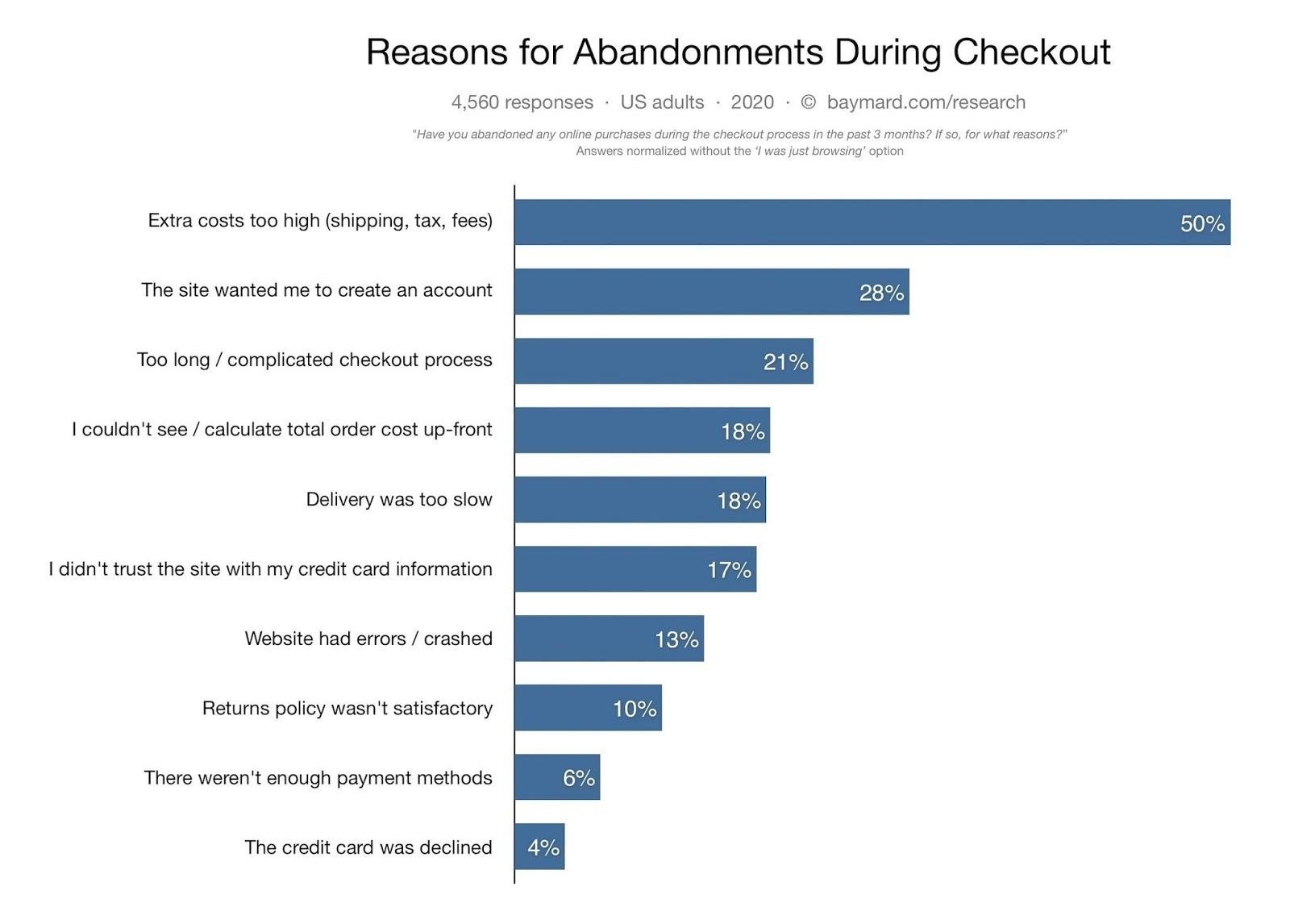
Another common reason is the added costs. In that same Baynard survey, users reported that their final checkout amounts were sometimes up to 10% higher than the item’s listed price due to shipping, handling, and other additional expenses. Buyers prefer to see their purchase’s actual cost on the product page instead of when asked to pay.
Another reason for basket abandonment worth highlighting is an unnecessarily complicated checkout process. Added steps, such as forcing the user to create an account before they can check out, will make them think twice before purchasing. The best ecommerce websites prioritise a smooth shopping experience, with transparent pricing and quick shipping.
8 Simple Methods to Improve Your Checkout Conversion Rate
You now understand some of the factors that cause a high shopping basket abandonment. Let’s talk about solutions that will increase your checkout conversion rate.
Below are eight strategies you can implement to lower your shopping basket abandonment. Implementing changes to your site will probably require employees to work together towards a shared goal. We recommend using time management and scheduling software to make sure that they communicate effectively.
With all that said, let's press forward by looking at eight strategies you can apply to improve your checkout rates.
Increasing Checkout Conversion Rate Method 1: Get Rid of Mandatory Sign-ups
It might sound counterintuitive to your online store’s growth, but one of the easiest ways to provide a better shopping experience is to stop forcing people to register or create an account.
For an impatient or busy individual who came on your site, hoping to place a quick order, having to sign up is an unnecessary hassle. They might decide they can’t be bothered and go elsewhere. If this happens, they’re unlikely ever to return.
Therefore, it’s best to allow customers the option to check out without an account.
If you’re worried about how this might affect your ability to grow your database of users, remember that you can always get a buyer’s contact information by asking for it during the checkout process. The important thing is you provide them with a choice.
If their purchase experience was satisfactory, they can return and see the benefit of creating an account. You can also send emails to incentivise them to become a member of your programme.
Increasing Checkout Conversion Rate Method 2: Explore a Single-Page Checkout Process.
While shopping online, have you ever come across a single final page system where you can put in your billing information, select a payment option, use a coupon, and select between modes of delivery, all without clicking through to a second page? That is a single-page checkout in action.
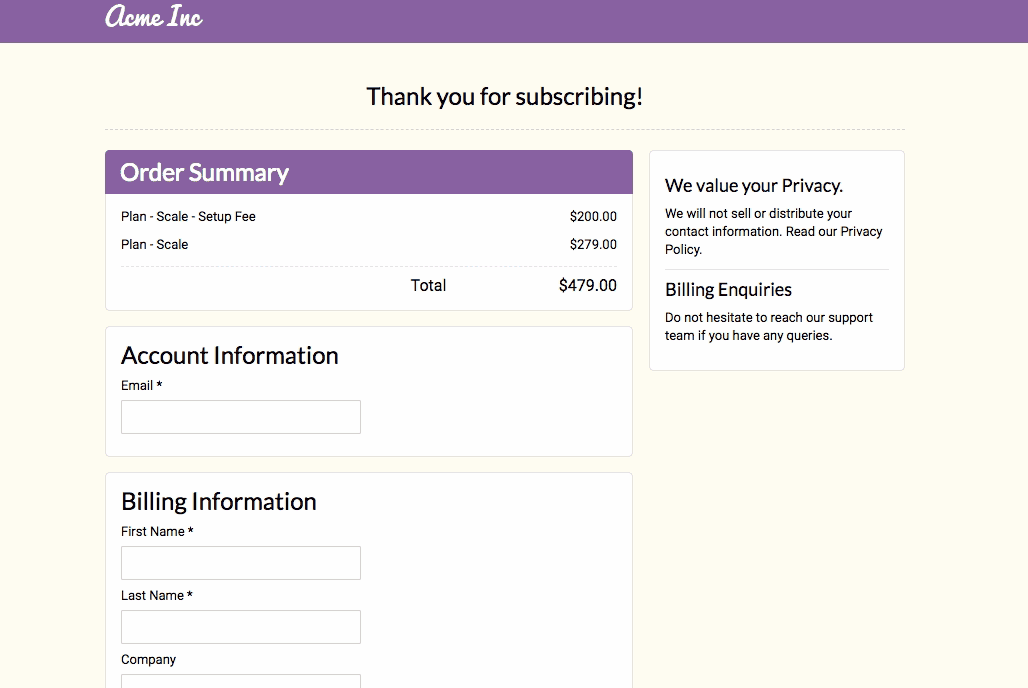
In the same way most shoppers would look for the shortest checkout queue at the grocery store, online shoppers also gravitate towards stores with a shorter checkout experience. People are busy, and everything you can do to save them time and speed things up will help you secure their custom.
Statistically, single-page checkout systems have been measured to provide a conversion rate increase of up to 21.8%. That’s a lot of potential additional sales!
Increasing Checkout Conversion Rate Method 3: Avoid Unnecessary Fields in Checkout
Once a potential customer has added their selected products to the basket, online shoppers want to confirm their order and have their goods on the way as quickly as possible. Having to complete unnecessary fields in the checkout form before finalising their purchase can lead users to ditch their basket. They might even close your webpage, and shop with your competitors instead.
Things like customer surveys and product recommendations can provide valuable information. But they should be set to show up after the customer has made their purchase. Done this way, customers can choose to provide answers to your survey questions or look through the recommendations to guide their next purchase if they have time. If not, they can simply leave the site, and you won’t have lost the sale.
Therefore, you should look through your checkout process to filter out and remove or modify the fields that aren’t needed. Remember: quick, simple, and streamlined are the way to go.
Increasing Checkout Conversion Rate Method 4: Free Shipping, Free Returns, and Secure Payments
Added conveniences and assurances are small but essential things that online shoppers value. If you can afford it, provide an option for free shipping. Shoppers are excited by getting a bargain and maximise any opportunity to save a few dollars where they can. Free shipping can mean the difference between closing a sale and not and provides an excellent opportunity to add value to your site’s shopping experience. Make sure you're running your e-commerce logistics as efficiently as possible, to be able to cover the lost margin to offer free shipping.
Offering free returns is another value add. It’s always a nice touch for specific products to offer buyers a buffer period to return products if they aren’t quite satisfied with their purchase. Worries like choosing the wrong size when buying an item of clothing can make customers hesitate about buying online. If you offer them hassle-free returns with a refund guarantee, you remove a lot of those fears.
Finally, don’t forget about a secure payment system. Customers need to feel that their financial data is safe with you. Ensure you choose a safe system and let your customers know what you’re doing to keep them and their money protected.
Increasing Checkout Conversion Rate Method 5: Optimise Your Checkout Experience
The checkout stage is the most crucial aspect of the entire shopping experience. The checkout page is where you’re most likely to lose a sale. Your customer has come this far, so you want to make sure that they move through this page and confirm their order.
First, you’ll want to capture your users’ email addresses at the earliest opportunity. If you have their email address, you can send basket abandonment emails. We’ll discuss basket abandonment emails in a minute.
You should position the email input field high up on the checkout page. Secondly, remove any distractions from the checkout page, such as unnecessary content or links to other pages. You want the page to focus squarely on its intended purpose: checking out.
If you’ve implemented a system allowing the user to modify or delete items in their basket without leaving the page, make these options clear. Such changes make it easier to remove an item and continue with their purchase.
Increasing Checkout Conversion Rate Method 6: Shopping Basket Recovery Emails
One of the most effective ways to bring customers back to your site is with a basket abandonment email sequence. If you’ve collected your customer’s email address, you can send them a series of targeted and personalised emails to entice them back. They might include special deals and discounts.
Here’s an example:
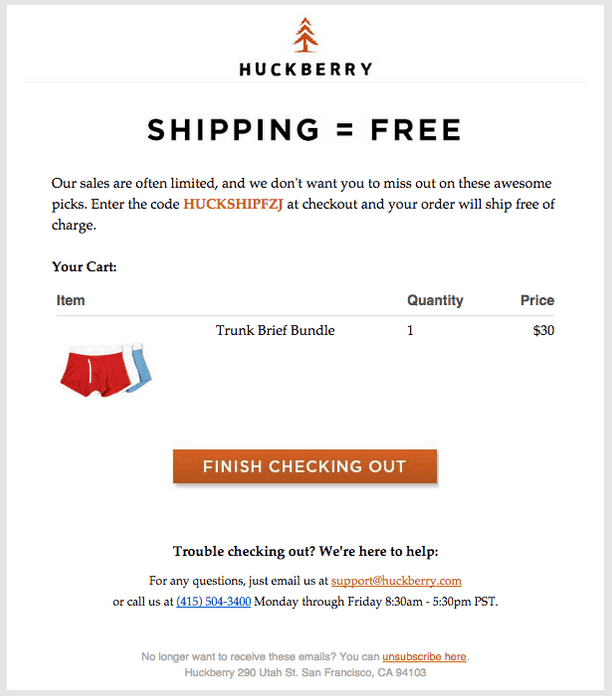
In this abandoned basket email, retailer Huckberry entices customers back with an offer of free shipping with their order. That’s a pretty good deal!
You’ll need to make sure the content in these emails is relevant and useful to the user. Your job is to show them what they’re missing and give them a compelling reason to return to their basket.
BigCommerce has a great resource on the recovery email strategy.
Increasing Checkout Conversion Rate Method 7: Retargeting Campaigns
Retargeted ads are a form of pay-per-click (PPC) advertising that specifically targets users based on past behaviours such as visiting your site or putting items in a shopping basket. Common retargeting platforms are Google Ads and Facebook.
Retargeting works by adding cookies, small pieces of data that track online browsing, in a user’s browser when they visit your site. These cookies identify the user and allow you to place ads for your site on some of the other websites and social media platforms they visit. After being reminded of your site and products through retargeting, they’re more inclined to come back and finalise their purchase.
Unlike search engine PPC adverts, retargeting campaigns appear naturally as an individual who has been to your website browses elsewhere on the internet. They don’t need to search for your store or related keywords on a search engine.
Here’s an example of retargeting in action:

This ad was served to customers who had visited the VELOSOCK website. You can send people who clicked on your ad to a custom landing page where you invite them to sign up for the newsletter to hear about product launches and special offers.
Increasing Checkout Conversion Method 8: A/B Test With Checkout Experience
At the finishing stages of your checkout improvement strategy, you will need to run A/B tests. A/B testing (or split testing) is a type of user experience testing that presents half of a website’s users with one version of a webpage and the other half with an alternate version to see which one works better.
A small change to various elements of your checkout process can make a big difference! For example, in the example below, VeggieTales ran a split test to see if the appearance of the main menu impacted conversion rates. It did. By removing the main menu, Veggietales increased their checkout conversion rate by 14%.
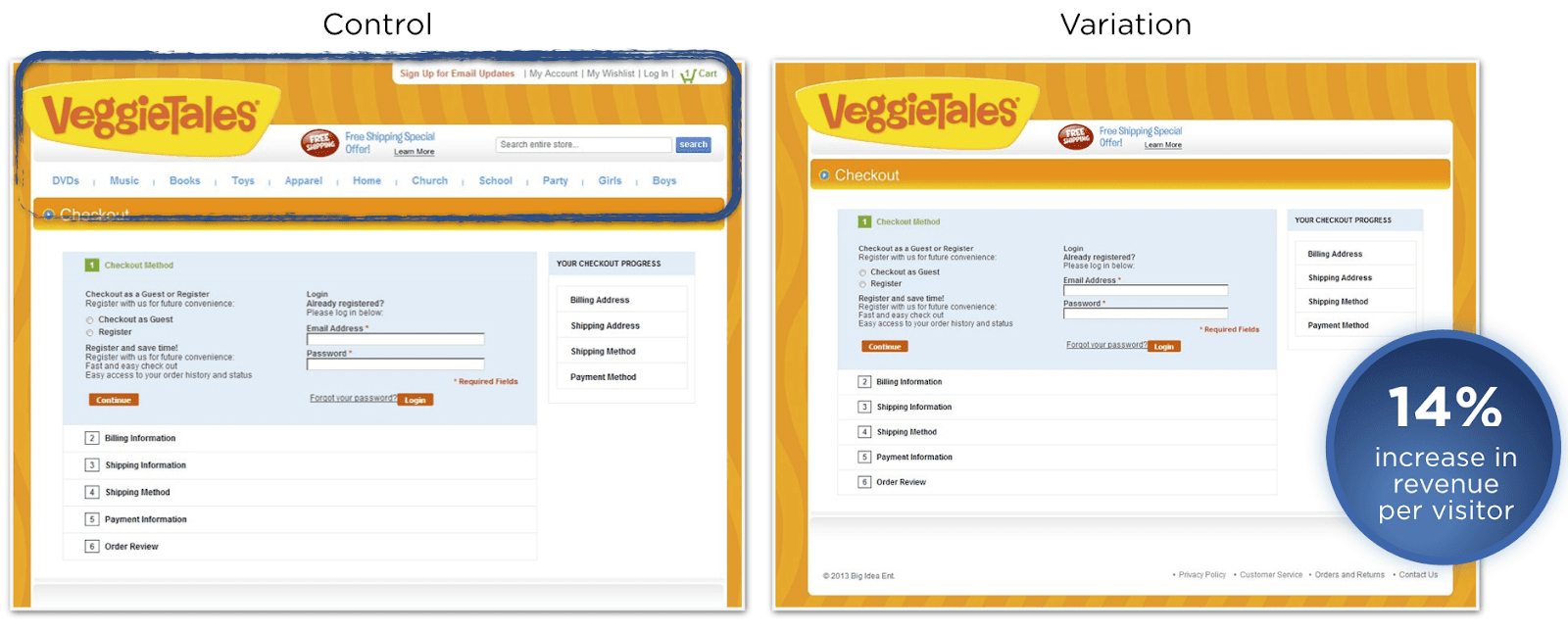
You can see how a small change can make a big difference.
To conclude: what to do to increase checkout conversion rate?
Basket abandonment will always exist in the online shopping space. The goal is to make sure that as many visitors as possible leave your website having made a purchase (and keep them coming back for more!).
As such, your strategy to reduce basket abandonment should focus on value and experience. Once you can provide visitors with a quick way to shop for their favourite goods at great prices and with no hidden costs, they will be inclined to complete their purchase and return again and again.
Therefore, never stop optimising your store. As new developments continue to arise in the industry, customers will be drawn to the sites that keep improving and offering an enhanced customer experience.
About the other
Owen Jones is the Senior Content Marketer at ZoomShift, an online schedule maker app. He is an experienced SaaS marketer, specialising in content marketing, CRO, and FB advertising. He likes to share his knowledge with others to help them increase results.

Author and researcher


Subject matter expert
Huib Adriaans is the VP of Enterprise at Sendcloud and the founder of Tracey. With 10+ years in the logistics space, he leverages shipping intelligence and data-driven insights to help merchants reduce "Where is my parcel?" enquiries and build world-class delivery experiences.
How much time can you save on shipping?

Share
Recommended For You

Shipping
Integrations
Best Shopify shipping apps: compare features, pricing & automation
Compare the best Shopify shipping apps for automation, couriers, labels, tracking, returns and international shipping. Find the right app for your store.

Shipping Intelligence
Shipping
E-commerce
Best 9 Shipping Data Analytics Software Tools (2026)
E-commerce
Enterprise