8 shipping automations that help you save 10+ hours every week



TL;DR: Manual shipping slows down growing e-commerce brands with errors, support overload, and hours of repetitive work. This guide shows how shipping automation helps small and mid-sized online stores save time, reduce mistakes, and scale smarter—with practical workflows for labels, tracking, returns, and more. Discover 8 automated shipping fixes that free up your team and improve customer experience.
Manual e-commerce shipping is the operational tax you don’t see coming. A few clicks here, some copy-pasting there, and suddenly your team is losing hours every week. Errors creep in. Support tickets pile up. Scaling becomes chaos.
That’s where automation changes everything.
In this blog, you’ll find 8 practical shipping automations that save time, reduce mistakes, and help you grow, without burning out your team or hiring new helping hands.
What shipping automation actually means
Shipping automation isn’t about robots or outsourcing, it’s about removing manual tasks from your workflow so you can scale without the chaos.
For growing e-commerce teams, it means centralising repetitive shipping processes that normally steal time, cause errors, and overload support. It’s how small teams handle big volumes faster, smarter, and with fewer mistakes.
8 shipping automations to save time, cut errors, and scale fast
These are not “nice-to-haves.” Each of these automations directly eliminates time-wasting tasks, reduces errors, and creates a smoother experience for your customers and your team. So that you can focus on what matters most: growing your business.
Let’s break them down:
1. Automated address validation and correction
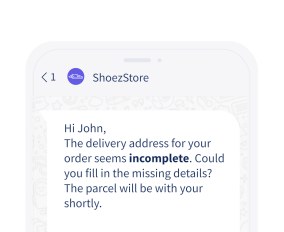
One wrong number in a postcode. A missing apartment number. Small address mistakes like these lead to failed deliveries, returned parcels, and a flood of support messages.
Fix bad addresses before they cause delivery problems: With AI-powered address validation and correction, you can automatically catch and correct those issues the moment an order comes in. No more manual checking, no more reships. Just cleaner data, fewer mistakes, and a lot less time spent chasing problems that could’ve been avoided.
🕒 Saves you: 1-2 hours a week
📉 Reduces up to 40% of avoidable delivery errors
2. Automated shipping document generation
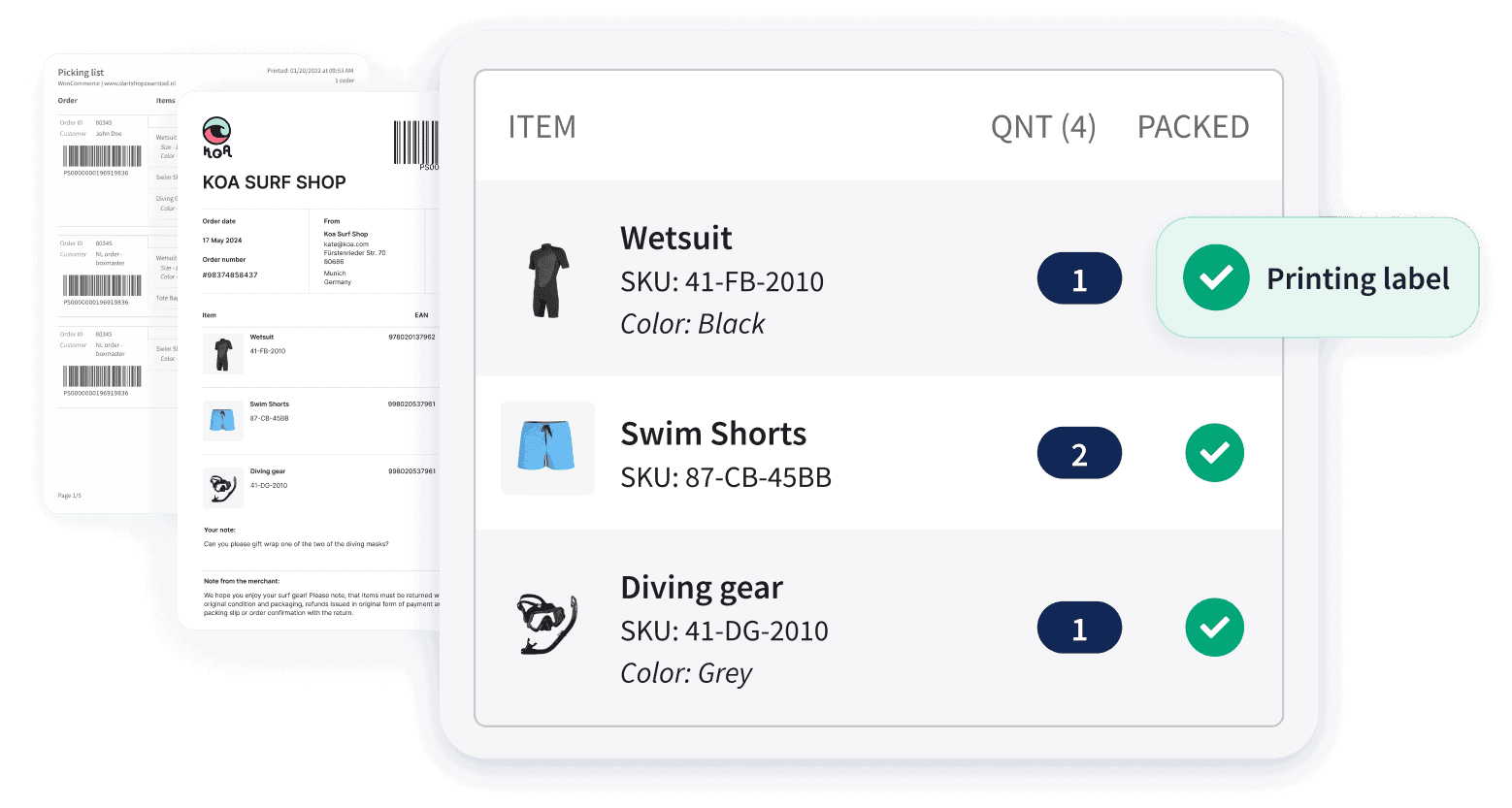
Packing slips. Picking lists. Invoices. These documents are essential to every order and a huge time drain when done manually. Add international orders into the mix, and suddenly your team is juggling customs forms like CN22s and CN23s, too.
With automated document generation, you can create customs forms, invoices, and pick lists automatically using synced product data. Everything is filled out correctly the first time. No more manual editing or back-and-forth with customs.
🕒 Saves you: 1-3 hours a week
📦 Speeds up cross-border shipments and avoids delays
3. Automated label creation (bulk processing)
Manually creating shipping labels? That works..until you’re processing 50, 100, or 500 orders a day. Suddenly, it’s the bottleneck. Switching between platforms, copying in order details, and printing one label at a time turns into hours of repetitive work.
With automated label creation in bulk, you can generate and print labels for every order in just a few clicks, no matter how many couriers or channels you use. It’s fast, accurate, and scales with you.
Merchants like THE DUKE Distillery already cut their label workflow from one hour to just a few minutes and KAA Gent automated 100% of their label process.
🕒 Saves you: 3-5 hours a week – up to 7 minutes per order!
🔁 Cuts label errors by up to 50%
4. Automated shipping rules and dynamic courier selection
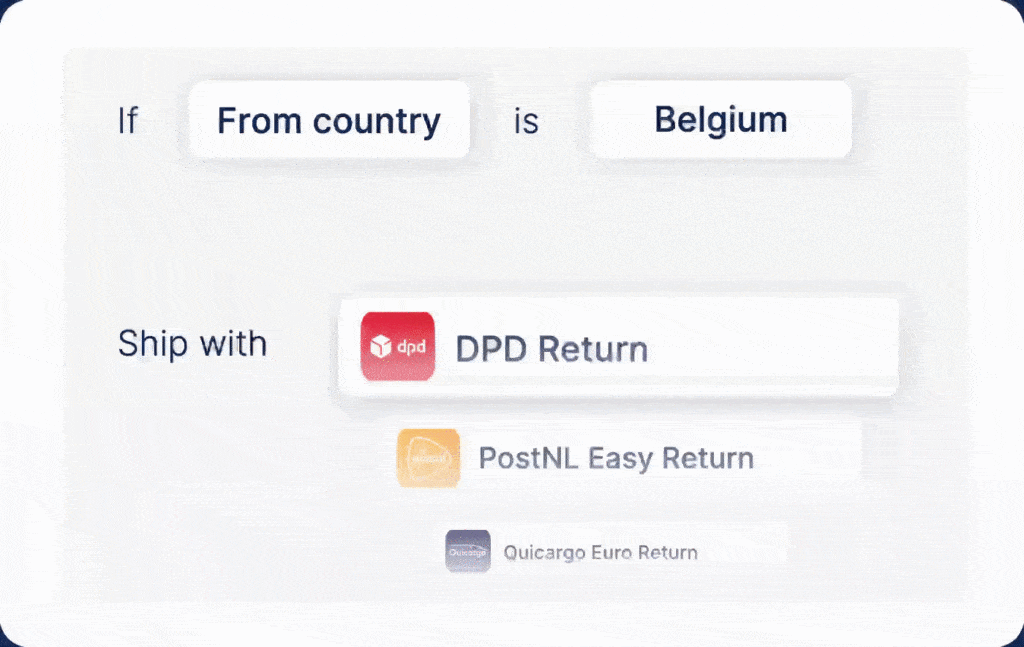
Shipping choices add up fast. Especially when you’re trying to match the right service to the right order. Do high-value parcels need insurance? Should heavier items go with a different courier? What about express for local deliveries? Making all these decisions feels like playing a never-ending puzzle.
Shipping rules let you set that logic once, then let the system do the work. Whether it’s based on destination, weight, value, or marketplace, the system picks the right shipping method every time.
Merchants like St Martin’s Coffee already use these rules to split shipping logic between customer types, reduce manual admin, and prevent common errors:
“Shipping rules and automation features have helped us to mitigate common errors and reduce time-consuming admin. We can also split our workflows between our different customer bases like our subscription service and our next day service.”
— Andy Hall, Co-founder St Martin’s Coffee
Pro tip: Take it a step further with dynamic courier selection. Instead of only relying on fixed rules, choose the best courier in real time—based on live rates, service availability, and past performance.
🕒 Saves you: 2-4 hours a week
📦 Reduces misshipments, delays, and overspending
5. Automated order routing across warehouses
Once your business grows beyond a single warehouse or stock location, routing orders manually becomes a real time sink. Should it come from warehouse A? Is it in stock in B? What’s the cheapest route?
Each order means checking inventory, comparing shipping costs, and figuring out which location can fulfill it fastest or cheapest. Do that a few hundred times a week, and you’ve got a serious operational drag.
With automated order routing, that decision is made for you. Orders get assigned to the right warehouse based on logic you control—like stock availability, destination, or lowest cost. It’s a simple way to speed up delivery times, reduce split shipments, and make better use of your inventory.
🕒 Saves you: 1-3 hours a week
🚚 Optimises stock and speeds up delivery
6. Automated tracking emails and branded tracking pages
“Where is my order?” It’s the one question every support team hears on repeat…and the one that can be mostly avoided with better tracking communication.
Automated tracking emails keep customers in the loop with real-time updates, without your team having to lift a finger. Pair that with a branded tracking page, and you’ve got a post-purchase experience that’s both helpful and on-brand.
Merchants like Boots use these features to reduce WISMO tickets by up to 46%, while also turning tracking into a chance to upsell or reinforce brand loyalty.
🕒 Saves you: 1-3 hours a week
📬 Reduces WISMO queries by up to 50%
Want more ideas? Read 11 other strategies to reduce WISMO!
7. Automated exception detection and courier claim handling
Delays, lost parcels, failed deliveries. When something goes wrong in shipping, the follow-up can take hours. Manually spotting issues, contacting couriers, and managing claims in spreadsheets eats into your team’s time and delays refunds for your customers.
Support automation handles all of that behind the scenes. It flags issues in real time, triggers claim workflows, sends reminders, and tracks refund statuses in one place. That means less time digging through emails and more time spent on work that actually grows your business.
🕒 Saves you: 1-2 hours a week
🧾 Up to 8x faster courier claim resolution

8. Returns automation (portals, labels, and insights)
Returns are part of e-commerce, but handling them manually creates friction for customers and overhead for your team. From label generation to refund tracking, it can quickly turn into a support drain.
With returns automation, customers can initiate returns through a self-service portal, while the system matches each return to the original shipment, updates the refund process, and collects insights. E-Com shops like Bunzlau Castle use this setup to streamline their return flow, reduce workload, and improve the experience for both customers and staff.
🕒 Saves you: 2-3 hours a week
🔁 Improves return speed, reduces manual work, and boosts customer satisfaction
Pro tip 1: Generate return labels only when needed: Avoid including return labels in every parcel. On-demand label generation reduces costs, limits fraud, and keeps your process cleaner!
Pro tip 2: Automatically track return reasons: Collecting reason codes helps you spot product or sizing issues early, improve listings, and meet marketplace compliance standards (like Amazon or eBay).
How much time these shipping automations actually save
We’ve covered a lot of automations, each tackling a different time sink in the shipping process. To help you see the impact at a glance, here’s a quick summary of how much time each one can save you, and where it makes the biggest difference:
Automation | Time saved (weekly) | Impact |
|---|---|---|
1. Address validation & correction | 1–2 hours | Prevents up to 40% of avoidable delivery errors |
2. Shipping document generation | 1–3 hours | Speeds up fulfilment, reduces customs delays |
3. Label creation (bulk processing) | 3–5 hours | Cuts label errors by up to 50% |
4. Shipping rules & courier selection | 2–4 hours | Fewer mis-shipments, lower shipping costs |
5. Order routing across warehouses | 1–3 hours | Faster delivery, better stock efficiency |
6. Tracking emails & branded pages | 1–3 hours | Reduces WISMO tickets by up to 50% |
7. Exception detection & claims | 1–2 hours | Up to 8× faster claim resolutions |
8. Returns automation | 2–3 hours | Streamlined returns, improved customer satisfaction |
When does shipping automation make sense?
Short answer: a lot sooner than most merchants think.
Shipping automation isn’t just for enterprise teams or massive warehouses, it’s for any e-commerce brand that’s starting to feel the cracks in their process. If you’re spending too much time on repetitive tasks, missing refund windows, or struggling to keep up with support, automation can make an immediate difference.
Here’s when it really pays off:
You’re shipping 1,000+ parcels per month
You work with multiple couriers or sales channels
You’re expanding into new markets or warehouses
Your team is small, but your support load is growing
You’re losing time (or money) to manual errors or delays
Peak season turns your ops into chaos
Think of automation as an early investment in stability. It helps you grow without having to grow your team at the same pace and without burning out the one you already have.
Why Sendcloud is the fastest path to automation
Most tools help you with part of shipping. Maybe they handle label printing, or compare courier rates but they still leave your team juggling tracking, returns, and support across multiple systems.
Sendcloud’s shipping automation brings it all together in one place. Labels, shipping rules, real-time tracking, exception handling, returns, and even courier claims—fully integrated and fully automated. You can start small with one workflow and scale up as you grow.
With 160+ courier connections, deep integrations with major e-commerce platforms, and proven results from merchants across Europe, Sendcloud helps you ship smarter and grow faster. Start automating your shipping with Sendcloud for free!

As a Product Marketing Manager, Bart bridges the gap between Sendcloud's shipping platform and its 30,000 merchants. With a strong background in B2B SaaS, he turns complex product features into clear value stories that help online retailers grow their business. Passionate about customer insights and go-to-market strategy, he ensures every product launch resonates with merchants and drives real results.
How much time can you save on shipping?

Share
Recommended For You

Shipping
E-commerce
2 in 5 UK shoppers abandon online carts over delivery concerns
An increasing number of UK shoppers are abandoning their purchases due to concerns about delivery, according to research from Sendcloud

Trends
E-commerce
2 out of 3 consumers abandon online orders in absence of return policy
67 percent of UK consumers admitted to abandoning their online orders when there is no return policy available.
E-commerce
Shipping
A complete guide to 3PL for e-commerce retailers
Considering a third party logistics, but unsure where to start? Check out this guide on a 3PL approach for e-commerce retailers.